
Iran said Sunday new US visa regulations for visitors from 38 mainly European countries but including Iran flies in the face of Tehran's landmark nuclear deal with the West.
The ISNA news agency reported Deputy Foreign Minister Abbas Araghchi as saying Tehran had consulted with European countries on countering the new law passed by Congress on Friday.
"This law certainly affects economic, tourist, scientific and cultural exchanges with Iran and it contravenes the nuclear deal," Araghchi said.
The US measure bars citizens of the 38 countries that participate in the Visa Waiver Program (VWP) and who are also dual nationals from Iran, Iraq, Syria and Sudan from using the visa-free system.
It also prevents those who have travelled to those four countries since 2011, or to a country Washington has listed as supporting terrorism, from participating, deeming them a risk and requiring them to apply for a standard visa.
The measure formed part of a sprawling bill that funds the US government until next September.
European diplomats, led by European Union ambassador to Washington David O'Sullivan, have warned of potential retaliation against the United States, arguing that the programme is based on reciprocity.
"If this law is applied, we will put forward a request to the Joint Commission, because the law goes against the nuclear accord," Araghchi said.
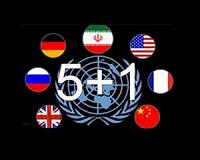
In July, Iran and the five permanent UN Security Council members — Britain, China, France, Russia and the United States — plus Germany reached a landmark accord on curb Tehran's nuclear programme in return for a lifting of sanctions.
The Joint Commission oversees implementation of the accord.
Iran closes capital's schools due to air pollution
Tehran (AFP) Dec 19, 2015 –
Iran is to close schools for two days in Tehran, state media said Saturday, following air pollution three times the acceptable level that has blanketed the city in smog.
Air quality in Iran's capital was the worst in at least nine months this week, media said, and floating particles from car emissions were at "seven times the standard level".
Traffic will also be limited in the centre of town and some factories will be closed, according to reports.
The Air Quality Index on Monday showed an average reading of 162 — a "red status" warning that the air is unhealthy for everyone, according to World Health Organization standards.
A normal healthy level is between zero and 50.
Authorities advised the elderly, the sick and children to stay indoors and emergency services were on standby.
Peak pollution hit 180 in some areas of Tehran, where poor air is worsened due to high altitudes — between 1,100 and 1,700 metres (3,600-5,600 feet) above sea level — in a basin surrounded by mountains.
Visibility was low as a grey fog blanketed the capital, a megacity of an estimated 14 million people.
The snow-capped mountains of the Alborz range were invisible from the city centre.
Exhaust fumes from five million cars make up 80 percent of Tehran's pollution, which increases in winter as emissions fail to rise above cold air.
Iran's government has tried to cut pollution by supplying lower emission fuel in large cities, Masoumeh Ebtekar, a vice president responsible for environmental protection, said this week.
In 2012, pollution contributed to the premature deaths of 4,500 people in Tehran and about 80,000 in the country, according to the health ministry.
