
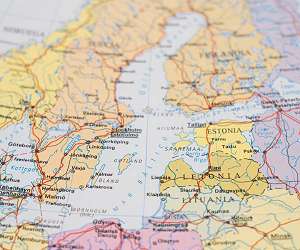
A heat wave searing the Baltic region has warmed the usually frigid waters of the Baltic Sea to temperatures usually seen in more tropical climes, experts said Friday.
"The highest sea temperature recorded recently along the Polish Baltic coast was 24 degrees Celsius (75.2 Fahrenheit) at the Pucka Bay," Alicja Kanska, a meteorologist with the Polish meteorological and hydrological institute in the Polish Baltic port city of Gdynia told AFP.
"The water is definitely warmer than usual — it's rare that Baltic water temperatures rise to this level," she said, adding that summertime temperatures in Baltic waters average 20 degrees Celsius.
"Rarely have we had such sustained tropical air masses bringing average daytime temperatures of 33-34 degrees Celsius over the region of the Polish Baltic for a week as is now the case," Gdynia meteorologist Marcin Czeczatka told AFP Friday.
This week's highs are still shy of the record 36.3 degrees recorded in 1992 along Poland's Baltic coast, he said.
Polish beach lovers will be disappointed at the weekend, says Czeczatka, as a cold front is expected to bring rain to the Polish coast and see temperatures plunge to around 20 degrees Celsius for several days before returning to average Polish summertime daytime temperatures of around 20 degrees.
Some 700 kilometres (400 miles) to the north of Gdynia, Baltic waters in Estonia have also warmed to a rare temperatures.
"The Baltic Sea temperature is well above the average and today on Friday at Narva-Joesuu beach near the Estonian-Russian border it is as high as 26 degrees Celsius," Ivo Saaremae from Estonian meteorological and hydrological institute told AFP.
earlier related report
Group warns of water shortages by 2050
Washington (UPI) Jul 22, 2010 –
Global warming will cause a risk of water shortages in two-thirds of U.S. counties by 2050, an environmental group warns.
The Natural Resources Defense Council says more than a thousand counties in 14 states will probably see limitations on water availability and use as demand exceeds supply in mid-century, USA Today reported Tuesday.
The high-risk areas include parts of Arizona, Arkansas, California, Colorado, Florida, Idaho, Kansas, Mississippi, Montana, Nebraska, Nevada, New Mexico, Oklahoma and Texas, the NRDC says.
Decreases in precipitation based on 16 leading climate models and increases in water demand based on current growth trends led to the risk projections, the group says.
"This analysis shows climate change will take a serious toll on water supplies throughout the country in the coming decades," Dan Lashof, director of NRDC's Climate Center, said.
Most of the counties at extreme risk for water shortages are in the Great Plains and Southwest United States, but none of the 48 states analyzed are unaffected, the group says.
Share This Article With Planet Earth
