
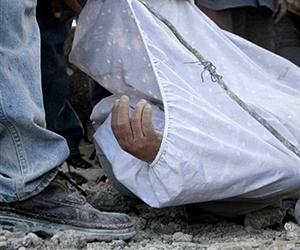
Haiti's carnival celebrations were replaced by mourning on Tuesday, with the annual explosion of pulsing music and colorful parades cancelled after last month's devastating quake.
Usually the culmination of weeks of parties, Haiti's carnival day celebration typically brings thousands of revelers into the streets on the Tuesday before Lent.
But this year, Haitians said they were in no mood to party after the January 12 quake that killed more than 200,000 people.
"Everybody's sad," said Nanotte Verly, a 48-year-old mother of nine who lost her home in the quake and sells jewelry and wooden plaques praising Jesus on a roadside. "All the buildings are still collapsed on the ground."
Haiti's ruined capital stood in stark contrast to carnival in previous years.
There was activity in the streets, including the usual roadside vendors, but none of the parades of thousands writhing and strutting behind huge trucks with giant speakers, blaring music made especially for the celebration each year.
The traditional center of carnival celebrations, the Champ de Mars park across from the collapsed National Palace, is now a sprawling homeless camp housing some 16,000 people in a maze of tents made of scrap wood and sheets.
On Tuesday, women bathed with buckets on the side of the street and children ran through the camp's alleyways.
Lemaire Sicard, who is 37 and lives at the site, spoke of how the Champ de Mars would be filled with revelers and partying in years past.
"But now there's nothing," he said. "It's not possible. There are people from this area who were hurt — deaths also."
Kowalskes Louis, 28, was building shelter for himself and 10 other family members at the Champ de Mars, using pieces of wood to construct a frame that he planned to cover with rusty sheets of aluminum stacked next to him.
"It's difficult to find material," he said, adding he had taken some from his collapsed home.
More than a million people are still homeless following the January 12 earthquake in what was already the poorest country in the Americas before the disaster.
The homeless now live in squalid camps like the Champ de Mars in and around the capital, and though aid workers are rushing to distribute tarpaulins, only about 272,000 people have been reached with shelter materials so far, according to the United Nations.
There were occasional tarps and tents in the Champ de Mars on Tuesday, but most shelters were built with bedsheets, wood and other scrap materials.
Shelter made of material that is not water-resistant will become a major problem when the heavy rain season begins around May, aid officials warn. The rains also threaten to worsen deteriorating conditions at the camps.
Marie Agar Claude, 25, and six other family members were living inside a pyramid frame made from wood at the Champ de Mars.
It was covered with a UNICEF tarp, but Claude claimed she had to buy it for 200 Haitian dollars (25 dollars) on the black market.
"Haitians sell them," she said.
Inside the makeshift tent, Claude's father lay on a wooden pallet set atop concrete blocks and said people in the camp were not getting the aid that they needed.
Sicard said some were also charging hefty amounts to build wooden frames for the homeless who could not do it themselves.
"There are people who are profiting from the situation," he said.
Share This Article With Planet Earth
