
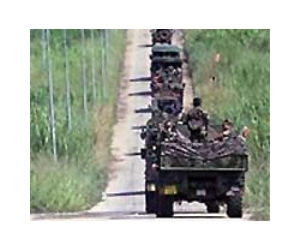
Guinean soldiers have withdrawn from an Ivorian village they took over late last month in a border dispute dating back to the days of independence, an Ivorian security source said Saturday.
The source told AFP that they left the village of Kpeaba, which lies close to the town of Sipilou, around 15 kilometres (nine miles) from Ivory Coast's border with Guinea, on Thursday.
On Wednesday, both countries spoke of the issue, with the Ivorian government calling for calm and "the withdrawal of troops from the village" and the Guinean side vowing it would not allow any territorial dispute with its neighbour.
According to the Ivorian government, the soldiers took control of Kpeaba on January 25, provoking "incidents" between the two sides.
An Ivorian military source said the armed soldiers deposed the village chief and flew the Guinean flag in the decades-old dispute.
The dispute dates back to when the two former French colonies gained independence: Guinea in 1958 and the Ivory Coast in 1960.
The western region of Ivory Coast is the most unstable in the country.
Malawi gets 1,000 new HIV infections a week: official
Blantyre, Malawi (AFP) Feb 23, 2013 –
AIDS-ravaged Malawi, where over a tenth of the population is HIV positive, records on average 1,000 new cases weekly, a top government official said Saturday.
"Its a great concern to us that despite efforts by government to prevent HIV and AIDS, the country continues to register about 1,000 new cases of HIV every week," Edith Mkawa, a senior health ministry secretary in charge of nutrition, HIV and AIDS, told reporters.
"The number is very high. It is frustrating the fight against HIV pandemic," she said.
Mkawa said Malawi, where 11.8 percent of the 14 million citizens are HIV positive, "needs urgent action to attain zero new HIV infections."
People "are not changing their behaviours. These behaviours are fuelling the spread of HIV at an alarming rate."
The southern African nation has 350,000 people receiving free anti-retroviral drugs, up from 5,000 in 2004.
