
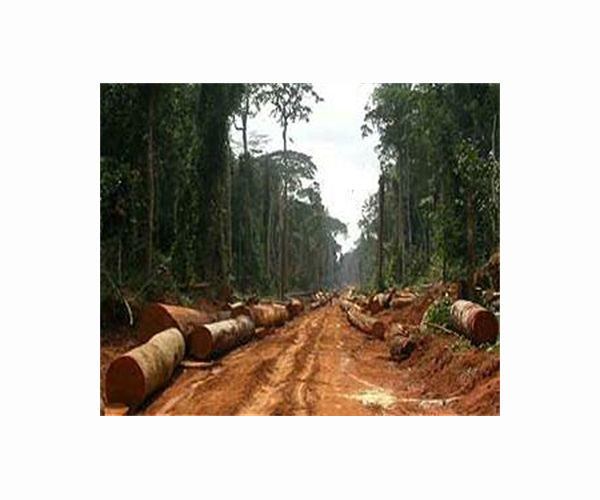
Loggers in Guinea have been authorised to resume work after a year-long government ban to slow felling in the biodiverse country where deforestation is widespread.
Tree felling will be restricted to local use and the export of timber remain banned, the council of ministers said in a statement issued Thursday night.
The Environment Ministry had banned both the cutting and transport of wood throughout the country on June 14, 2021.
The decision — taken by the former civilian government, which has since been overthrown by a military junta — came after clandestine logging operations caused a stir in the central Mamou and Faranah regions.
Guinea "is one of the countries with the fastest deforestation rates in the world", the ministry said in 2019.
Forest cover had fallen to less than 700,000 hectares by the end of the 2010s, from 14 million hectares in the 1960s.
The council of ministers decided to "lift the ban on wood cutting for one year to meet local wood needs", its statement said.
It will however reduce logging licences and quotas, as well as regulate the number of chainsaws in use.
Considerable quantities of timber are felled illegally in Guinea and elsewhere in the region and exported to Asian markets.
In addition to the timber trade, wood is also cut for salt extraction and fish smoking.
Other factors contributing to deforestation include expanding cocoa, coffee and palm oil crops, slash-and-burn agriculture practised by an increasingly large population, demographic pressure from a population that has doubled in forty years, and mining activities.
Specialists say it is harming biodiversity and impacting local livelihoods with soil erosion and acidification.
The ruling junta says it will promote the use of metal frames, rather than wood, in building construction as well as the use of gas instead of coal and firewood.
