
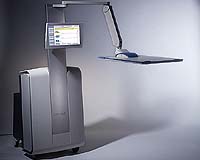
A system for tracking the movement of the prostate during radiation therapy has gone into service at the Seattle Cancer Care Alliance. Featuring tiny GPS-type positioning transponders implanted inside the prostate, the technology tracks any movement of the prostate in real time and alerts technicians if the organ moves beyond pre-determined parameters so they can adjust the external beam of radiation.
The advantage of using the system is that the radiation dose stays on target and less of it reaches surrounding healthy tissue, which reduces potential side effects. There is also the potential for using higher doses of radiation to attack tumors precisely while reducing the amount of time patients must undergo the procedure, according to Ken Russell, M.D., radiation oncology clinical chief at the SCCA and the University of Washington.
"The purpose of radiation oncology is to accurately deliver the treatment to the cancer and avoid as much as possible the normal nearby organs," said Russell, who is also vice chairman of the UW Department of Radiation Oncology. "The prostate is a moving target."
Calypso Medical Technologies of Seattle manufactures the system, which is called the Calypso 4D Localization System. It consists of five components that work together: electromagnetic transponders the size of a grain of rice, a console the size of a large rolling suitcase, an electromagnetic array to receive the transponder signals, a tracking workstation and infrared cameras installed in the treatment room.
Three transponders are implanted during a 15-minute outpatient procedure at the UW urology clinic. The process is similar to a hollow-needle biopsy. The radiation treatment is done at the SCCA outpatient clinic on the Fred Hutchinson Cancer Research Center campus at South Lake Union.
