
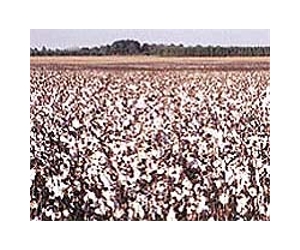
The contamination of wild cotton in Mexico with genetically modified cotton poses a risk to biodiversity, agricultural experts say.
Scientists at the National Autonomous University of Mexico say seed dispersal can result in gene transference between cotton populations event thousands of miles apart, Inter Press Service reported Thursday.
Varieties of Mexican wild cotton that are contaminated with transgenes — genes from one species introduced artificially into another — can undergo rapid evolution with unpredictable consequences, the researchers said.
"The genetic diversity of wild populations is very high, and that of cultivated cotton is very low. Gene flow can reduce the differentiation between populations, but we have no idea what impact that might have," Ana Wegier, the head of the research project for UNAM, said.
"What we are seeing is the effect on biodiversity of 15 years of growing transgenic crops under permits," Weiger said.
In 1996, to boost cultivation in the face of the collapse of international prices for cotton, the Mexican government authorized experimental planting of genetically modified cotton.
Transgenic cotton is now grown on a commercial scale on an area of more than 250,000 acres with harvests of 500,000 tons.
