
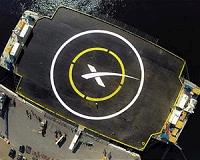
On the eve of the Winter Solstice SpaceX engineers achieved a historic first achievement. The first stage of a Falcon 9 launch vehicle, after boosting the upper stage to a planned separation point, maneuvered back to a stable vertical landing at Cape Canaveral. This success was certainly a "sweet" one, because two previous attempts at landing on a seagoing platform had failed.
This event is being lauded as a major step toward realizing the goal of a reusable commercial space launcher. While it is true that, a month earlier, Blue Origin had succeeded in bringing a liquid-hydrogen/liquid oxygen New Shepard vehicle back from a suborbital flight, SpaceX's recovery was the first known landing for an unmanned orbital launch vehicle first stage.
There is no doubt that this was an engineering feat that will enable at least partial reusability of space launch vehicles. However, there is considerable doubt that first-stage return-to-launch-site maneuvers will lead to lower-cost launches. Consider the required sequence of events needed to achieve this.
Upon separation from the upper stage, the first stage is left hundreds of mile downrange with a high Mach number velocity vector heading away from the launch site.
A purely rocket-powered stage must carry sufficient propellants to reverse course and sustain flight all the way back to the launch site. Simulations have shown that a considerable amount of propellant is required to achieve this maneuver.
In fact, some case studies indicate that the extra propellant load plus added structure and equipment for return could reduce the launch vehicle's payload mass performance by as much as 50%, when compared to a fully expendable launch vehicle of the same class.
This means a 50% reduction in revenue for the launch services provider. When you add up all of the cost of reusability plus performance reduction, it is not clear that a cost advantage exists.
On the other hand, a down-range landing site for the first stage would greatly reduce the payload penalty, because the extra propellants load would be minimal. In fact, SpaceX is trying to accomplish just that.
The problem seems to be one of terminal approach stability and controllability relative to the floating platform. Improved first stage control authority and further platform stabilization may improve the chances of at-sea landing successes.
