
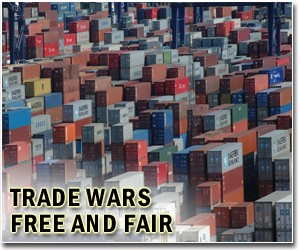
The European Union is drafting a law in response to Chinese protectionism in public markets, EU trade commissioner Karel De Gucht told the German Focus magazine in an interview to appear Monday.
"My colleague, internal market commissioner Michel Barnier, and I are preparing a draft law on public markets so that we can respond if the Chinese continue to deny European companies access to certain segments of the market," he said.
The law would also make it possible for the European Commission to close access to public markets to Chinese companies in return. The draft should be ready by March, said Focus.
De Gucht criticised China for what he called "nationalist commercial practices", "massive subsidies" and "monopolistic access to raw materials".
"All of this makes it very difficult to do business there," the commissioner said.
Negotiations for China's adhesion to a World Trade Organisation government procurement agreement have stalled on Beijing's refusal to allow EU firms the same access to public markets as that enjoyed by Chinese companies in Europe.
The WTO's appeal organ is due to make a ruling later Monday on a challenge by China, which was found guilty by the body last year for restricting exports of raw materials crucial for European industry.
China government debt 'controllable': Wen
Beijing (AFP) Jan 30, 2012 –
Chinese Premier Wen Jiabao said government debt was "overall safe and controllable" and key projects would continue to receive funding to avoid "systemic risks", state media said Monday.
An explosion in lending in recent years has fuelled concerns that local governments, which borrowed heavily to build roads, bridges and luxury apartment buildings, will default as the world's second largest economy slows.
China's audit office said earlier this month that it had uncovered 530.9 billion yuan ($84 billion) in misused funds involving local government debts.
That compares with an estimated 10.7 trillion yuan in local government debt at the end of 2010 — or about one quarter of China's 2010 gross domestic product — but analysts believe the real figure could be much higher.
"Currently our government debt is overall safe and controllable," Wen told a government financial work conference earlier this month, according to the People's Daily, the mouthpiece of the ruling Communist Party.
"We are taking the issue of managing local government debt very seriously. Through clean-ups and regulation, the trend of expanding investment vehicles has been effectively contained."
Local governments, which are not allowed to borrow directly from banks, have set up thousands of investment vehicles to finance infrastructure and other projects.
But there are concerns that Beijing's efforts to contain inflation and property prices by restricting lending and hiking interest rates could trigger widespread defaults and destabilise the economic giant.
Policymakers have started to ease lending restrictions but have indicated they will move slowly to open the credit valves to avoid reigniting inflation, which hit a more than three year high of 6.5 percent last July.
"We need to actively solve the financial risks but also ensure financing for major projects under construction," said Wen.
"We shouldn't simply slam on the brakes."
