
The European Union voiced concern Tuesday at Iran's announcement that it would resume uranium enrichment at an underground plant, warning it is getting harder to preserve the 2015 nuclear deal.
An EU spokeswoman said it was becoming "increasingly difficult" to save the accord, which was abandoned by the US in May last year and which Iran has undercut with a series of recent moves to step up its nuclear activities.
After the US ditched the deal, it reimposed crippling sanctions, prompting Iran to begin suspending its own commitments.
President Hassan Rouhani said Tuesday that Iran would restart enrichment at the Fordow plant south of Tehran.
"We are concerned by President Rouhani's announcement today to further reduce Iran's commitments under the JCPOA," EU spokeswoman Maja Kocijancic told reporters, using an abbreviation for the deal's official title, the Joint Comprehensive Plan of Action.
"We urge Iran to reverse all activities that are inconsistent with its commitments under the JCPOA and to refrain from any further measures that would undermine the preservation and full implementation of the nuclear deal."
The three European parties to the accord — France, Britain and Germany — along with the EU diplomatic service have tried to keep Iran in the deal despite the US sanctions.
But, to Tehran's mounting frustration, European efforts to create a way for foreign firms to keep trading with Iran have so far failed to have any significant impact.
Kocijancic said the EU remained committed to the deal but warned this depended on "full compliance" from Iran.
"High Representative Federica Mogherini said herself recently it is becoming increasingly difficult to preserve the JCPOA," Kocijancic warned.
– Iranian pressure –
EU foreign ministers will discuss the nuclear crisis along with the broader tensions in the Gulf at a regular meeting in Brussels on Monday, though no decision or formal statement on the matter is expected.
A key factor for EU countries is the assessment of Iran's latest actions by the UN's International Atomic Energy Agency (IAEA), which oversees Tehran's nuclear activities.
Rouhani's statement did not make it clear exactly what process would resume at Fordow on Wednesday, and the bloc will look to the IAEA for clarification.
Iran has sought to ratchet up the pressure on the European parties to the deal to do more to help its economy, which is struggling with the US sanctions, and officials in Brussels see this week's announcements as part of this pattern.
"They haven't really changed their approach. They are provocative but the measures they have taken up to now are reversible," one EU official said.
"But the longer they push it, this reversibility is going to disappear," the official warned.
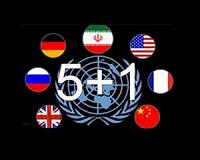
The JCPOA, agreed in 2015 between Iran, the three European powers, Russia, China and the US, includes a mechanism for dealing with breaches, but so far this has not been used.
US accuses Iran of 'nuclear extortion' with enrichment step
Washington (AFP) Nov 5, 2019 –
The United States accused Iran on Tuesday of "nuclear extortion" and vowed no let-up in pressure after the clerical regime said it would resume uranium enrichment at the key Fordow plant.
"Iran has no credible reason to expand its uranium enrichment program, at the Fordow facility or elsewhere, other than a clear attempt at nuclear extortion that will only deepen its political and economic isolation," a State Department spokesperson said.
"We will continue to impose maximum pressure on the regime until it abandons its destabilizing behavior, including proliferation-sensitive work."
President Hassan Rouhani said Iran would resume enrichment at the plant near the Shiite holy city of Qom that was suspended under a 2015 nuclear accord with the United States and five other powers.
It was the latest action by Iran to seek tangible benefits from the deal, from which the United States withdrew as President Donald Trump imposed sweeping sanctions aimed at reducing Tehran's regional role.
The State Department said it would await verification by the International Atomic Energy Agency, the UN nuclear watchdog which stepped up inspection under the 2015 accord.
