
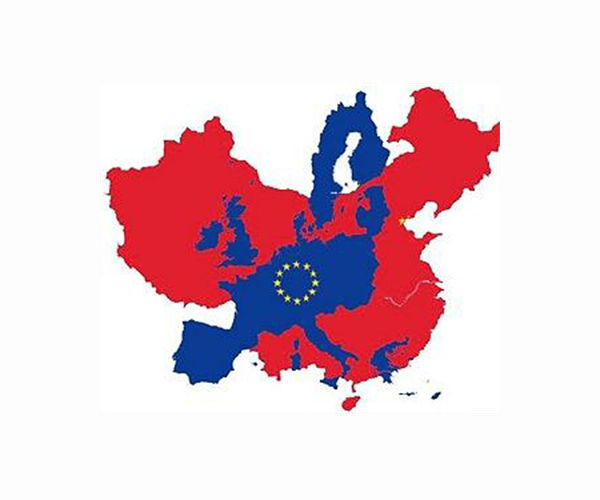
A long-negotiated investment agreement between EU and China was more of an "intention" than a deal and it could be a long time before it became a reality, an EU commissioner said on Thursday.
"I will be very honest with you, this deal was not exactly a deal," Thierry Breton, France's representative to the EU executive told the Atlantic Council think tank in Washington.
"At the end of the day… it was an intention… not more, not less," said the former French finance minister, who is the EU's industry commissioner.
"So I think that the time when the intention will transform into reality may be pretty long," he added.
He also noted that the deal, sealed to the surprise of many during the last hours of Germany's EU presidency in December, came during an "interim time in the US" between the Trump and Biden presidencies.
The investment pact was announced shortly before the new US President Joe Biden took office and started unwinding many of his predecessor's "America First" policies.
But the deal is now far from certain.
Breton spoke after the EU commission admitted that it was forced to suspend efforts to ratify the pact after a volley of tit-for-tat sanctions between Beijing and Brussels.
The dispute escalated suddenly in March when the EU imposed sanctions on four party and Xinjiang regional officials because of their actions against the Uyghur Muslim minority.
Beijing swiftly hit back with punitive measures on European politicians and academics — including key MEPs who would need to back the pact to get it ratified.
Joerg Wuttke, head of the EU chamber of commerce in Beijing, told reporters on Friday: "The Comprehensive Agreement on Investment is, I think, not going to take place for a long time."
He noted that it is easier to impose than lift sanctions, and said there appears to be little political space for leaders on both sides to give way.
"It's a pity, we like the agreement," he said.
Companies also face a politically-charged environment in China, with Swedish clothing giant H&M drawing backlash in March over an earlier decision not to source cotton from the northwestern Xinjiang region — which faces accusations of forced labour and rights violations.
"We feel like we're between a rock and a hard place, and it's difficult for us to manoeuvre in this situation," said Wuttke.
But EU Chamber representatives added Friday that political tensions globally have been coupled with a "charm offensive" in China, noting they still receive support from officials.
The EU commission handles trade policy for the bloc's 27 member states and the pact with China was seven years in the making.
China's exports top forecasts, imports growth best in 10 years
Beijing (AFP) May 7, 2021 –
Chinese exports grew at a forecast-busting rate last month, data showed Friday, while imports surged at their strongest in a decade as the global economy bounces back from the pandemic crisis and domestic consumption recovers.
With vaccines being rolled out around the world — particularly in the key US market — and economically painful lockdowns being eased, demand for China's goods has picked up this year, having fallen off a cliff in 2020.
Shipments abroad soared 32.3 percent on-year in April — smashing the 24.1 percent expected in a Bloomberg survey — thanks to a sharp rise in demand for electronics and medical masks.
The impressive figures are attributable to last year's very low base of comparison owing to the pandemic.
But they still show that the global recovery is underway, led by the United States where the economy is scorching along on the back of vast government spending and central bank largesse.
"The stimulus in developed economies, especially in the US, sustained their demand for Chinese manufactured products," Nomura chief China economist Lu Ting told AFP.
He added that the worsening Covid-19 outbreak in emerging markets including India also supported Chinese exports, in part because they then rely on China to supply protective gear.
At home, with the coronavirus largely brought under control, China's vast army of consumers are getting back to their daily lives after last year's travails, sending imports up 43.1 percent, slightly below forecast but the best rise since early 2011.
The jump was also fired by a surge in commodity prices — iron ore is at a record and copper close to one — electronics and integrated circuits, which are then mostly turned around before being shipped abroad.
The strong figures will provide cheer to China's leaders who are looking to recalibrate the economy from state investment and exports-led growth to one more reliant on domestic consumer demand.
But Lu warned of the surging prices of imported commodities noting it "will both trigger higher inflation and depress domestic demand".
Rajiv Biswas, Asia Pacific chief economist at IHS Markit, added that factors such as rising container freight shipping costs, on top of global semiconductor shortages, had "added to China's import bill".
In April, China's trade surplus with the US — a key point of contention during their bruising trade war — rose 23 percent to $28.1 billion.
