
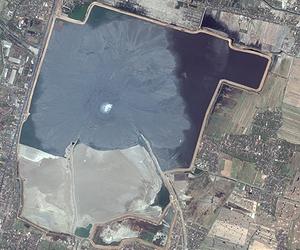
From monitoring vanishing glaciers to the accounting of forestry, hydropower and mining assets as steps to boost sustainable development here on Earth, the power of satellite remote sensing plays an increasingly vital role.
These topics and others are highlighted in the Fall 2010 issue of the quarterly print and online publication – Imaging Notes magazine.
"Secure World Foundation in 2009 established a partnership with Imaging Notes magazine," said Dr. Ray Williamson, SWF's Executive Director.
"A key focus of our organization centers on strengthening or developing the policies and institutions that improve the utility of space technologies in support of human and environmental security needs. We are pleased to be a partner with Imaging Notes to help support our objectives."
Community action
The just-issued publication includes articles centered on security and intelligence, sustainable development using Earth observations and the continuing growth of Community Remote Sensing, or CRS for short.
Imaging Notes and Secure World Foundation have taken a lead role in gauging the expanding use of CRS – a new field that combines remote sensing with citizen science, social networks, and crowd-sourcing to enhance the data obtained from traditional sources. It includes the collection, calibration, analysis, communication, or application of remotely sensed information by these community means.
Other Imaging Notes articles delve into satellite camera systems that feed imagery to such users as Google Earth and the Weather Channel and information sharing incongruities in the intelligence community.
Paradox of choice
Richard Heimann, a researcher for the ITT Corporation notes that during the Haiti earthquake, "the paradox of choice and the need for building a conceptual framework for the data paradox became apparent. The dynamic nature of the Haiti earthquake and similar events poses particular obstacles, and highlights the larger deficiencies of information sharing. The event often outpaced analysis and sometimes even search and discovery," he writes.
Asks Myrna James Yoo, publisher of Imaging Notes: "Too much data…dare I say it?" She notes that an issue rising to the surface in the past few years is the question of having too much data – so much so that processing it and using it are major challenges.
Share This Article With Planet Earth
