
The Earth's crust beneath its oceans could store many centuries' worth of industrial CO2, keeping it out of a warming atmosphere, British researchers say.
With dramatically increasing concentrations of CO2 in the atmosphere from the burning of fossil fuels such as coal, oil and natural gas causing climate change and ocean acidification, a storage solution for the greenhouse gas has been a research priority in recent years.
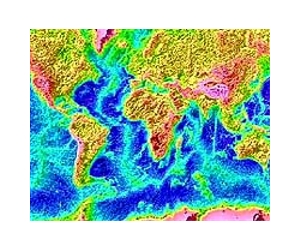
Doctoral student Chiara Marieni at the National Oceanography Center at the University of Southampton has been studying the physical properties of CO2 to develop global maps of the ocean floor to estimate where it can safely be stored.
At high pressures and low temperatures such as those in the deep oceans, CO2 becomes a liquid denser than seawater.
By estimating temperatures in the upper ocean crust, Marieni and her colleagues identified regions where it may be possible to stably store large volumes of CO2 in the basalts, the university reported Wednesday.
These fractured rocks have high proportions of open space, and over time may also react with the CO2 to turn it into solid calcium carbonate, permanently preventing its release into the oceans or atmosphere, the researchers said.
"We have found regions that have the potential to store decades to hundreds of years of industrial carbon dioxide emissions, although the largest regions are far off shore," Marieni said.
Five potential regions were identified, off the shores of Australia, Japan, Siberia, South Africa and Bermuda, ranging in size from 200,000 square miles to almost 1.5 million square miles.
"However, further work is needed in these regions to accurately measure local sediment conditions and sample the basalt beneath before this potential can be confirmed," Marieni said.
