
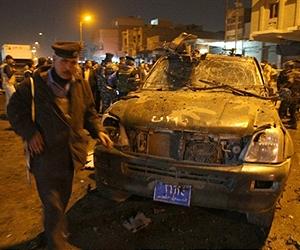
Dozens were killed in weekend violence across Iraq, officials said Sunday, just days ahead of the start of the holy Muslim fasting month of Ramadan when insurgents typically step up their attacks.
The unrest has fuelled concerns of a deterioration in security here — more than 100 people have died so far this month — amid a massive pullout of American forces and a five-month-long political impasse, although US officers insist Iraqi soldiers and police are up to the task.
In the southern port city of Basra, the death toll rose to 43 from a spate of blasts Saturday evening which officials said were caused by bombs and not a power generator short circuit as first believed.
"We received 43 corpses, and 185 people have been wounded," said Dr. Riyadh Abdelamir, director of Basra province's health department, adding that women and children were among the wounded.
Ali al-Maliki, the head of the Basra provincial council's security committee, said the deaths were caused by coordinated attacks — a double car bombing and a third roadside bomb which caused a large fire in crowded Ashaar market in the centre of Basra, Iraq's third largest city.
"The attack that hit Basra yesterday evening was the result of terrorist action," said Maliki, who added that the explosions occurred between 7:00 pm and 7:30 pm.
The city's police command had late Saturday attributed the explosion to the short-circuit of a communal power generator.
On Sunday morning, a suicide bomber detonated a car packed with explosives at a petrol station in the western city of Ramadi, killing six people, medical and security officials said.
The attack appeared to be targeting a nearby post office where local residents were collecting social security payments. Two women and a child were among those killed, while 29 others were wounded.
Ramadi is the capital of Anbar, a Sunni Arab province which was the site of some of the worst violence during the bloody insurgency that blighted Iraq following the US-led invasion in 2003. The level of attacks has declined in recent years but security in the province remains precarious.
Also in Anbar, masked gunmen robbed a currency exchange owner and set off their empty explosives-laden car when police tracked them down, killing two people, officials and the victim said.
On Saturday, seven policemen were among eight people killed near Baghdad and in north Iraq, including four who died in a fierce gunfight in a Sunni neighbourhood of the capital.
The weekend's violence comes ahead of Ramadan, which is expected to begin on Wednesday or Thursday. In previous years the holy month has coincided with a rise in insurgent activity.
The spate of unrest also comes as US forces reduce troop levels ahead of an August 31 declaration of an end to combat operations here, by which time there will be 50,000 American soldiers in Iraq from around 64,000 currently.
The drawdown advanced further on Saturday when US forces conducted a departure ceremony for the 4th Stryker Brigade, 2nd Infantry Division, the last combat brigade to leave Iraq.
Politicians in Iraq are meanwhile grappling with a stalemate over the formation of a new government following a March 7 general election, with no new administration expected until after the conclusion of Ramadan in mid-September.
earlier related report
Saddam deputy says US 'leaving Iraq to the wolves': report
London (AFP) Aug 6, 2010 –
Saddam Hussein's former deputy, Tareq Aziz, on Friday accused the US president of "leaving Iraq to the wolves" by pressing ahead with a withdrawal of combat troops despite a recent upsurge in violence.
In an interview with Britain's Guardian newspaper, the former Iraqi deputy prime minister said the United States should stay in the country to correct the mistakes it had made since the 2003 invasion.
"We are all victims of America and Britain," he told the daily paper from his prison cell in Baghdad, in his first interview since he was captured shortly after the fall of Baghdad more than seven years ago.
"They killed our country in many ways. When you make a mistake you need to correct a mistake, not leave Iraq to its death."
His comments came after Obama confirmed this week that the US would end its combat mission in Iraq as scheduled on August 31, despite figures showing July had been the deadliest month in the country for more than two years.
Aziz, the face of ex-Iraqi president Saddam Hussein's regime on the world stage for many years, went on to say Iraq was now in a worse state than before the US-led invasion.
"For 30 years Saddam built Iraq and now it is destroyed. There are more sick than before, more hungry," said Aziz.
"The people don't have services. People are being killed every day in the tens, if not hundreds.
"I was encouraged when [US President Barack Obama] was elected president, because I thought he was going to correct some of the mistakes of Bush. But Obama is a hypocrite. He is leaving Iraq to the wolves."
Figures released by the Baghdad government Saturday showed that 535 people died in July, including 396 civilians, 89 policemen and 50 soldiers.
That figure was the highest for a single month since May 2008 when 563 people were killed in violence.
Aziz also launched a staunch defence of Saddam Hussein, insisting the West's view of him was wrong.
"Saddam did not lie," he said. "He did not change the facts. He is someone for whom I have a great respect and love. He is a man who history will show served his country.
"Saddam built the country and served the people. I cannot accept your [the West's] judgment that he was wrong."
Aziz, 73, turned himself in to US forces in April 2003 and is one of Saddam's few surviving top cohorts.
He was appointed deputy premier in 1991, having previously served as foreign minister. In 2009, he was jailed for 15 years for murder and given a seven-year term in August 2009 for his role in expelling Kurds from Iraq's north.
Aziz's family has repeatedly called for his release on health grounds.
earlier related report
14 killed in south Iraq generator explosion
Basra, Iraq (AFP) Aug 7, 2010 –
Fourteen people were killed in an apparent electricity generator explosion in Iraq's southern port city of Basra on Saturday, officials said.
The blast occurred at around 7:15 pm (1615 GMT) in the crowded Ashaar market in the centre of the city, 450 kilometres (280 miles) south of Baghdad, and injured another 110 people, a medical official in the emergency services department of the city's Sadr hospital said.
"The explosion was caused by an electricity generator short-circuiting," said Colonel Karim al-Zaidi, a spokesman for Basra's police command.
Private communal generators are common in Iraq, where demand for electricity dramatically outstrips supply, forcing the use of unpopular rationing.
The electricity shortfall triggered protests across the country over the summer, including in Basra, that eventually led to the resignation in June of the electricity minister.
Share This Article With Planet Earth
