
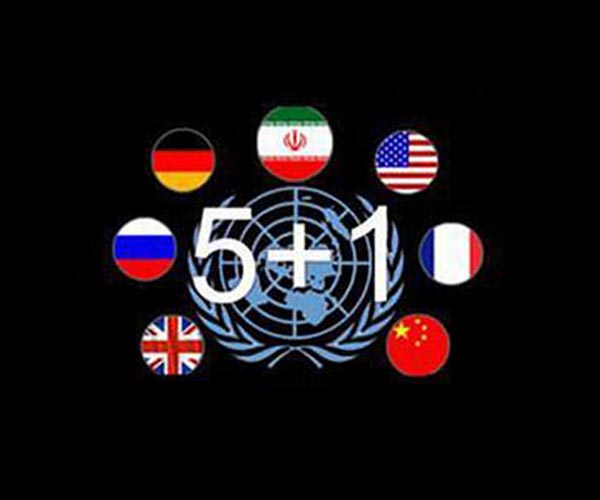
Britain, France and Germany warned Saturday against moves to "exploit" the Iran nuclear negotiations — a tacit warning to Russia which is accused of delaying an agreement to gain leverage in its invasion of Ukraine.
Negotiators in Vienna said Friday they had halted talks despite having almost sealed a deal to revive the 2015 Joint Comprehensive Plan of Action (JCPOA) to contain Iran's nuclear activities.
The setback came after Russia said it was demanding guarantees that the Western sanctions imposed on its economy following its invasion of Ukraine would not affect its trade with Iran.
"Nobody should seek to exploit JCPOA negotiations to obtain assurances that are separate to the JCPOA," said a statement on Saturday from the spokespersons for the British, French and German foreign ministries — the three European parties to the negotiations.
"This risks the collapse of the deal, depriving the Iranian people of sanctions lifting and the international community of the assurance needed on Iran's nuclear programme," they added.
The current round of negotiations started in late November in the Austrian capital Vienna between Britain, China, France, Germany, Iran and Russia, with the US taking part indirectly.
After the talks halted on Friday, the United States put the ball in Iran and Russia's court.
"We are confident that we can achieve mutual return to compliance… (if) those decisions are made in places like Tehran and Moscow," State Department spokesman Ned Price told reporters.
Russia's ambassador to the UN in Vienna, Mikhail Ulyanov, told reporters outside the talks venue that he rejected "attempts to put all the blame on the Russian Federation", insisting that other parties to the talks "need additional time".
The JCPOA aimed to ensure Iran would not be able to develop a nuclear weapon, which it has always denied seeking.
It unravelled when former US President Donald Trump withdrew from the deal in 2018.
Trump reimposed sanctions on Iran, prompting it to start disregarding the curbs laid down in the deal on its nuclear activity.
"A fair and comprehensive deal is on the table ready for conclusion," the European statement said on Saturday.
"It is our understanding that Iran and the US have worked hard to resolve final bilateral issues and so we are ready to conclude this deal now."
Russian demands threaten to derail Iran nuclear talks
Vienna (AFP) March 11, 2022 –
Last-minute Russian demands related to the Ukraine conflict threatened to derail the near-complete process of reviving the Iran nuclear deal Friday, as the EU announced negotiations would be paused.
The EU's foreign policy chief Josep Borrell tweeted that the pause was "due to external factors," despite the fact that "a final text is essentially ready and on the table".
The current round of negotiations started in late November in the Austrian capital Vienna between Britain, China, France, Germany, Iran and Russia, with the US taking part indirectly.
They had progressed most of the way toward their aim — the revival of the 2015 Joint Comprehensive Plan of Action (JCPOA), which began unravelling when former US President Donald Trump withdrew from the deal in 2018.
The EU diplomat who has been chairing the talks, Enrique Mora, told reporters that delegations had got to the point of "negotiating footnotes".
He praised in particular the United States and Iran for their "very constructive, very positive approach", adding that he hoped to see the talks resume "very, very soon".
However, last week Russia said it was demanding guarantees that the Western sanctions imposed on its economy following its invasion of Ukraine would not affect its trade with Iran.
As with the original JCPOA in 2015, Moscow had been expected to play a role in the implementation of any fresh deal, for example by receiving shipments of enriched uranium from Iran.
"The Ukraine conflict has now entered the Vienna talks in a very real way," Eric Brewer of the Nuclear Threat Initiative told AFP.
He said the "blanket guarantee" demanded by Moscow "has thrown a wrench into this process at the last minute that really threatens to upend talks and prevent the restoration of the JCPOA".
The United States on Friday put the ball in Iran and Russia's court after the EU announcement.
"We are confident that we can achieve mutual return to compliance… (if) those decisions are made in places like Tehran and Moscow," State Department spokesman Ned Price told reporters.
– Energy 'weapon' –
One EU source close to the talks said that Russia had at first made "reasonable" requests related to its civilian nuclear activities in Iran, but that they were then broadened "outside the scope of the JCPOA".
Another diplomat from one of the European parties to deal said that "if the Russian block is confirmed to be definitive, we will be obliged to look at other options," adding that Moscow could not be allowed to "take the deal hostage".
The head of the British delegation Stephanie al-Qaq tweeted that she was "deeply disappointed" at the pause in the talks.
The last-minute hitch must be resolved in the "next few days", she warned, or else the agreement was "likely to unravel".
After he withdrew from the JCPOA, Trump went on to reimpose sanctions on Iran, including on its vital oil sector.
That prompted Iran to start disregarding the curbs laid down in the deal on its nuclear activity.
The JCPOA aimed to ensure Iran would not be able to develop a nuclear weapon, which it has always denied seeking.
"Russia's gambit may be to delay the revival of the deal in order to avoid a flood of Iranian oil on the market" and the subsequent fall in prices, Clement Therme, Iran specialist at France's Paul Valery University told AFP.
"In keeping prices high, the Kremlin can use energy as a weapon against the West," he added.
– Russia rejects blame –
As for Iran itself, "the Islamic Republic isn't in a position to counter the Russian strategy," Therme said.
"Moscow is making use of Iran's weakness."
Tehran itself has blamed the US for "creating challenges" in the final stage of the talks.
Iranian foreign ministry spokesman Saeed Khatibzadeh said in a tweet Friday that "no external factor will affect our joint will to go forward for a collective agreement".
Russia's ambassador to the UN in Vienna, Mikhail Ulyanov, told reporters outside the talks venue that he rejected "attempts to put all the blame on the Russian Federation", insisting that other parties to the talks "need additional time".
A European source said it was now up to Iran and China to apply pressure to Moscow to make sure the deal was not scuppered.
US says ball in Moscow, Tehran camp to revive nuclear deal
Washington (AFP) March 11, 2022 –
The United States Friday urged Moscow and Tehran to take the "decisions" needed to revive the 2015 nuclear accord, putting the ball squarely in their camp as last-minute Russian demands threatened to derail the process.
"There will need to be decisions made in places like Tehran and Moscow," State Department spokesman Ned Price told reporters after the European Union announced a pause in negotiations on the deal limiting Iran's nuclear program.
"We are confident that we can achieve mutual return to compliance with the JCPOA if… those decisions are made in places like Tehran and Moscow," Price said, using the acronym for the deal formally known as the Joint Comprehensive Plan of Action.
The current round of talks between world powers and Iran, taking place in the Austrian capital Vienna, had appeared close to its goal until Russia made a sudden new set of demands last week.
Russia said it wanted guarantees that the Western economic sanctions imposed in retaliation for its invasion of Ukraine would not affect its trade with Iran.
Price told reporters that "the new Russia-related sanctions are wholly and entirely unrelated to the JCPOA" and "shouldn't have any impact" on the talks.
"We have no intention of offering Russia anything new or specific as it relates to these sanctions," he added.
Price confirmed that the US negotiator, Rob Malley, had returned to Washington with his team for the time being.
Price warned that "there is very little time remaining" to save the accord, which began unravelling when former US president Donald Trump withdrew the United States in 2018.
'Other options' possible if Russia blocks Iran nuclear deal: European diplomat
Paris (AFP) March 11, 2022 –
Other options will have to be explored if Russia keeps blocking progress towards reviving the 2015 deal limiting Iran's nuclear programme, a European diplomat said on Friday.
"If the Russian block is confirmed to be definitive, we will be obliged to look at other options," said the diplomat, who asked not to be named, saying the parties did not want to be left in a situation where Russia is "taking the deal hostage".
The EU on Friday announced a pause in the talks — despite the final text of the deal essentially being ready.
It came after Russia said it was demanding guarantees that the Western sanctions imposed on its economy following its invasion of Ukraine would not affect its trade with Iran.
The diplomat said that the essential issues in the negotiations between world powers and Iran had been concluded when Russia issued its demands last week through a statement by Foreign Minister Sergei Lavrov.
"A failure of this deal… would be extremely damaging and it would be irresponsible for Russia to do so," said the diplomat from the so-called E3 of European powers negotiating the deal.
The diplomat confirmed that the talks had been paused because of Russia's "blockage" so the parties could carry out talks in their capitals.
"We all have an interest in agreeing a deal," said the diplomat, adding that China has a "very important role to play" at this moment.
The EU's foreign policy chief Josep Borrell tweeted that the pause was "due to external factors," despite the fact that "a final text is essentially ready and on the table".
The current round of negotiations started in late November in the Austrian capital Vienna between Britain, China, France, Germany, Iran and Russia, with the US taking part indirectly.
They had progressed most of the way toward their aim — the revival of the 2015 Joint Comprehensive Plan of Action (JCPOA), which began unravelling when former US President Donald Trump withdrew from the deal in 2018.
