
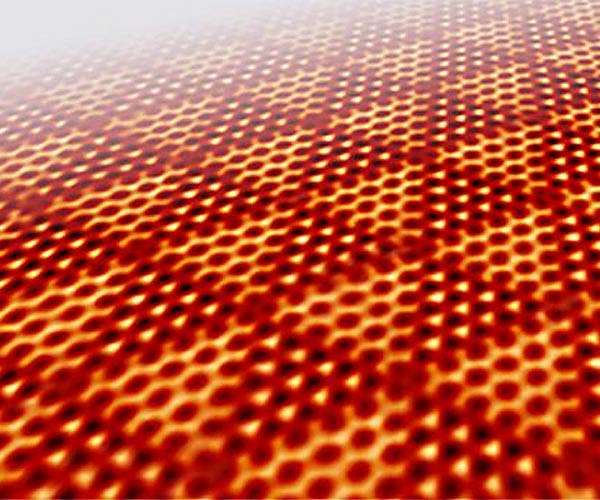
Chinese scholars have developed a strategic roadmap for the development of information technology using two-dimensional (2D) materials. This review paper, part of the "Shuang-Qing Forum," outlines the transition of 2D materials from basic research to industrial development. The paper highlights the role of dedicated tools, AI, and academia-industry collaboration in advancing this technology.
The semiconductor industry has seen continuous miniaturization and performance improvements over the past 70 years. The pursuit of Moore's Law has led to the exploration of new materials, including 2D materials like transition metal dichalcogenides (TMDs), which are potential candidates for next-generation transistors based on atomically thin channel.
Strategic Roadmap for 2D Materials
The review paper calls for dedicated technologies and tools to meet industrial standards for 2D materials. It emphasizes the importance of material growth, characterization, and circuit design. Key areas of the roadmap include:
Materials: Scaling Up with Precision
The future of 2D semiconductor materials depends on scaling up production with precision. The industry has made progress with 2-inch n-type single-crystal wafers, but material defects remain a challenge. Developing larger single crystals with precise defect control and cultivating p/n-type materials that match silicon's performance are primary goals.
Characterization: The Role of AI
Characterization techniques have achieved sub-atomic resolution levels, which are essential for 2D materials. AI tools are crucial for standardized and refined assessment criteria, ensuring accuracy and efficiency in analyzing experimental data.
Electronic Devices: Synergy of BEOL and FEOL
2D semiconductor devices are approaching performance metrics comparable to silicon-based devices. Future advancements will focus on foundational technologies such as HKMG integration and controllable doping to optimize performance, power consumption, and area.
Thermal Management and Interconnects: Overcoming RC Delays
Effective thermal management and reduction of RC delays are critical. Using materials with a lower dielectric constant and integrating 2D materials like hexagonal boron nitride (h-BN) and graphene will enhance performance and reliability.
Integrated Circuits: Embracing 3D Integration
The future of integrated circuits (ICs) based on 2D semiconductors is moving towards 3D integration. This approach leverages the advantages of 2D semiconductors for monolithic 3D heterogeneous integration, improving chip-level energy efficiency and functionality.
Optoelectronic Integration: The Path to High-Throughput Technologies
Optoelectronic integration is expected to become a key direction in high-throughput information technologies. The synthesis of large-scale, high-quality single crystals and the development of multifunctional integrated devices are essential for this future trajectory.
Research Report:Two-dimensional materials for future information technology: status and prospects
