
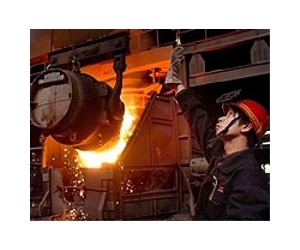
China said Tuesday it will support domestic steel mills in their thorny iron ore price negotiations with global miners even after the Australian government bluntly told Beijing to stay out of the talks.
"As the world's largest iron ore consumer, the interests of Chinese steel mills should be reflected in the negotiations," commerce ministry spokesman Yao Jian told reporters.
The steel mills wanted to maintain the "long-term contract price mechanism" to avoid large price fluctuations for the commodity, he said.
Yao did not say how Beijing would support the steel mills in the negotiations, aimed at striking annual contracts with Anglo-Australian mining giants BHP Billiton and Rio Tinto, and Brazil's Vale.
China's state media reported at the weekend that more than 10 top domestic steel mills had asked Premier Wen Jiabao to make the iron ore benchmark price talks "a matter of national importance".
For the first time in decades, China's steel industry and the mining companies failed in 2009 to hammer out a deal on prices.
Steel industry leaders have warned the government they cannot agree to the 90 percent price hikes demanded by the miners and that such a rise could hurt national interests, the China Securities Journal reported.
"The domestic steel companies can no longer bear such high quotes of iron ore and have been forced to hike steel prices to pass on the costs," an unnamed source told the newspaper.
"Raising the solution of the iron ore imports issue to the national level can avoid internal friction and protect the overall interest of China's steel industry," it added.
Australia again urged China, the world's third largest economy, to stay out of the negotiating process and gave assurances that it would not get involved.
"You can't have the government intervene to set prices for what is an internationally traded commodity," Trade Minister Simon Crean told Australian radio.
"China wanted to be recognised as a market economy and what we say is that if that's the case, we have recognised you as a market economy, act like one. Act in accordance with market principles."
China's imports of the commodity surged by more than 40 percent last year to almost 628 million tonnes.
Share This Article With Planet Earth
