
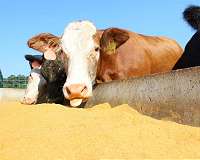
China opened its gates to US beef imports this week, giving American cattle farmers much sought-after access to the country's massive market following a 14-year ban.
Shipments of eligible US beef have been allowed to enter China since Tuesday, the General Adminstration of Quality Supervision, Inspection and Quarantine said in a statement.
Announced last month, the lifting of the beef embargo was one of the first concrete results of trade discussions that began when Chinese President Xi Jinping met with Donald Trump at the US leader's resort in Florida in April.
The agreement, seen as a sign of warming trade ties between the world's largest economies, also gives US natural gas and certain financial services access to China's market of nearly 1.4 billion people.
In return the United States will allow cooked Chinese poultry to enter US markets.
China imposed a ban on US beef imports following a case of mad cow disease in the United States in 2003.
To ensure the safety and quality of the imported meat, China insists that US beef comes from cattle younger than 30 months.
The animals must be traceable to their birth farm.
"Cattle should be born and raised in the US, or born in Mexico or Canada and slaughtered in the US," China's quarantine authorities said.
"Cattle should not be the offspring of those that were suspected of having or confirmed to have mad cow disease."
Beef consumption in China is rising owing to the country's fast-growing middle class, though pork still accounts for more than 60 percent of the meat consumed.
Shots fired in Australia's war on food waste
Australia's first recycled supermarket is giving food destined for landfills a second chance, as the government embarks on a major push to cut down on waste costing the economy Aus$20 billion (US$15 billion) a year.
The outlet run by food rescue organisation OzHarvest in Sydney takes surplus products normally thrown out by major supermarkets, airlines and other suppliers, and gives them away … read more
