
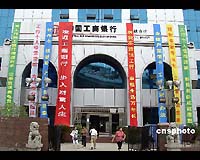
Chinese state banks extended a record amount in loans in January, heeding calls to help boost the economy, state media said Wednesday, in what analysts called an encouraging sign from the Asian giant.
The loans, totalling an estimated 1.2 trillion yuan (175 billion dollars), were focused on road, power, railway, and other infrastructure projects, the China Securities Journal report said, citing unnamed bank officials.
Lending spiked partly because a massive four-trillion-yuan stimulus plan, announced in November, was beginning to kick in.
Out of the total, state-owned banks are expected to supply one trillion yuan in loans annually for the next two years, Standard Chartered economist Stephen Green said.
"It's actually a one-to-two-trillion yuan government stimulus package and the banks are being asked to supply the rest," Green told AFP.
The January estimate signalled a nearly 50-percent increase from the 803.6 billion yuan in new loans a year earlier, and the rise was even higher when compared with December's 771.8 billion yuan.
The flood of bank loans was reported as data released Wednesday indicated China's manufacturing activity rose in January — showing possible early signs of recovery.
The government's purchasing managers' index, or PMI, rose to 45.3 percent in January, up from 41.2 percent in December and a record low of 38.8 percent in November, the official Xinhua news agency reported.
But the PMI remained below the break-even point of 50, indicating overall the sector remained in decline.
Green said the PMI's employment component for January was even lower than November, adding the surge in lending for infrastructure projects was unlikely to address China's most pressing problems — unemployment and shrinking wages.
"You need surprisingly few people to build these things. It isn't like an iPod factory where thousands of people are working on a production line. These things are fairly capital-intensive but not labour-intensive," Green said.
Although the data for loans and manufacturing were encouraging signs, Wednesday's news also highlighted the drawbacks of China's focus on massive infrastructure projects over small- and medium-sized businesses.
"It's a problem in terms of employment," said Qi Jingmei, an economist with the State Information Centre, a government think tank.
"But the economic crisis provides a good opportunity for industry consolidation and washing out production capacity that relies on outdated technology and high pollution," she added.
The four big state-run banks had already finished a fifth of their 2009 full-year lending target, according to the China Securities Journal, an official mouth-piece for China's securities regulator.
The country's biggest lender, Industrial and Commercial Bank of China, extended more than 200 billion yuan in new loans in January and China Construction Bank lent more than 250 billion yuan.
Bank of China and Agricultural Bank of China each extended about 100 billion yuan in new loans, the newspaper said.
China's economy grew nine percent in 2008, slipping back into single digits for the first time in six years as the impact of the global crisis kicked in. In the final quarter, growth slowed to 6.8 percent.
Premier Wen Jiabao has said China must take "extraordinary measures" to boost its economy beyond the economic stimulus plan announced late last year.
The official Xinhua news agency reported Tuesday that the government was preparing to spend 130 billion yuan from its four-trillion-yuan stimulus package, following 100 billion yuan spent in the fourth quarter.
Share This Article With Planet Earth
