
As one of the key events of Australia's National Science Week, SCINEMA – a science film, video and multimedia festival – brings a program of science drama, documentaries, and short subjects, as well as a number of guest speakers, to over 150 Australian towns from Cairns to Hobart and Sydney to Perth.
SCINEMA regularly plays to tens of thousands of people across Australia, and in 2008 the program, which explores topics from climate change and human health to natural history, also includes a film by local filmmaker Matthew Higgins.
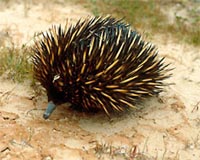
Mr Higgins will present a screening of his 15-minute film Echidnarama – an intimate journey into the secretive lives of these intriguing bush animals – as part of the Amazing World of Science event at the National Convention Centre on Saturday 23 August at 2.45pm.
"Festivals like this are a great opportunity for amateur film-makers like myself to have our films screened to a wide audience," Mr Higgins says. His earlier film, What's Happening at Number 96, won Best Film at the 2005 SCINEMA Festival of Science Film.
Screening at CSIRO Discovery Centre in Canberra from 16 – 24 August, the Festival features a session of films from Australia's future science documentary film-makers on Wednesday 20 August at 5pm.
It will include: short films on sustainability from Radford College and Weetangera Primary School students, a short entitled 'A day in the life of a worm' from Blue Gum Community School, and a documentary on creepy crawlies from ANU Science Communication student Robyn Lawrence.
SCINEMA (pronounced with a long 'i' to emphasise the science behind the cinema) is a partnership of the CSIRO and Cosmos Magazine, and aims to promote and raise the public level of science literacy.
SCINEMA is also bringing an international guest speaker to the ACT. Canadian multimedia artist Peter McLeish will present his new work 'Polaris Terrarum' at the Amazing World of Science event at the National Convention Centre on Thursday 21 August at 11.15am. His work explores the psychological effects of climate change and shrinking ice fields on people who live in our polar regions. McLeish will also speak to students at the Australian National University's School of Art.
related report
Queensland film-makers headline film festival
SCINEMA regularly plays to tens of thousands of people across Australia, and in 2008 the program, which explores topics from climate change and human health to natural history also includes a number of films from Queensland film-makers.
Filmed over the four-month breeding season of the Tasmanian Wedge-tailed Eagle, Wild Tasmania, by former James Cook University student Jasper Montana, exposes the plight of the endangered bird and its perilous position in the middle of the logging and pulp mill debate currently raging in Tasmania.
"This is a very important issue," says Mr Montana, the 23 year old co-director, camera-man and editor. "The film really shows what's at stake for this magnificent creature."
Mr Montana will present a special meet-the-film-maker session at QLD Museum Southbank to talk about the filming of Wild Tasmania at 3.30pm on Sunday 24 August.
One of the quirkier films among the Festival line-up comes from Grayson Cooke, a lecturer at Bundaberg's Central Queensland University. I Use the Word State is a humorous short film featuring over 400 Ochrogarter Lunifer – processionary caterpillars – and the strangely appropriate words of Fredrich Nietzsche.
Queensland company Viz Poets' film Over My Dead Body is also in competition in the internationally competitive Film Festival. The Festival Jury, Chaired by Cosmos Magazine Editor Wilson Da Silva, will announce winning films at an awards ceremony at QLD Museum South Bank on Sunday 24 August. Produced by Vicki Guest and directed by Ian Walker, the film explores the market in recycled human bodies.
Stripped down to its sellable parts, the recycled human body can be repackaged and sold for around $200,000. Skin and bone from the dead are part of a new resources boom.
SCINEMA (pronounced with a long 'i' to emphasise the science behind the cinema) is a partnership of the CSIRO and Cosmos Magazine, and aims to promote and raise the public level of science literacy.
