
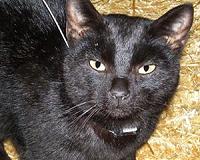
A conservation agency has constructed what is believed to be the world's longest cat-proof fence in central Australia to save native wildlife and vegetation ravaged by the feline predators.
Australia has the highest extinction rate in the world, while declining populations are affected by habitat loss as well as introduced creatures such as cats, foxes and rabbits going feral and killing native species across the vast continent.
The Australian Wildlife Conservancy this month finished building and electrifying the 44-kilometre (27-mile) long fence to create a predator-free area of almost 9,400 hectares (23,200 acres) some 350 kilometres northwest of Alice Springs.
"Australia does not have an effective strategy for controlling cats," AWC chief Attius Fleming told AFP.
"The only way we can save Australia's most endangered animals is by establishing these massive feral cat-free areas using conservation fencing."
Fleming said as part of the project — which is funded by public and government donations — cats and other feral animals were being removed from the area, with threatened native mammals to be reintroduced next year.
The mammals set to be reintroduced in the area, which is owned by the AWC, include the western quoll, the numbat, the bilby and the central rock-rat.
The project will be extended in 2020 to cover a larger area of around 100,000 hectares, Fleming added.
Feral cats are believed to number between 10 and 20 million across Australia.
Cats were first introduced to Australia by British immigrants in the late 1700s as domestic pets, but some went wild and spread across the continent over the next 100 years.
Other causes of native species' population declines and extinctions include feral foxes, climate change, fire and habitat destruction.
The internet: a dangerous place for wild animals
Paris (AFP) May 22, 2018 –
From ivory baubles and leopard coats to rare turtles and live bears, the online market for protected wildlife is booming, according to an International Fund for Animal Welfare (IFAW) investigation released Wednesday.
Experts from the NGO spent six weeks last year combing the Internet in four countries — Russia, France, Germany and Britain — for advertisements hawking endangered animals, whether dead or alive, in pieces or whole.
The haul was impressive: 11,772 individual articles or animals in 5,381 ads spread across 106 websites and social media platforms.
Total asking-price value? Just shy of $4 million (3.2 million euros).
More than four-fifths of the items were live animals, including a large share of marine and fresh-water turtles (45 percent), birds (24 percent) and mammals (5 percent), the report said.
And while it is possible to sell and buy certain endangered species with permits under the Convention on International Trade in Endangered Species (CITES), 80-90 percent of the transactions proposed were probably illegal, said Celine Sissler-Bienvenu, IFAW's director for France and francophone Africa.
"The internet has transformed the global economy, and illegal wildlife trade has transformed with it," said Rikkert Reijnen, director for wildlife crime at the US-based NGO.
"All those who profit form wildlife crime have moved into the online space."
Besides turtles, other sought-after reptiles on the black market include snakes, lizards, and alligators. Owls, birds of prey, toucans, cranes and other protected bird species were also on the virtual bloc.
The market for mammals is more varied, ranging from body parts — rhino horns, cheetah and leopard furs, and a pair of coffee tables made from elephant legs — to a menagerie of protected species, trapped in the wild or raised in captivity under doubtful conditions.
"Of the many threats to our planet's wildlife, the illegal trade of live animals and their body parts is one of the most inhumane," said Reijnen.
Most of the live animals were on sale in Russia, including big cats, monkeys, lemurs and at least one bear.
IFAW praised the "precious work" and commitment shown by major online peer-to-peer platforms such as e-Bay, which has trained its personnel to join in the fight against illegal wildlife trafficking.
But national regulations are lagging behind, especially for commerce on the internet, the reports said.
As a general rule, sellers — often connected to criminal organisations — know they are breaking the law, but buyers may be less aware.
"They just want some exotic animals," Sissler-Bienvenu said.
IFAW has forwarded their findings to national and international authorities. Similar reports from the NGO in the past have resulted in legal proceedings against both sellers and buyers.
