
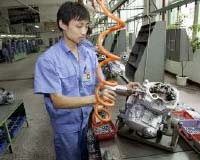
China will become the world's largest greenhouse gas emitter in one year, exceeding the emissions of the U.S. However, China also presents the most investment opportunities for manufacturing products based on new clean technologies, putting the country on both sides of the environmental challenge. These points and many others were discussed by a blue-chip panel of cleantech leaders during the Lux Research Cleantech Discussion Panel on June 15, 2007.
"Cleantech is receiving unprecedented government, corporate, and investor interest, with $48 billion in R and D spending in 2006," said Matthew M. Nordan, President of Lux Research and moderator of the panel. "The breadth of this interest was evident on our recent cleantech discussion panel, where more than 100 entrepreneurs, investors, and researchers gathered to debate the present and future of clean technologies."
On June 15th, Lux Research hosted an interactive conference call with a panel of cleantech leaders from government, finance, and industry to discuss key findings from The Cleantech Report, the authoritative reference guide to energy and environmental technologies. Members of the panel were:
Matthew M. Nordan, President, Lux Research Inc. Ira Ehrenpreis, General Partner, Technology Partners (leading cleantech venture capital firm) Alexander ("Andy") Karsner, Assistant Secretary for Energy Efficiency and Renewable Energy, U. S. Department of Energy B.J. Stanbery, PhD, CEO, HelioVolt (pioneering thin-film solar technology start-up).
Highlights from the Cleantech Discussion Panel included: Carbon regulations are up for grabs. Assistant Secretary of Energy Andy Karsner stated that new carbon regulations are extremely unlikely in the U.S. in the next two years, emphasizing that the current administration feels the best way to reduce carbon emissions is by introducing new technologies rapidly. He acknowledged, however, that anything is possible in a new administration.
Venture capitalist Ira Ehrenpreis felt that the tenor of the debate has changed in the last two years. Ehrenpreis pointed out that as recently as 2005, Senate Environment and Public Works Committee Chairman James Inhofe called global warming "the greatest hoax ever perpetrated on the American people," but that today politicians on both sides of the aisle are discussing the best route to decreasing emissions.
Relationships between public and private sectors are developing like never before. Significant government outreach to the private sector in recent years has enabled innovation from government laboratories to reach markets at a rapid pace. Ehrenpreis stated that one-third of his firm's cleantech portfolio emerged from academic research that is generally government-funded, and that the Department of Energy's "entrepreneur in residence" program at its national laboratories was having a significant, positive effect on commercialization.
The next wave of clean technologies is developing. Panelists acknowledged that the first two recent waves of cleantech investment were in solar in 2005 – which HelioVolt CEO B.J. Stanbery has benefited from – and biofuels in 2006. Predictions for the next waves: Water (one in five people worldwide do not have access to clean water), cellulosic ethanol and other new alternative fuels, and energy storage in next-generation batteries and supercapacitors.
The call was preceded by a review of findings from The Cleantech Report. This comprehensive, 600-page reference study on energy and environmental technologies, available exclusively from Lux Research, includes:
