
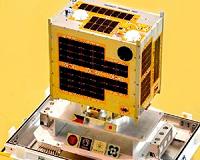
AAC Microtec has supplied a key avionics component for the new Philippine microsatellite Diwata-1, which was launched from Kennedy Space Center to the International Space Station (ISS) on March 23 and successfully deployed into orbit on April 27.
Diwata-1 is a 50 kg microsatellite and it uses one of AAC's fault-tolerant mass memory products. The new satellite will be used for environmental resource monitoring and meteorological applications, among other things.
"I am very glad that the Diwata-1 satellite deployment was successful and I congratulate the collaborating Philippine and Japanese teams to a well-executed project that was carried out within a very short timeframe.
"I am pleased that AAC got the chance to be part of the first deployment of a satellite of this size from the ISS, following the previous successful contribution to TechEdSat-1, which was in the first group of CubeSats to be deployed from the International Space Station in 2012," says AAC Microtec's CEO Mikael Andersson.
Diwata-1 is a 50kg satellite with the dimensions 55 cm x 35 cm x 55 cm. It was developed as part of the Department of Science and Technology's Philippine Scientific Earth Observation microsatellite (PHL?microsatellite) Program.
In this program the University of the Philippines collaborates with two Japanese universities, the Tohoku University and the Hokkaido University. Diwata-1 has four optical sensors providing satellite images for environmental resource monitoring and meteorological applications to the Philippine nation of 100 million people.
