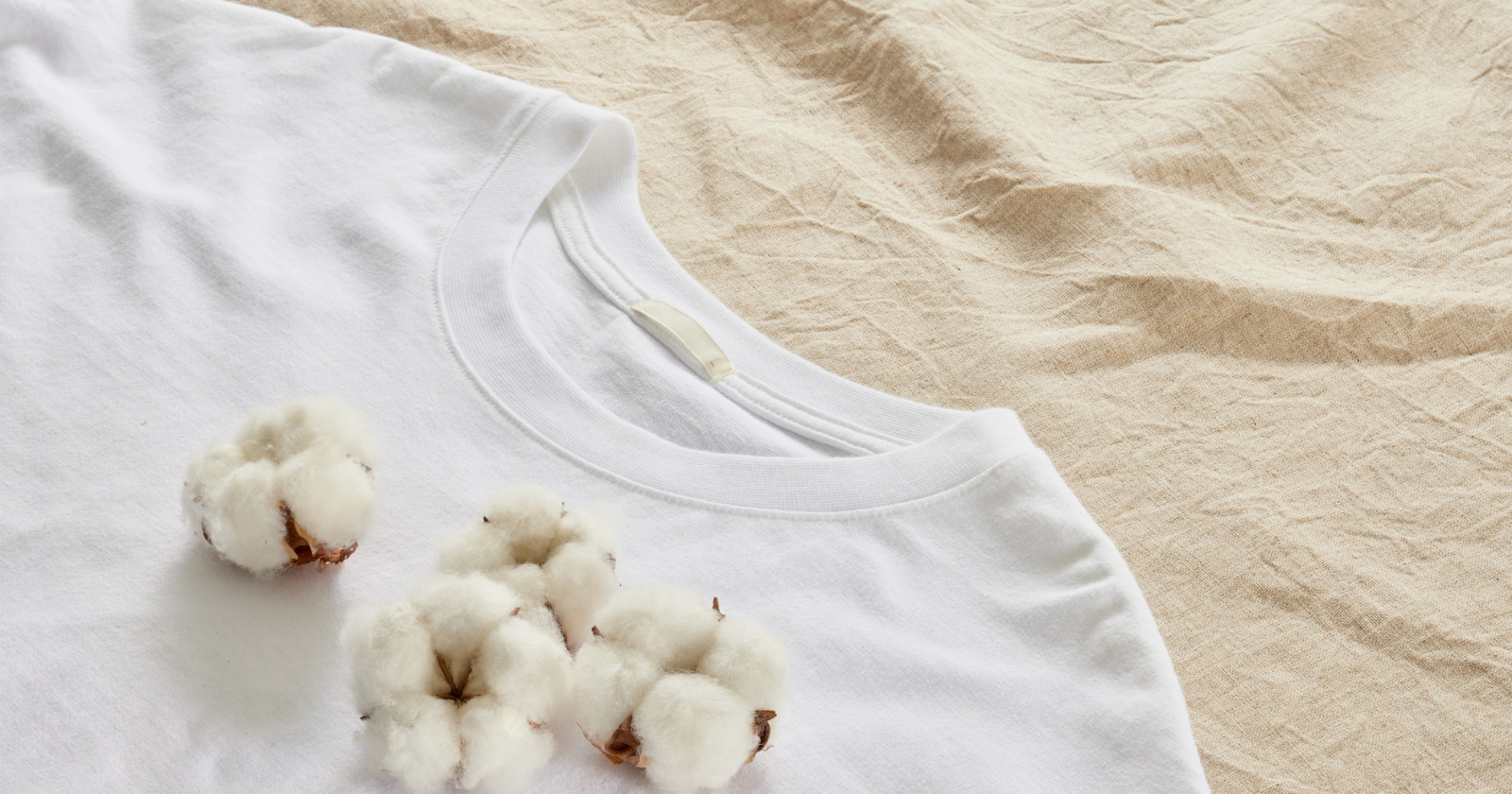
A plain cotton T-shirt carries roughly 2,700 litres of water. That is about 900 days of drinking water at three litres a day, or a little over two and a half years for one person, which is the equivalence Geographical, the magazine of the Royal Geographical Society, uses. The precise tally behind the round number comes from a 2006 study in Ecological Economics by Ashok Chapagain, Arjen Hoekstra and colleagues, whose product table puts a 250-gram shirt at 2,720 litres: 1,230 litres of irrigation water, 1,110 litres of rain absorbed by the crop, and 380 litres needed to dilute the pollution generated along the way.
Strip out the dilution volume and the shirt still carries 2,340 litres, most of it drunk by the plant well before anyone spins a thread.
The figure gets quoted so often it has become background noise. It shouldn’t be. Cotton grown on an irrigated desert margin in Central Asia can draw water from a river hundreds of kilometres upstream, travel as fibre to a mill, and end up on a shop rail in a country that has never had reason to think about the Amu Darya. The water stays where it was pumped. The shirt does not.
Where the number comes from
Cotton’s water use breaks into three colours. Green water is rainfall absorbed by the plant. Blue water is surface and groundwater pulled through irrigation. Grey water — dilution water, in the original paper’s language — is the volume required to bring the wastewater from dyeing, bleaching and finishing back to safe concentrations.
For a 250-gram T-shirt those three add up to 2,720 litres. Some summaries round to 2,500, others to 2,700. The shirt is the same shirt either way, and the drinking-water comparison holds at the rate the accounting assumes: roughly three litres a day, roughly 900 days, roughly two and a half years.
The comparison is rhetorical. The underlying number is arithmetic. Cotton drinks that much.
A thirsty crop grown in dry places
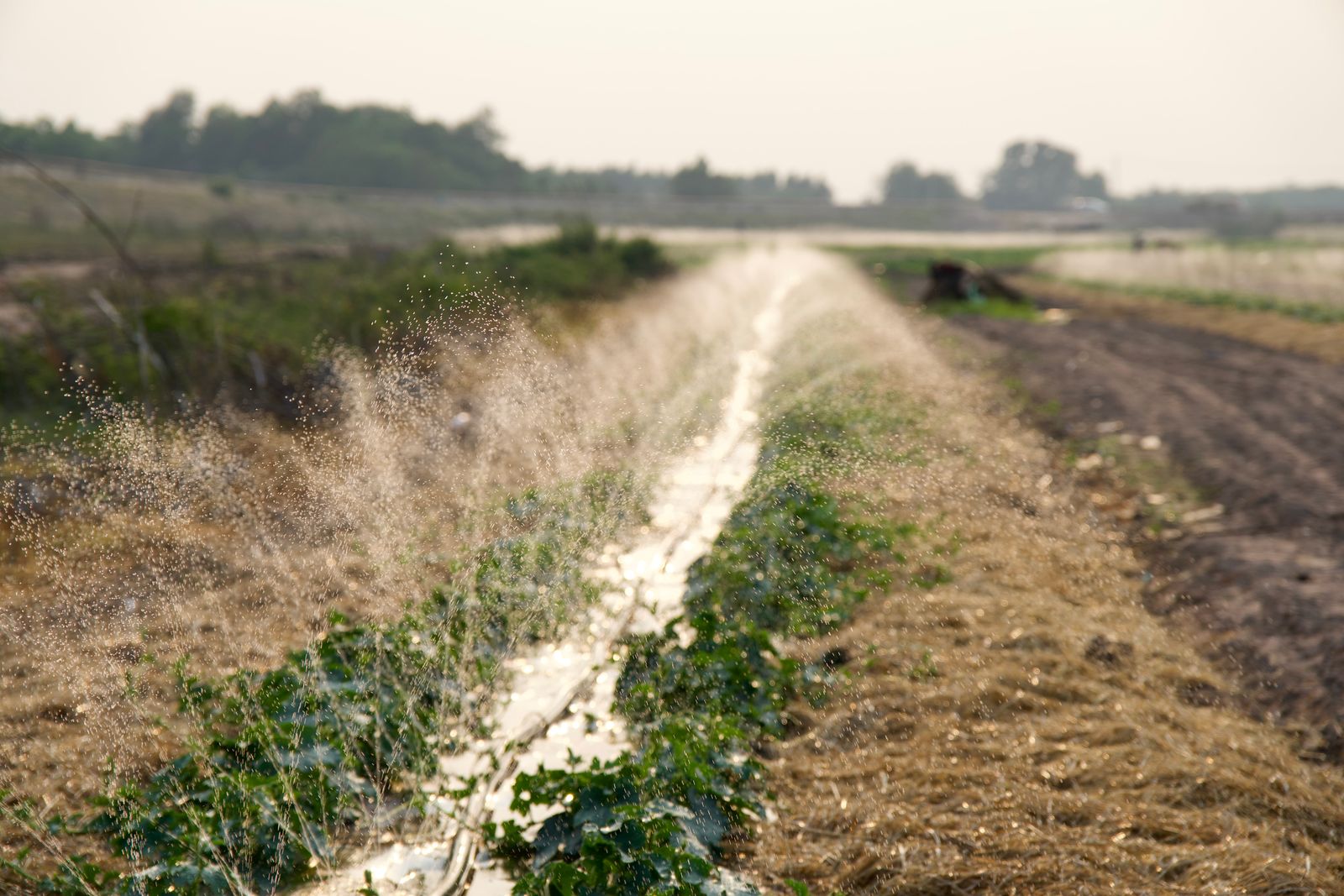
Cotton would be a less awkward crop if it grew where rain fell reliably. It doesn’t. Chapagain’s team put 53 per cent of the world’s cotton area under irrigation, producing 73 per cent of the global crop, and located the irrigated share squarely in dry countries — Egypt, Uzbekistan and Pakistan, with China’s Xinjiang province irrigated in full.
WWF, which runs a long-standing cotton programme with growers in South Asia, lists the freshwater systems this has damaged: the Aral Sea, the Indus Delta and Australia’s Murray-Darling.
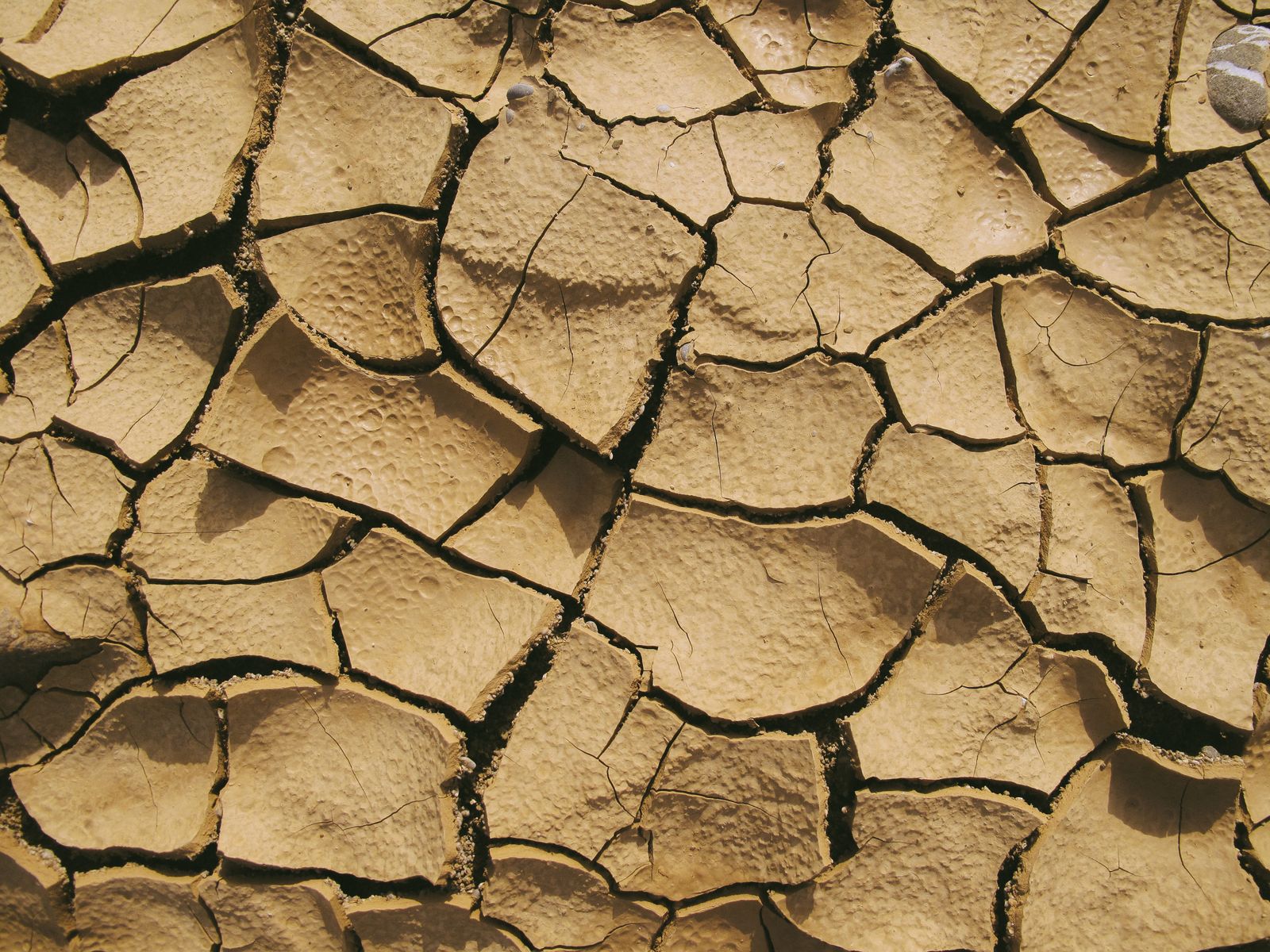
The Aral is the extreme case. Between 1960 and 2000 it lost roughly 60 per cent of its area and 80 per cent of its volume, after Soviet planners diverted the Amu Darya and Syr Darya to grow cotton in the desert and their successors kept doing so after independence. NASA has tracked the retreat from orbit, and its southern basin now depends on an Amu Darya that frequently fails to reach it at all.
The seabed is a salt flat. Moynaq, once a working fishing port with a cannery, now sits hundreds of kilometres from any water, its trawlers rusting in sand.
Virtual water and the shopper who never sees the bill
Nobody in Berlin or Melbourne is pumping that water, which is the point. Economists call the transferred volume virtual water — the water embedded in a commodity, a term coined by Tony Allan in the late 1990s. The product crosses the border. The depleted river stays behind. Chapagain’s team found that 84 per cent of the EU’s cotton water footprint sat outside Europe, concentrated in India and Uzbekistan.
The Uzbek figures in that study are the starkest illustration. Uzbekistan used 14.6 billion cubic metres of blue water a year to irrigate cotton, exporting 3.0 billion of it in virtual form to the EU25 — which made European consumers, the authors calculated, indirectly responsible for about a fifth of the Aral Sea’s desiccation.
That is the mechanism, and it has not changed. A shirt bought in Manchester still carries a debt written on a river the buyer will never see.
Efficiency is up, total use is up too
Cotton has got better at using water. A 2024 assessment covering 1972 to 2018 found the average blue, green and total water footprint per unit of fibre fell by 37, 48 and 43 per cent respectively, driven by better cultivars, fertiliser and water management.
Total use rose anyway. The same study found cotton’s total water footprint up 5 per cent and its blue water footprint up 17 per cent, with the unsustainable share — water drawn from rivers and aquifers already past their limits — climbing from 59.3 to 70.9 cubic kilometres a year.
Most of that unsustainable volume leaves the country it was pumped in. Chatham House’s July 2026 review of textile water footprints notes that 71 per cent of it was traded virtually between 2014 and 2018, with the United States, Pakistan and India accounting for more than 60 per cent of that trade.
Efficiency gains that go straight into planting more acres are a familiar pattern. The plumbing improves. The demand grows to match it. The river keeps dropping.
What better plumbing can and cannot fix
India carried the single largest share of cotton’s field-level water use in Chapagain’s 1997–2001 accounting — 48 of the 198 billion cubic metres consumed growing the world’s crop. Drip irrigation is the standard prescription, and it does not work the way the prescription assumes. Writing in Science in 2018, Quentin Grafton and eleven co-authors showed that higher irrigation efficiency rarely reduces basin-scale consumption: farmers who save water on a field tend to irrigate more of them, and runoff that used to return to the aquifer stops returning.
Pakistan tells the same story from a different angle. In the Chapagain accounting its cotton crop consumed 19.9 billion cubic metres of irrigation water against 5.4 billion of effective rainfall — a crop grown almost entirely on pumped and diverted water, before a single litre of dyeing effluent is counted.
Flax needs considerably less water for the same weight of fibre. Linen shirts exist. They cost more, wrinkle enthusiastically, and do not dominate anyone’s wardrobe.
The pollution nobody irrigates
Grey water — 380 of the shirt’s 2,720 litres — is the part that falls out of the headline. It shouldn’t. Dyeing, bleaching and finishing generate wastewater loaded with heavy metals, azo dyes and residual bleach.
Across the whole industry the volumes are enormous. Kirsi Niinimäki and co-authors, writing in Nature Reviews Earth & Environment, put fashion’s annual consumption at 79 trillion litres — 79 billion cubic metres — alongside more than 92 million tonnes of waste. A great deal of that water returns to rivers coloured and contaminated. Indonesia’s Citarum, which supplies mills producing for international brands, has been described as the most polluted river in the world.
A shopper looking at a plain white shirt on a hanger sees none of this. A shopper looking at a plain black shirt sees none of it even more.
How it compares to the other things a body uses water for
Cotton is not the thirstiest thing in most people’s day. Mesfin Mekonnen and Arjen Hoekstra’s global assessment of farm animal products puts beef at 15,400 litres per kilogram as a world average, against 10,400 for sheep meat and 4,300 for chicken. Most of the beef figure is green water falling on pasture and feed crops.
The shirt sits in a different weight class, and the relevant question is not how big the number is but where the water came from. A shirt grown under a capped, metered entitlement in northern Australia is a different transaction from a shirt drawing irrigation from an overexploited Maharashtra aquifer. Same garment, same rack, same price tag. The bill lands on a river the shopper has never heard of.
When the river runs out and the courts step in
Rivers do not go to court on their own behalf. Sometimes national parks do. Nuclear Power Daily has tracked the Doñana case, in which a Spanish national park’s shallow marshes dried out while unpermitted wells fed a strawberry industry next door, and the Court of Justice of the European Union ruled in 2021 that Spain had breached both the Water Framework Directive and the Habitats Directive.
The cotton chain rarely reaches a courtroom. It reaches a satellite image instead.
Regulatory pressure exists, but less of it than the headlines of 2023 suggested. The EU’s Corporate Sustainability Reporting Directive, which would have pulled thousands of apparel companies into supply-chain disclosure, was substantially narrowed by the Omnibus I directive that came into force on 18 March 2026. Mandatory reporting now reaches only companies above 1,000 employees and €450 million in turnover, and the second wave of reporters has been pushed to financial year 2027. Whether what remains changes anything on a hanger, or only in an annual report, is still an open question.
What the number is really counting
The 2,700-litre figure is not a bill anyone pays at the till. It is a ledger of green rain, blue irrigation and grey wastewater spread across several countries and the better part of a year, distilled into a single number that fits on a placard.
The point of the accounting was to make invisible water visible. A shopper who reads that a shirt cost 2,700 litres is not being told to feel guilty about that particular shirt. They are being handed a conversion rate between a wardrobe and a watershed.
The conversion scales fast. Chapagain’s team put the cotton water footprint of an average person worldwide at 43 cubic metres a year, and of an average American at 135 — more than three times the global figure, and half of it drawn from water outside the United States. That is 135,000 litres a year, per person, for cotton alone.
None of it sits in the shopper’s garden. It sits, in pieces, in the Indus basin, the Murray-Darling, the plains of Xinjiang and the vanished bed of the Aral Sea. It was drawn down years before the shirt reached the hanger, and no receipt tracks it back.
Come autumn, when the cotton belt along the Amu Darya turns white at harvest, some of the water pulled from the river’s last flowing channels will already be halfway to becoming a shirt that gets worn twice and donated.