On a windless morning in Tamatea/Dusky Sound, a black cloud of tītī wheels above a rocky outcrop that thirty years ago held almost none of them. The birds are sooty shearwaters, and they burrow into peat soil to breed. Rats eat their eggs. Stoats take the chicks. On Anchor Island, Pukenui/Anchor and dozens of smaller islets scattered through the Fiordland coast, both of those predators are now gone — cleared by trap lines, bait drops from helicopters, and years of check-and-recheck monitoring by the New Zealand Department of Conservation. The birds came back on their own, within a handful of breeding seasons, because the pressure keeping them out simply stopped.
The answer to what happened is unusually clean for ecology. Conservationists removed ship rats, Norway rats, kiore, stoats, weasels and brushtail possums from a set of small offshore islands — beginning in the 1960s and building up to Campbell Island’s 11,300 hectares in 2001 and Antipodes Island’s 2,000 hectares in 2016. Once the mammals were gone, species that had been reduced to a few dozen individuals — the kākāpō, the South Island saddleback, the Chatham Island black robin — began breeding successfully again. The mechanism was not reintroduction magic. It was the removal of a predator load that ground-nesting birds had never evolved to survive.
Why New Zealand’s birds were defenceless in the first place
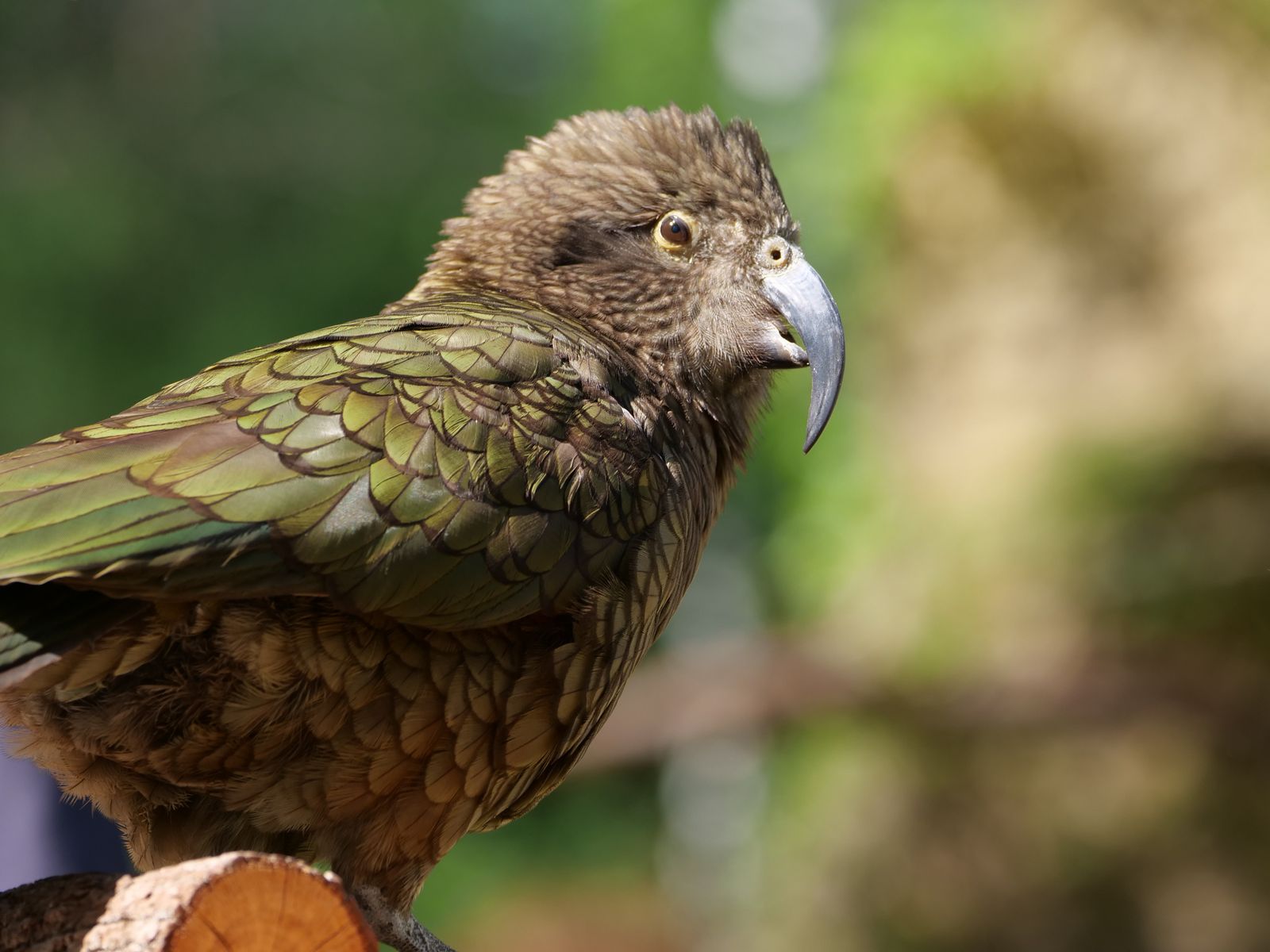
New Zealand split off from Gondwana about 85 million years ago. When it drifted into isolation, it carried almost no land mammals with it — just two species of small bat. Everything else that filled the ecological jobs mammals do elsewhere, from grazing to seed dispersal to nocturnal foraging, was done by birds, reptiles or insects. Birds nested on the ground because nothing hunted them there. Some, like the moa and the kiwi, lost the ability to fly entirely. Others, like the kākāpō, became flightless and nocturnal — a fat green parrot that freezes when threatened, which works beautifully against a hawk overhead and disastrously against a stoat.
Polynesian settlers arrived roughly 700 to 800 years ago and brought the kiore, the Pacific rat. Moa were hunted out within two centuries. Europeans arrived in the 1800s and brought ship rats, Norway rats, cats, pigs, possums from Australia, and — in one of the worst decisions in the history of wildlife management — stoats, weasels and ferrets, introduced deliberately in the 1880s to control the rabbits that earlier settlers had also released. According to Popular Science, over 20 percent of the bird species present at first human contact are now gone, and roughly 30 percent of what remains is threatened.
The offshore island experiment
Islands were where recovery was tested first, because islands are containable. A rat that swims across a fjord is a manageable problem. A rat that walks across a suburb is not.
The technique that made large-scale eradication possible is aerial application of brodifacoum, a second-generation anticoagulant. Helicopters fly a GPS grid at low altitude and release cereal pellets containing a few parts per million of the poison. Rats and mice eat the bait, die over several days, and — critically — do not associate the bait with the death, so bait shyness doesn’t develop across the population. On uninhabited islands with no livestock and few non-target species, brodifacoum can clear a rodent population to zero if the coverage grid is tight enough and every last individual eats a lethal dose.
Campbell Island, a subantarctic outpost 700 kilometres south of the mainland, was the proof of scale. In 2001, bait was dropped across its 11,300 hectares in a single operation. Every Norway rat on the island died within weeks. The Campbell Island teal, a small flightless duck that had been reduced to a small colony clinging to a rat-free stack off the coast, was reintroduced and began breeding. Antipodes Island followed in 2016, when DOC and its partners eradicated mice from the 2,000-hectare island using the same aerial technique in the middle of winter, when native birds are least active and mice are hungriest.
What happens in the first three seasons after the last rat dies
The recovery curve is steep and it starts almost immediately. Ground-nesting seabirds are the fastest indicator, because their breeding failure under predation is close to total. On rat-infested islands, burrow-nesting petrels experience dramatically lower fledging success. On a cleared island, that success rate can jump dramatically within a single season. The birds themselves don’t change. The eggs simply stop being eaten.
The South Island saddleback is the textbook case. By 1964 the species was down to a small population on a single rat-free island, Big South Cape, off Stewart Island. Ship rats invaded that year. Emergency translocations moved saddlebacks to nearby cleared islets. The population is now in the low thousands. The Chatham Island black robin came even closer to the edge: five individuals in 1980, with only one breeding female, a bird named Old Blue. Aggressive cross-fostering and predator removal on Mangere and Rangatira islands brought the species back to viable numbers by the 2010s.
The kākāpō recovery followed the same pattern on a longer clock. Down to 51 known individuals in 1995, all now living on predator-free islands including Anchor, Whenua Hou/Codfish and Hauturu/Little Barrier, the population climbed past 250 by early 2024, on the back of a record 2023 breeding season triggered by a rimu mast. Mast years — when native trees fruit heavily in synchrony — are the same events that trigger rat and stoat plagues on the mainland, which is why the Department of Conservation ramps up predator control in South Island beech forests whenever a heavy seeding summer is forecast.
From offshore islands to a whole country
The island results were convincing enough that in 2016 the New Zealand government announced Predator Free 2050 — a national target to eliminate rats, stoats and possums from the entire country, 268,000 square kilometres of it, by mid-century. The scale is unprecedented.
The Miramar Peninsula in Wellington, a fishhook of land connected to the city by an isthmus less than a mile wide, became the first urban testbed. Predator Free Wellington laid traps in a grid across the peninsula at regular intervals. Traps were baited with peanut butter donated by a local manufacturer, and for the wilier individuals, Nutella. By early 2020 the team had eliminated weasels entirely and was tracking the last remaining ship rats individually, using reported sightings and chew cards to narrow down territories; the peninsula’s rats were declared gone in 2021. A March 2026 government funding announcement set out to extend the campaign across the rest of the city, with Wellington aiming to become the world’s first predator-free capital within the following decade.
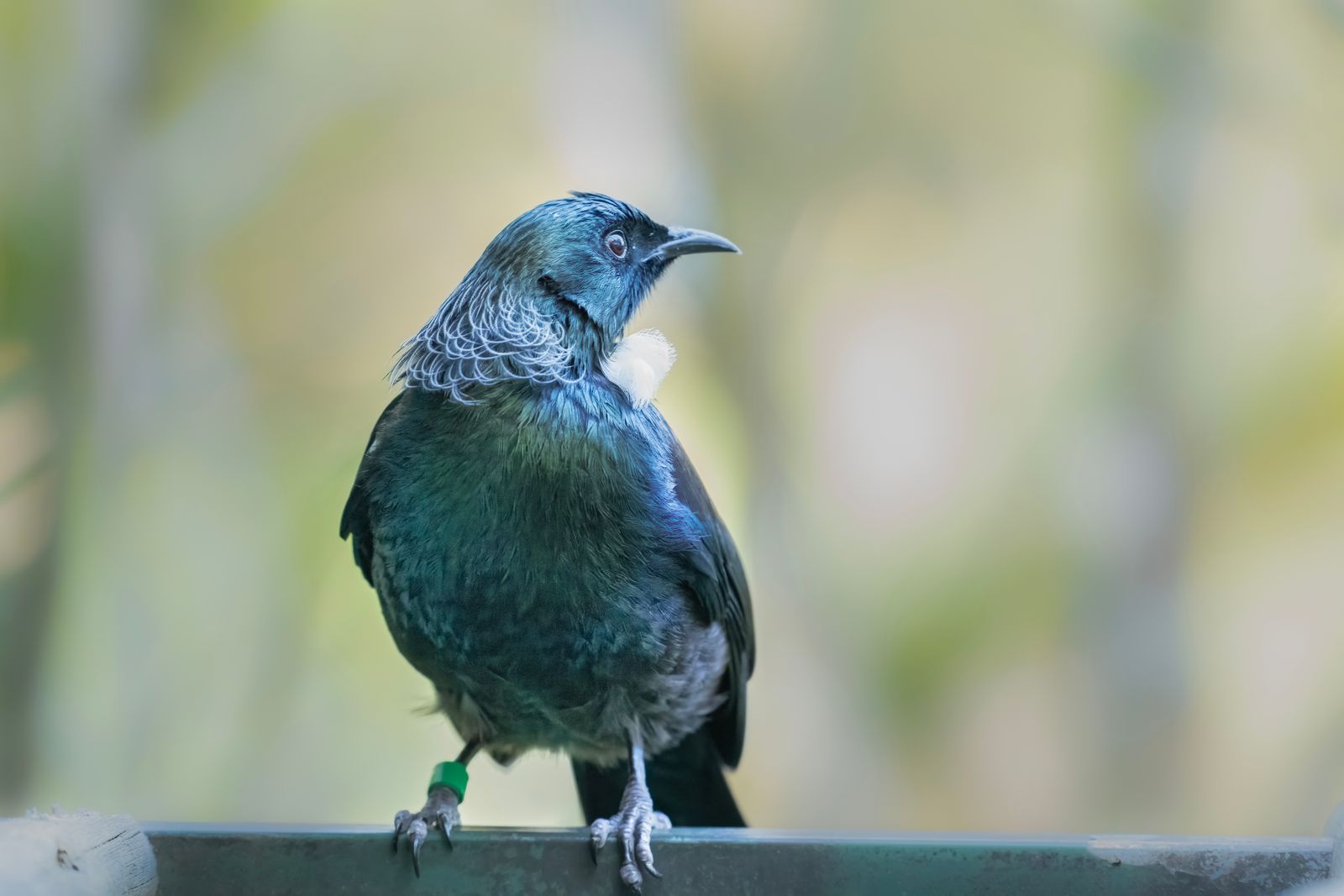
The bird response inside Wellington has mirrored the offshore island pattern. Zealandia, a 225-hectare fenced sanctuary in the middle of the city cleared of mammals in 2000, has produced what ecologists call a halo effect. Tūī sightings across the region have increased substantially since 2011. Kererū, the large native wood pigeon, have shown even greater increases. Kākāriki, the red-crowned parakeet, have multiplied. Kākā — a large auburn forest parrot considered functionally extinct in the Wellington region a generation ago — now nest in suburban gardens on both sides of the harbour.
The comparison case: islands elsewhere
New Zealand isn’t alone. The RSPB’s Orkney Native Wildlife Project, which has removed more than 8,500 invasive stoats from the 70-island Orkney archipelago off northern Scotland since 2019, reported in 2026 that Orkney vole activity and hen harrier breeding attempts had both reached their highest levels since monitoring began. On South Georgia, ten years after the last aerial bait drop in 2015, South Georgia pipits — the world’s most southerly songbird — are singing across the whole island for the first time in two centuries. On Macquarie Island, cleared of rats, mice and rabbits in 2014, burrow-nesting petrels have returned in numbers unseen in generations within a decade.
The pattern is consistent across latitudes and species. Where the predators go, the birds come back — provided a founder population survives somewhere nearby to seed the recovery. Where no founder population exists, the birds do not come back, because extinction is not reversible. This is why the offshore islands mattered so much: they were the arks that kept enough breeding pairs alive to make the mainland restoration mathematically possible.
Where this fits in the wider restoration story
Ecological restoration works when the pressure removed is the pressure that was actually doing the damage. That sounds obvious, but it isn’t always the case. Nuclear Power Daily has previously looked at the reintroduction of wolves to Yellowstone, where the trophic cascade story turned out to be genuine but far messier than the viral version suggested — elk behaviour changed, but climate, beaver populations and drought all confounded the willow recovery. The New Zealand island story is different because the intervention is subtractive, not additive. Nothing was released. Something was removed. And what came back came back on its own.
There is a parallel in a piece Nuclear Power Daily ran on Iceland’s birch woodland recovery, where fencing sheep out of eroded valleys allowed the seed bank in the soil to do its own work. Both stories share the same shape: remove the specific pressure the ecosystem cannot tolerate, and the ecosystem starts repairing itself faster than most planners expected.
What still isn’t solved
The current front line is not islands. It is the South Island’s beech forests, where mast years produce rat and stoat plagues that can wipe out a season of mohua, kea and rock wren nesting in a matter of weeks. The Pyke Forest and Fiordland conservation areas are being managed with pulse-timed 1080 poison drops calibrated to the mast cycle, but the mainland cannot be enclosed and reinvasion is constant. New tools — self-resetting traps, gene drive research, AI-camera identification — are being trialled, and none of them are yet ready for country-scale deployment.
A National Geographic feature on Predator Free 2050 frames the effort as a bet that ecological engineering can be scaled from thousand-hectare islands to a whole country in one human lifetime. That bet is still open. The offshore islands are the proof that the biology works. The mainland is the proof that will take another 25 years to arrive.
At dusk on Anchor Island, the sound is the giveaway. On a mainland forest patch of comparable size in the South Island, evening falls quiet. On Anchor, the tītī come in off the ocean in the thousands, wings whistling, and their burrows fill up with the low croaks of birds greeting mates they haven’t seen since morning. It is what New Zealand sounded like before the rats.