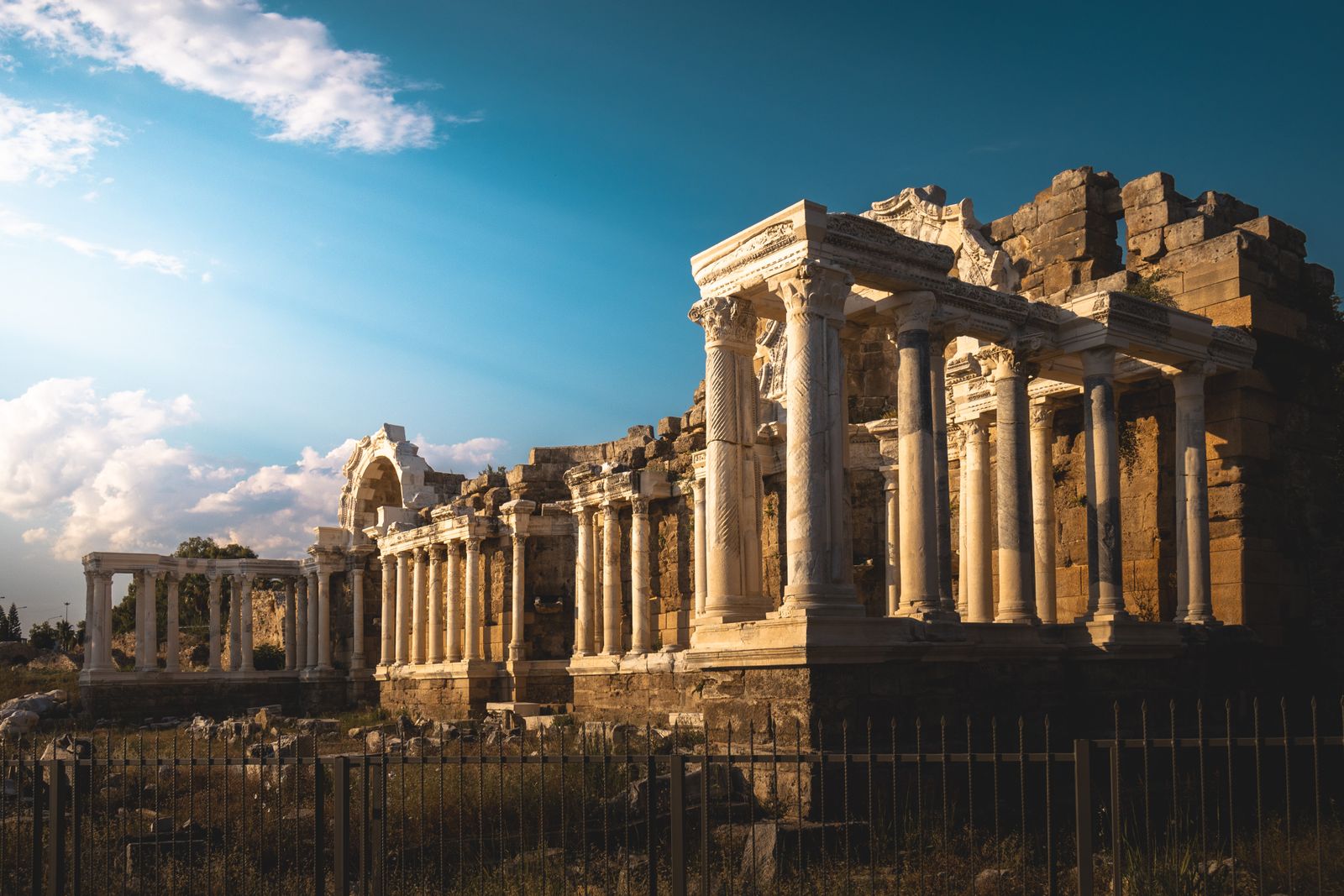
At Hadrian’s Villa in Tivoli, 27 kilometres east of Rome, a communal toilet built in the second century C.E. is still doing science. The concrete under the seat has been sitting undisturbed for roughly 1,900 years, and when researchers from the University of California, Berkeley and Beijing University of Technology finally chipped a sample out and put it under an X-ray microscope, they found something that has been quietly rewriting one of engineering’s oldest mysteries: the pores and hairline cracks inside the ancient material are threaded with calcite, a hard crystalline mineral that has been growing there, slowly, for nineteen centuries.
The mechanism has a name — carbonation — and it is the reason Roman harbour concrete keeps gaining strength in seawater while modern Portland cement, poured with high-temperature kilns and reinforced with steel, tends to crack, spall and fail within about a hundred years. The findings, published in Science Advances on July 8, 2026, were led by Xiaohong Zhu of Beijing University of Technology and Paulo J. M. Monteiro of Berkeley. They map, at scales down to tens of nanometres, exactly how the ancient material heals itself.
The latrine that nobody restored
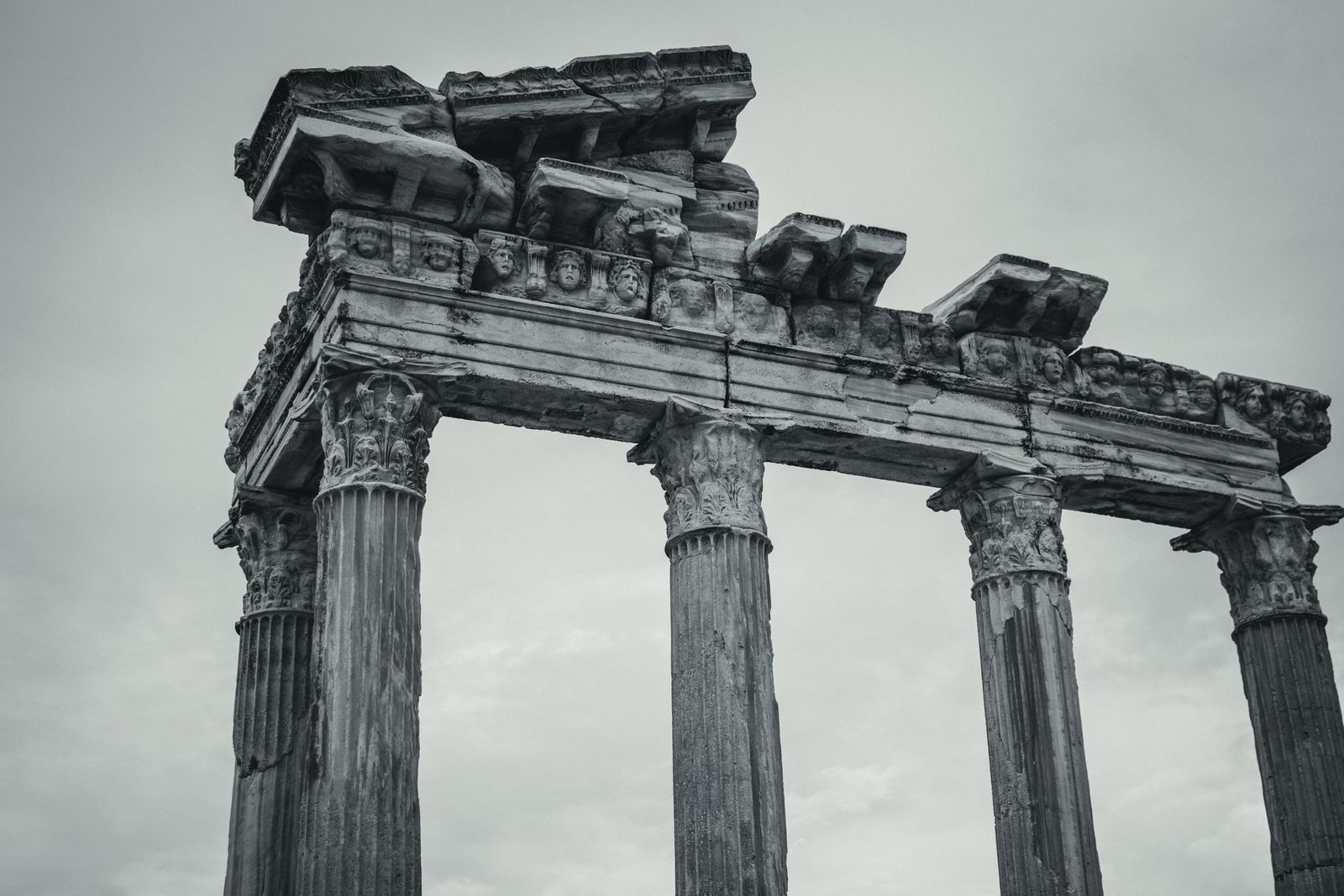
Roman ruins across Italy have been patched, repointed, cleaned and stabilised by generations of conservators. That care is a gift to tourists and a problem for chemists, because it contaminates the record. The team needed a sample where the concrete had been left alone since the emperor Hadrian ruled Rome, from 117 to 138 C.E.
They found it under a toilet seat.
According to Scientific American’s coverage, Monteiro explained that the latrine provided an ideal sample because such structures are typically left undisturbed. Monteiro noted that the undisturbed concrete effectively conducted a centuries-long natural experiment. The communal toilets at Hadrian’s Villa, a UNESCO World Heritage site, are an architectural footnote at a sprawling estate famous for pools and colonnades. For materials scientists, they are the equivalent of a sealed reactor vessel: a chemistry experiment nobody interrupted.
The sample was small, roughly 20 microns across in the region that mattered — about a quarter the width of a human hair. Under high-resolution X-ray imaging and electron microscopy, the internal structure lit up as a weblike network of crystal, binding grains of volcanic ash and lime rubble into a single, still-hardening whole.
Volcanoes versus kilns
The old explanation for Roman durability was the pozzolanic reaction. Roman builders shovelled volcanic ash — pozzolana, named after the town of Pozzuoli near Naples — into their mixes along with quicklime and water. The ash is rich in reactive silica and alumina, and it sets off mineral reactions that keep going long after the concrete has apparently cured.
Maria Juenger, a cement researcher at the University of Texas at Austin who was not involved in the study, explained that Romans effectively used volcanic materials to achieve what modern concrete does with high-temperature kilns. Portland cement, the workhorse of modern construction, is made by roasting limestone and clay at around 1,450°C. The heat drives off carbon dioxide and produces a fine grey powder that, when mixed with water, sets fast and hard. It also emits enormous amounts of CO₂ — cement manufacture accounts for roughly 8 percent of global carbon emissions.
The Roman recipe is slower, more forgiving, and, it turns out, still reacting.
Self-healing lime clasts
The first big update to the old pozzolanic story came in 2023, when a team led by MIT materials scientist Admir Masic looked at the bright white specks scattered through Roman concrete. Generations of engineers had written those specks off as evidence of sloppy mixing — undissolved chunks of lime, an embarrassment to Roman quality control.
Masic’s group argued the opposite. The white specks, called lime clasts, are reservoirs. When a crack forms in the concrete and rainwater or seawater seeps in, the water dissolves calcium out of a nearby clast. The calcium then recrystallises inside the crack as calcium carbonate, sealing it shut. The concrete, in effect, scabs over.
That paper reframed lime clasts as engineered features, not defects. The 2026 latrine study takes the next step: it maps where the new mineral actually ends up and shows how the binding happens at the nanometre scale.
Carbonation, the slow weaver
Inside the latrine sample, the researchers found calcite doing two jobs. It filled the microscopic pores that had been left by evaporating mix water, and it wove through hairline fractures that had opened as the structure settled over centuries. The mineral is calcium carbonate — the same compound that makes limestone, chalk, and seashells — and it forms when atmospheric carbon dioxide dissolves in the moisture inside the concrete and reacts with calcium-rich compounds left over from the original lime.
The reaction is unhurried. It cannot be forced with a kiln or an admixture. The CO₂ has to migrate slowly through the material, find calcium, and crystallise in place. In a Roman harbour mole exposed to seawater, that process is accelerated by dissolved carbonates in the water itself, which is one reason Roman marine concrete — the concrete of Caesarea Maritima, Portus, Baiae — is often stronger today than the day it was poured.
According to Scientific American’s coverage, Monteiro noted that calcite had been suspected as an important binding phase in inland Roman concrete before, but that what is new is the ability to see how it binds. Berkeley’s own account of the study frames calcite as a mineral that could help modern infrastructure withstand environmental and mechanical stress. The scans show calcite as the primary binding agent in the pores and fractures — not a marginal contaminant but the mineral doing the structural work.
Masic, the MIT scientist behind the 2023 lime-clast paper, told Scientific American that the findings support the view that carbonates play a central structural role in Roman concrete.
Why the same reaction destroys modern concrete
Here is the strange asymmetry. Carbonation is the hero of the Roman story and the villain of the modern one. The difference is a metal bar.
Almost every modern structural concrete pour — bridges, parking garages, seawalls, cooling towers — is reinforced with steel rebar. Fresh Portland cement is highly alkaline, with a pH around 12.5, and that alkalinity forms a passivating oxide film on the surface of the steel that keeps it from rusting. As long as the concrete stays alkaline, the steel stays intact and the structure holds.
Carbonation eats that alkalinity. As atmospheric CO₂ diffuses in and reacts with calcium hydroxide to form calcite, the pH inside the concrete drops. Once it drops far enough, the passivating layer on the rebar breaks down. The steel begins to rust. Rust occupies several times the volume of the metal it consumed, so it pushes outward, cracking the concrete around it. Water and chloride ions get in, corrosion accelerates, and the structure fails.
Juenger emphasized that steel reinforcement is the critical difference between Roman and modern concrete. Monteiro noted that carbonation has opposite effects on Roman and modern concrete due to the presence of steel reinforcement. Roman builders had no rebar. Their concrete was mass concrete, held together by geometry and compression, so carbonation could do nothing but keep binding. Modern engineers put a corrodible metal inside the same reaction and turned a strength into a fatal flaw.
Seawater as an accelerator, not a threat
The seawater question in the headline follows from the same chemistry. When Portland-cement concrete sits in the ocean, the biggest threats are chloride penetration attacking rebar and sulphate attack degrading the cement paste. Structures built for 100-year design lives often need major repairs after 30 or 40 years in the surf.
Roman marine concrete goes the other way. The seawater flowing through microcracks brings dissolved carbonates and magnesium into contact with the pozzolanic gel and the lime clasts. New crystals — including aluminous tobermorite, identified in earlier studies of the Baiae harbour breakwaters — grow in the voids and lock the matrix tighter. Research on seawater-mixed concrete durability now studies these same mineral pathways to see how much of the Roman trick can be transplanted into steel-free modern mixes.
What the Pompeii construction site added
The latrine is not the only Roman site giving up its secrets. An unfinished construction site in Pompeii — a house under renovation when Vesuvius erupted in 79 C.E., its raw materials frozen mid-project — allowed researchers to reverse-engineer the ancient sequence of steps. That work, published in Nature Communications in December 2025, showed builders dry-mixing quicklime with volcanic ash before adding water — a technique known as hot mixing — which produced the lime clasts that give the concrete its self-healing, post-pozzolanic reactivity.
Combined with the Tivoli latrine work, the picture is of a building tradition that treated concrete less like a finished product and more like a living material — one designed to keep reacting, keep binding, keep sealing itself for centuries.
The modern climate calculation
The temptation to copy the Roman recipe wholesale runs into the steel problem, but there is a related idea gaining ground: controlled carbonation. If concrete can be engineered to absorb CO₂ from the atmosphere as it cures, and to keep absorbing it over its service life, the material itself becomes a modest carbon sink. Given that cement production emits roughly 8 percent of global CO₂, even a fractional recapture matters.
According to the United Nations, about half of the buildings that will exist in 2050 have not yet been constructed. That is a lot of pours still to come. Startups and university labs are testing calcined clays, ground volcanic ash, and CO₂-injected mixes — all of them nudging modern concrete back toward something closer, chemically, to what Hadrian’s masons were shovelling into the forms at Tivoli.
The paper’s authors are careful not to oversell the climate angle. The calcite in the latrine took nineteen centuries to weave itself through the pores. Monteiro explained that engineers must carefully balance the rate of carbonation, weighing CO₂ capture benefits against potential damage to steel reinforcement. Speed up carbonation to capture CO₂ faster, and you speed up rebar corrosion. Slow it down to protect the steel, and you lose the sink.
An experiment that will not stop
The relationship between chemistry and engineering has surfaced on this beat before. A recent piece on the SL-1 accident in 1961 traced how a four-millisecond reaction lifted a 26,000-pound vessel off the floor. The Tivoli latrine sits at the other end of the time scale: a reaction so slow it took a Chinese-American research team, high-resolution X-ray tomography, and a UNESCO-protected bathroom to catch it in the act. Additional reporting from ZME Science has since walked general audiences through the same finding.
Hadrian died in 138 C.E. His villa fell into ruin, his empire fractured, his wall in northern Britain became a footpath. The concrete under the latrine kept working. Every winter, rainwater seeped into a fresh microcrack. Every summer, a new sliver of calcite grew in the gap. Carbon dioxide that was exhaled by legionaries, medieval shepherds, Renaissance tourists and twentieth-century archaeologists diffused into the pores and hardened there.
The Berkeley and Beijing team took their sample, sealed the site, and left. The experiment, as it has done since the second century, kept running.