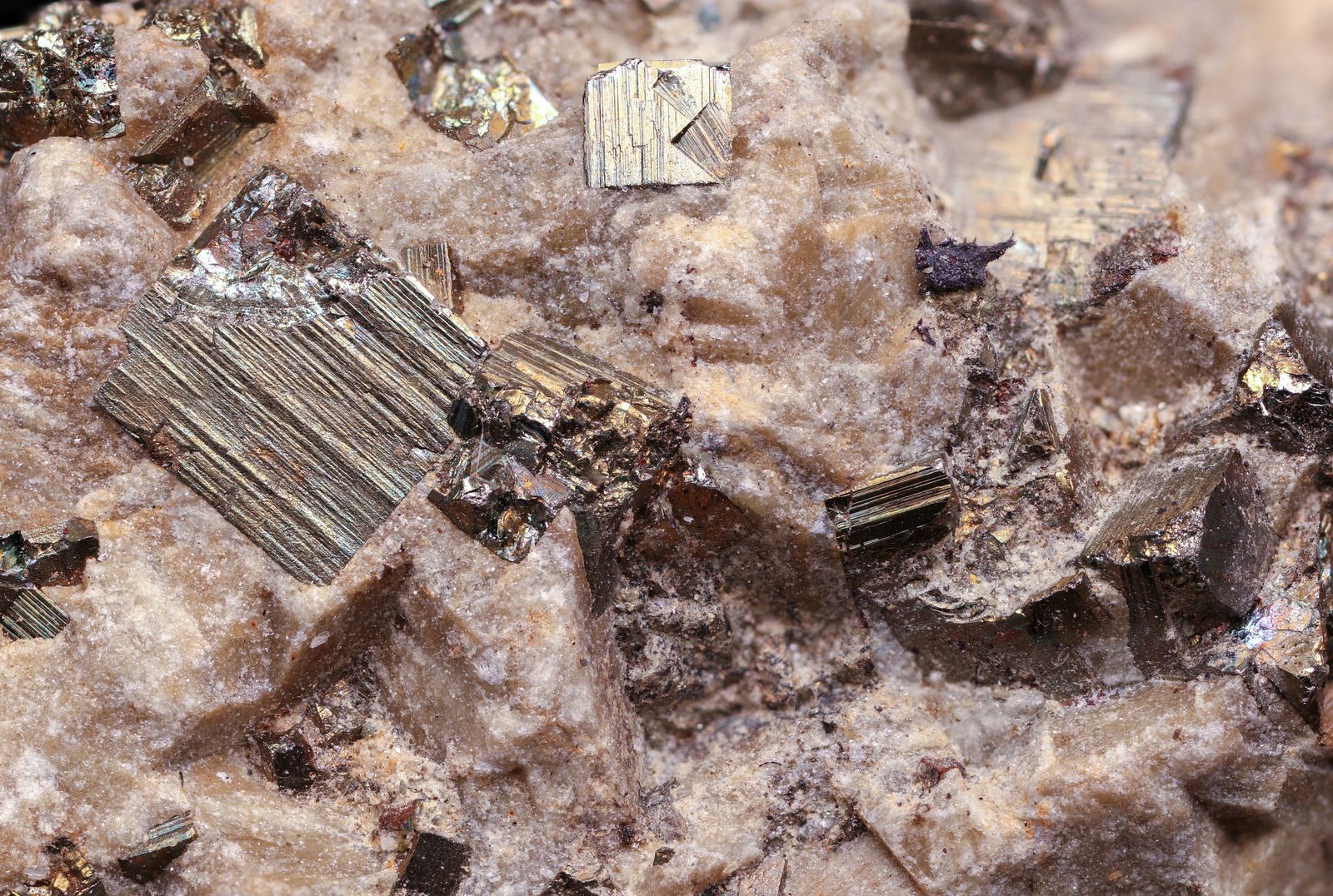
Roughly 1.7 billion years ago, in what is now the Franceville Basin of southeastern Gabon, a vein of uranium ore soaked in groundwater began splitting atoms on its own. No human hand. No enrichment plant. Just the right rock, the right water, and the right isotope ratio, cycling on for about thirty minutes, boiling itself dry, cooling for two and a half hours, and firing up again — a three-hour heartbeat that repeated for several hundred thousand years.
The site is called Oklo. It was discovered in 1972, and it remains the only confirmed natural nuclear reactor ever discovered on Earth.
The isotope that gave it away
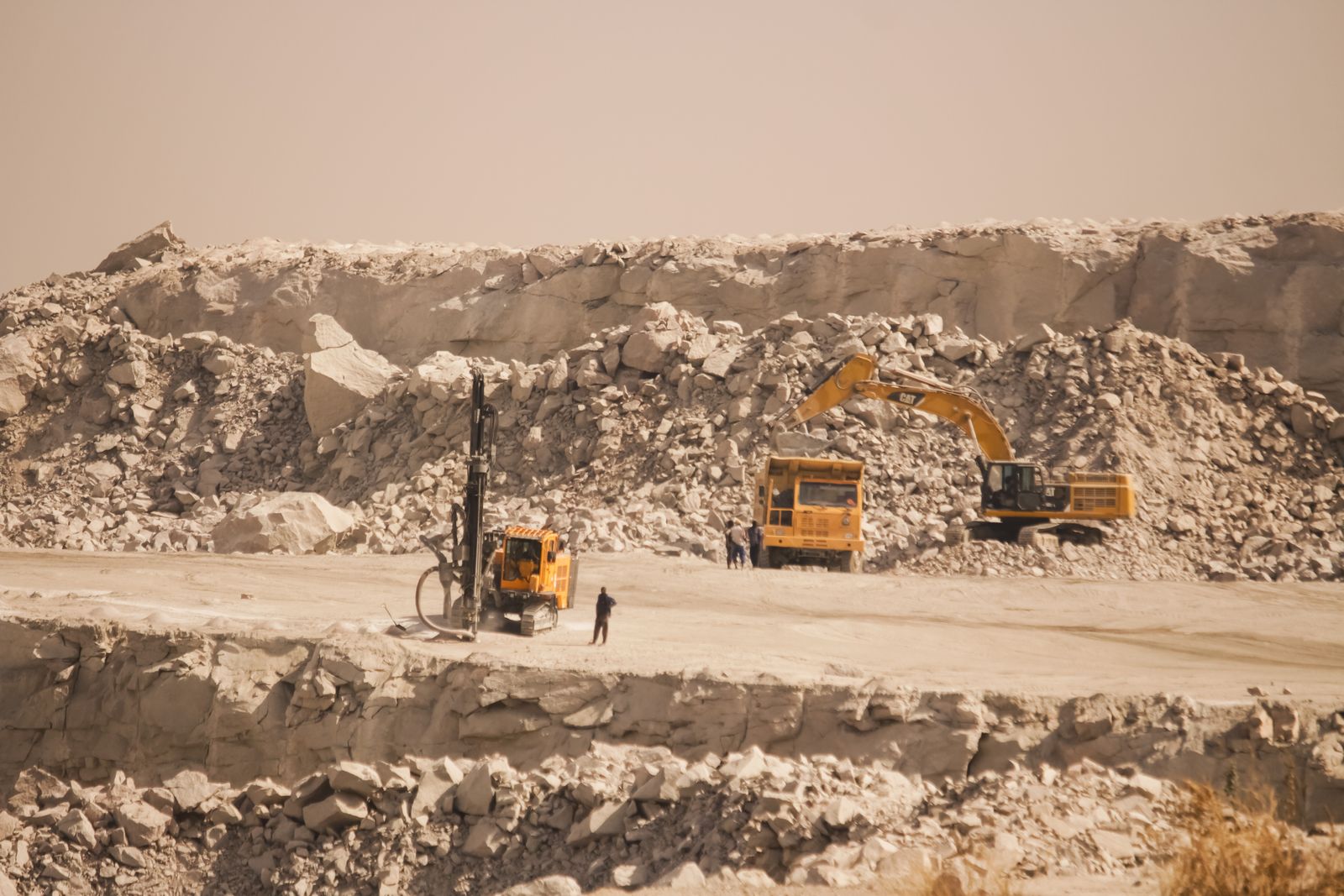
The discovery started with a discrepancy at a French fuel-enrichment plant. Uranium ore from Gabon was arriving with slightly less uranium-235 than natural ore is supposed to contain. Natural uranium is 0.72% U-235 almost everywhere on the planet. The Oklo samples were coming in depleted.
That sounds like a rounding error. It isn’t. The 0.72% figure is set by physics, not geology, and it doesn’t drift from one continent to another. Something at Oklo had eaten the missing U-235.
Fission had. As Ethan Siegel laid out in Forbes, investigators eventually found seventeen separate reactor zones spread across three ore bodies at Oklo, each one carrying the chemical fingerprint of a sustained chain reaction — depleted U-235, plus daughter isotopes of xenon, neodymium, and ruthenium locked into the surrounding minerals in ratios that only fission produces.
Why 1.7 billion years matters
A reactor today needs uranium enriched to roughly 3% U-235 to sustain a chain reaction with ordinary water as a moderator. Natural uranium at 0.72% will not do it. This is why enrichment plants exist.
But U-235 decays about six times faster than U-238. Run the clock backwards, and the ratio climbs. At 1.7 billion years ago — a bit more than two U-235 half-lives — natural uranium was around 3.7% U-235. Reactor grade, straight out of the ground.
That single fact is what opens the door. Any uranium vein anywhere on the planet, if it caught the right groundwater at the right depth in that window of geological time, had a shot at going critical. Oklo is the one we’ve caught.
The oxygen that made it soluble
Fissile fuel wasn’t enough. The reaction also needed water threaded through the ore, and it needed the uranium concentrated in dense enough veins that neutrons from one atom would find another before flying off into the surrounding rock.
Both conditions required oxygen. Uranium dissolves in oxygenated groundwater and precipitates out where the chemistry changes, which is how you get rich veins in the first place. And Earth’s atmosphere only started carrying meaningful oxygen after the Great Oxidation Event about 2.4 billion years ago, when cyanobacteria began flooding the seas with the waste product of photosynthesis.
So Oklo sits in a narrow geochemical window. Old enough for U-235 to still be abundant. Young enough for oxygen to have concentrated the ore. Miss that window on either side and no reactor lights up.
The three-hour pulse
The pulsing is the strangest part. Reactors we build are designed to hold steady. Oklo could not. It had no control rods, no operator, no coolant loop — only groundwater doing double duty as both moderator and coolant.
When water flooded a uranium-rich pocket, neutrons from spontaneous U-235 decay slowed down enough to smack into other U-235 nuclei and split them. Each split threw off more neutrons. The chain went critical. Temperatures climbed. Within about half an hour, the water boiled off.
With no moderator, the neutrons flew too fast to keep the reaction going. Fission stopped. The rock cooled. Over roughly the next two and a half hours, groundwater seeped back in — and the whole cycle began again.
The thirty-minute-on, one-hundred-fifty-minute-off rhythm has been inferred by measuring xenon isotopes trapped in aluminum phosphate minerals near the reactor zones. Xenon is a fission product; different isotopes have different half-lives and decay behaviors. The pattern locked in the mineral matrix only makes sense if the reactor ran in pulses of about three hours, over and over, for several hundred thousand years.
What was alive to see it
Nothing with a backbone. Nothing with a shell. Nothing on land at all. When Oklo was pulsing, Earth’s biosphere was almost entirely microbial. The oceans held bacteria and archaea, and — depending on which fossils and biomarkers you trust — possibly the earliest single-celled organisms with a proper nucleus.
The timing of eukaryotic life is a live debate. Some biomarker studies place complex cells as early as 1.6 to 1.7 billion years ago, roughly contemporaneous with Oklo, while other work in Quanta Magazine’s coverage of fossilized molecules from ancient shales suggests the deep story of complex life is still being rewritten. Recent findings summarized by SciTechDaily on animal fossils from 567 million years ago keep pushing dates around. What is not in dispute is that visible, multicellular animals — the Ediacaran biota — did not arrive until roughly 570 million years ago, more than a billion years after Oklo went quiet, a chapter examined by ScienceDaily’s reporting on Earth’s early oceans.
Whether or not any given microbe near Oklo had a nucleus, the point stands: the reactor ran in a world without plants, animals, forests, or soil in any modern sense. The sky was probably hazy. The continents were bare rock.
How much fuel it burned
Over the several hundred thousand years the Oklo zones were active off and on, the reactors consumed about 5.4 tonnes of U-235 and produced a comparable mass of fission products. Peak thermal power in each zone was modest — estimates put it at around 100 kilowatts, less than a mid-sized diesel generator. This was not Chernobyl. It was more like a slow underground campfire, tended by the water table.
What makes the site scientifically priceless is what happened to the waste. The plutonium, iodine, cesium, and strontium produced by fission at Oklo have had 1.7 billion years to migrate through the surrounding rock. Most of them barely moved. Some traveled only a few metres from where they were made.
That is the closest thing geologists have to a real-world experiment in deep-time nuclear waste storage. The clay and sandstone layers that trapped Oklo’s fission products are the kind of geological seal that repository designers at facilities like Finland’s Onkalo are trying to replicate. Nature ran the experiment first.
A test of the constants
There is one more reason physicists keep returning to Oklo. The ratios of samarium and neodymium isotopes preserved in the reactor zones depend on the exact cross-section for neutron capture by samarium-149 — and that cross-section depends, in turn, on the fine-structure constant, one of the fundamental numbers that sets how electromagnetism behaves.
If the fine-structure constant had drifted even slightly over the past 1.7 billion years, the isotope ratios at Oklo would look wrong. They don’t. To within very tight limits, the constant has not budged. Oklo is a natural laboratory for testing whether the laws of physics are actually constant across cosmic time, and so far the answer is yes.
That kind of deep-time fission chemistry connects to more recent work on how heavy nuclei break apart in the first place, probing why fissioning nuclei prefer to split into unequal fragments — a question the daughter isotopes at Oklo help constrain from the other direction.
Why there’s only one
Seventeen reactor zones in one place, and nothing like it found anywhere else on the planet. Why?
Part of the answer is that the window slammed shut. Once U-235 dropped below about 1% of natural uranium — which happened well before the first animals crawled — no vein of ore anywhere on Earth could go critical on its own again, no matter how much groundwater flowed through it. The fuel simply isn’t rich enough anymore.
Part of it is preservation. Oklo survived because the ore bodies were sealed under stable sandstone and never subducted, uplifted violently, or eroded away. Other natural reactors may well have fired somewhere in the Precambrian and then been ground into unrecognizable sediment by 1.5 billion years of tectonics.
And part of it is that Oklo was found by accident. If a French enrichment plant had not noticed a tiny fraction of missing U-235 in a shipment of ore, the site would still be a set of unremarkable uranium veins in West Africa.
The heartbeat that ran alone
Try to picture it. A river valley in equatorial Africa, 1.7 billion years before there were rivers with fish in them. A seam of dark ore a few metres thick, buried under sandstone. Groundwater trickling in. The rock warming, then boiling, then quiet. Steam venting through fractures. A pause. Water returning. Warming again.
Thirty minutes on. Two and a half hours off. Repeat, roughly 3 million times, over several hundred thousand years.
No one to hear it. No one to measure it. The atmosphere above still working out what to do with all this new oxygen. The continents unassembled. The moon closer and brighter. And in a pocket of West African rock, a chain reaction keeping time.
When it finally sputtered out — starved of fissile fuel by its own slow appetite — Earth had another billion years to wait before anything with eyes would evolve to look for it.