Dissolved oxygen is draining out of the world’s oceans, lakes, rivers and coastal waters at a pace fast enough that scientists at UC San Diego’s Scripps Institution of Oceanography want it recognized as a formal planetary boundary — a red line for Earth system stability. In a review published in the journal Limnology and Oceanography, an international team argues that aquatic deoxygenation has been treated as a side effect of climate change for too long, when in fact it is a driver of instability in its own right.
The paper calls for adding aquatic deoxygenation as a tenth entry to the Planetary Boundaries framework. That framework currently tracks nine Earth system processes — including climate change, ocean acidification, biodiversity loss and freshwater change — that together define what researchers call a safe operating space for humanity.

A tenth line in the sand
The nine-boundary framework was designed to give policymakers a dashboard of the planet’s vital signs. A recent update found that six of the nine boundaries had already been breached, putting Earth outside the safe operating range for stability. The team says dissolved oxygen belongs on that dashboard because its decline is fast, geographically widespread and tightly linked to boundaries already being crossed.
According to the researchers, the health and stability of our planet depends on the health and stability of aquatic ecosystems, which need oxygen to function normally. The study aims to elevate the profile of aquatic deoxygenation as a global threat and demonstrate that it does not operate in isolation.
COP25, the 2019 United Nations Climate Change Conference held in Madrid, helped catalyze discussions around this issue among oceanographers and climate scientists.
Why the water is losing its breath
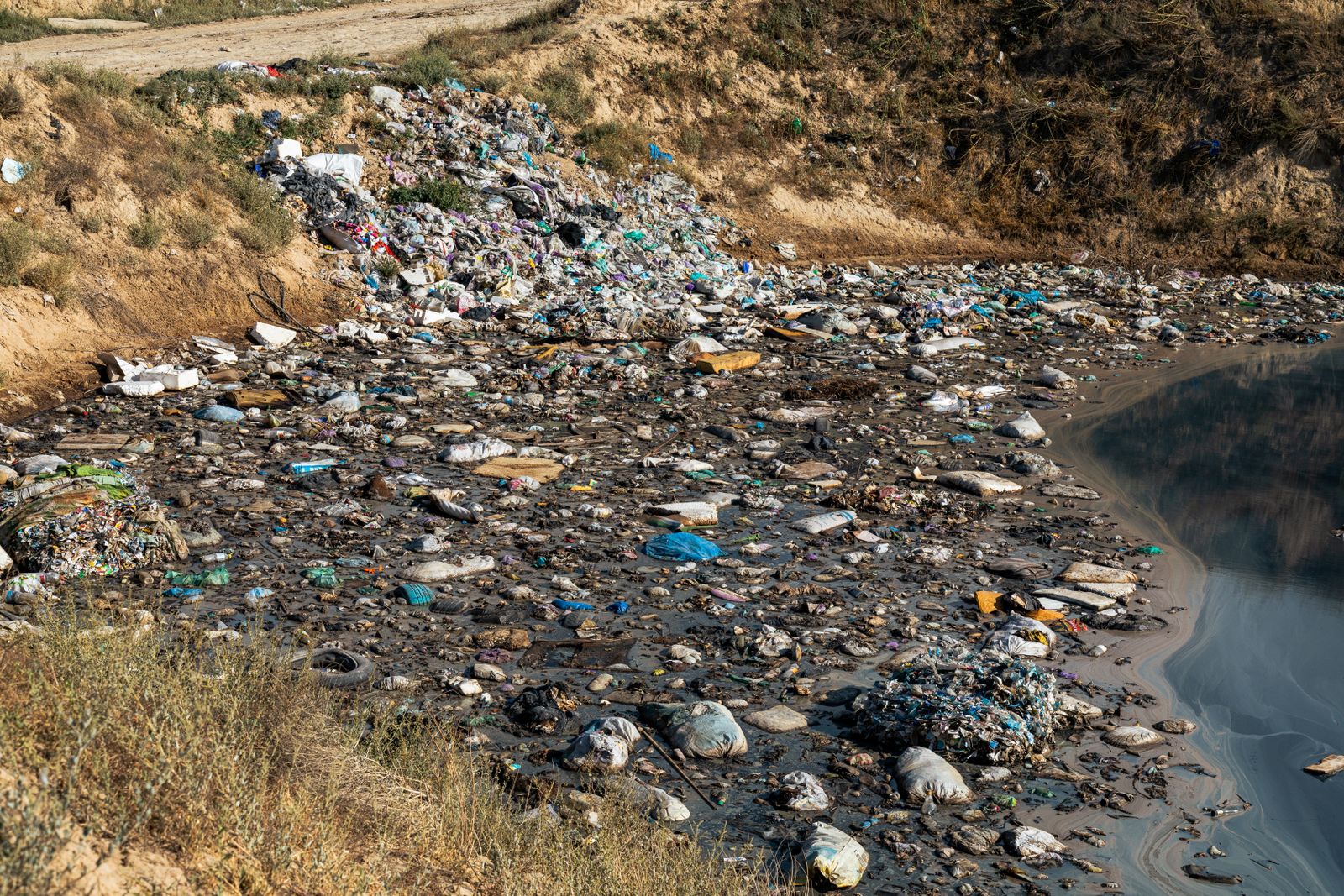
Three drivers are pushing oxygen out of aquatic systems, according to the review. Warmer water physically holds less dissolved gas. Nutrient pollution from farms and sewage feeds algal blooms whose decay consumes oxygen. And shifts in how water masses mix and ventilate — driven by changing winds, currents and stratification — leave deep layers cut off from resupply at the surface.
These forces feed on one another. Warmer surface layers float more stably atop cooler deep water, slowing the vertical mixing that would otherwise replenish oxygen below. Nutrient runoff then supercharges biological demand for whatever oxygen remains.
The biological bill is already coming due
The consequences of oxygen loss are showing up in ecosystems on multiple continents. In South Australia, a devastating algal bloom has been linked to marine wildlife deaths across the region, with dozens of dolphin carcasses washing up on beaches — the highest mortality figures in over a decade.
Many of the animals were severely emaciated. Southern calamari populations, a key food source for common dolphins, dropped significantly in Gulf St Vincent and Spencer Gulf during the bloom. Weight loss has also turned up in postmortems on seals, seabirds, little penguins and turtles from the same event.
Algal blooms of this scale sit at the intersection of the drivers the team describes: warmer water, nutrient loading and disrupted circulation. A concurrent marine heatwave has affected southern Australia in recent years.
Why the framework matters for policy
Planetary boundaries function as a policy tool as much as a scientific one. The framework, first laid out in the journal Nature, gave governments and international bodies a shared vocabulary for identifying which environmental problems threaten Earth system stability rather than just local ecosystems.
The argument is that treating deoxygenation as a standalone boundary would push it out of the shadow of climate and biodiversity discussions. The researchers argue that adding aquatic deoxygenation to the Planetary Boundaries framework will help us understand its impacts on Earth system stability. Mitigating its impacts represents a critical component of maintaining biodiversity and climate.
The framing matters because oxygen loss cuts across existing categories. It is partly a consequence of climate change, partly a consequence of nutrient pollution (which sits under biogeochemical flows), and partly a consequence of altered freshwater and marine circulation. A boundary of its own would force policymakers to address the compound problem directly.
Changes that could last centuries
Some of the shifts already under way may be effectively permanent on human timescales. Once large volumes of ocean water lose oxygen, restoring them requires reversing warming, cutting nutrient loading and re-establishing mixing patterns — a combination that could take centuries even under aggressive mitigation.
Coastal dead zones, where oxygen falls too low to support most marine animals, have been expanding for decades. Their appearance in enclosed and semi-enclosed seas — the Baltic, the Gulf of Mexico, the Chesapeake Bay — has become a familiar summer story. What the Scripps team is warning about is the scaling of that same process to open ocean basins and inland waters simultaneously.
Aquatic oxygen and the energy transition
The deoxygenation story intersects with the debate over low-carbon energy in ways that rarely get airtime. Thermal power plants — nuclear included — draw large volumes of water for cooling, and the temperature and oxygen content of that water is regulated in most jurisdictions precisely because warm discharges can worsen local hypoxia. As surface waters warm, plants that rely on once-through cooling face tighter operating windows.
At the same time, the case for decarbonization is strengthened by findings like these. Aquatic deoxygenation adds another slow-moving, hard-to-reverse consequence to the ledger of continued fossil fuel combustion. Nuclear energy’s role in that ledger — as a firm, low-carbon source that can displace coal and gas generation — becomes harder to separate from the ocean-oxygen question the longer emissions continue.
Readers following the broader climate-energy nexus can find related coverage in Nuclear Power Daily’s reporting on reactor deployment and grid decarbonization.
What comes next
Formal adoption of a tenth planetary boundary is not a quick process. The current framework has been revised several times, most recently in a recent update that quantified how many boundaries had been breached. Adding a new one requires consensus among Earth system scientists on measurable thresholds — control variables, safe zones and danger zones — that can be tracked over time.
The paper is a step toward that consensus, laying out the case that dissolved oxygen meets the criteria: a global process, a measurable variable, evidence of rapid change, and links to other boundary breaches. Whether the institutions that maintain the framework take up the proposal will determine how quickly the science moves into policy documents.
For now, the message from Scripps is that the water itself is running short of breath — and that treating that shortage as a footnote to warming or pollution understates how much it will shape the century ahead.