
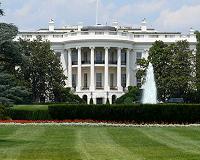
Top US economic advisor Larry Kudlow on Friday warned a threat to hit China with tariffs on up to $150 billion of imports is not a negotiating ploy — the White House wants a change in Chinese behavior.
Indicating a tough stance that escalates the risks of a trade war between the world's two largest economies, Kudlow told reporters that President Donald Trump believes China must move decisively to end intellectual property theft.
"Trump is not just using tariffs as a negotiating card, he's said that to me," Kudlow warned. "Something has to change."
Kudlow said that tariffs were still not a certainty and there were some "back channel" talks going on but "any foreign policy can go wrong."
"What this is, is an attempt by a strong willed, strong backboned president to right some very bad wrongs in the trade area with respect to China."
"Blame China, not Trump. China has been practicing unfair and illegal trading practices for several decades, they are out of compliance with the World Trade Organization in many cases."
Timeline of a month of escalating US-China trade tensions
Washington (AFP) April 6, 2018 –
Trade tensions between the United States and China have been escalating over the past month, following President Donald Trump's decision to impose steep tariffs on steel and aluminum imports.
Here are the main dates in the conflict between the world's two largest economic powers:
– March 8 –
US President Donald Trump signs the order to impose tariffs of 25 percent on steel imports and 10 percent on aluminum, citing national security concerns.
The goal was to address China's overproduction but the measures also would hit allies, prompting the European Union to threaten retaliation. The administration later temporarily exempted the EU, Canada, Mexico and four other economies from the duties.
– March 22 –
The Trump administration announces punitive tariffs on about $50 billion in Chinese goods in retaliation for what it says has been the massive theft of intellectual property from American companies.
Trump gives US Trade Representative Robert Lighthizer 15 days to draw up a list of products to target, which Lighthizer said would be drawn from the industrial sectors Beijing has said it wants to dominate.
– March 23 –
In retaliation for the US tariffs on steel and aluminum, Beijing hits back, threatening tariffs on 128 American exports valued at about $3 billion, including fresh fruit, pork and recycled aluminum that could face duties of 15-25 percent in the event negotiations with Washington fail to resolve the dispute.
Economists say this response is measured, since it does not affect the main Chinese imports from the US.
The US files complaint in the World Trade Organization over Beijing's policies that Washington says violate intellectual property rights.
– March 26 –
Chinese authorities urge the United States to stop its "economic intimidation" and threaten further retaliation.
– March 29 –
China files a complaint in the WTO over the US steel and aluminum tariffs, which Washington says are based on national security concerns.
USTR in an April 4 letter calls that complaint "baseless."
– April 2 –
China's rolls out its punitive measures against the 128 US products in response to Trump's steel and aluminum duties. Fruit, pork and California wine are on the hit list.
– April 3 –
In response to the March 22 presidential order, USTR publishes the provisional list of imports that would be subject to new duties in retaliation for "the forced transfer of American technology and intellectual property."
This list, which targets imports representing approximately $50 billion, identifies products from various sectors including aeronautics, information and communication technologies, and robotics and machinery.
– April 4 –
A few hours after the publication of the US target list, Beijing responds with a list of $50 billion of US goods that will be hit in retaliation, this time including key exports: aircraft, auto and soybeans.
Trump responded in a tweet, saying, "We are not in a trade war with China, that war was lost many years ago by the foolish, or incompetent, people who represented the US."
– April 5 –
Trump calls China's retaliation "unfair" and orders USTR to consider tariffs on another $100 billion in Chinese imports.
"Rather than remedy its misconduct, China has chosen to harm our farmers and manufacturers," Trump said.
China files another WTO complaint over the tariffs on $50 billion in exports amid charges of intellectual property theft.
– April 6 –
China says it will fight the US "at any cost" and calls on the European Union to join with Beijing in battling US protectionism which it says threatens the rules-based global trading system overseen by the WTO.
"China and the EU … should take a clear stance against protectionism, jointly preserve the rules-based multilateral trade order and keep the global economy on a sound and sustainable track," said Zhang Ming, the head of the Chinese mission to the EU.
Amid widespread concerns and calls for restraint from US businesses and those farm states most vulnerable to Chinese retaliation, Trump says the outcome will be worth the short-term risk.
"I'm not saying there's not going to be any pain," he said, but "we're going to be much stronger for it."
