
The issue of US troops stationed in South Korea will not be "on the table" at a summit between President Donald Trump and North Korea's Kim Jong Un, US Defense Secretary Jim Mattis said Saturday.
"That issue is not on the table here in Singapore on the 12th (of June), nor should it be," he said at the Shangri-La Dialogue, a security summit in Singapore, referring to the scheduled date of the Trump-Kim meeting.
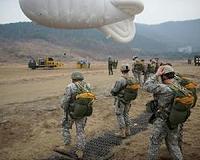
There are currently some 28,500 US forces based in the South.
Trump said Friday he will meet Kim for the historic summit as originally scheduled after extraordinary Oval Office talks with a top envoy from Pyongyang.
Trump told reporters that denuclearisation — and a formal end to the decades-old Korean war — would be on the table in Singapore.
However, Mattis stressed that "any discussion about the number of US troops in the Republic of Korea is subject to… the Republic of Korea's invitation to have them there, and the discussions between the United States and the Republic of Korea, separate and distinct from the negotiations that are going on with DPRK (North Korea).
"That issue will not come up in the discussion with DPRK."
But he added: "Obviously if the diplomats can do their work, if we can reduce the threat, if we can restore confidence building measures with something verifiable, then of course these kinds of issues can come up subsequently between (South Korea and the US)."
South Korean Defence Minister Song Young-moo also told the Singapore summit that the presence of "US forces in Korea is a separate issue from North Korea's nuclear issue".
Last month, South Korea's President Moon Jae-in dismissed claims that US troops stationed in the country — based on Seoul's alliance with Washington — would have to leave if a peace treaty was signed with the North.
North Korea 'military reshuffle' raises eyebrows in Seoul
Seoul (AFP) June 4, 2018 –
Seoul is monitoring developments in the North's military, it said Monday after reports Pyongyang replaced three of its top military officials ahead of a summit with the United States.
President Donald Trump is due to meet with North Korean leader Kim Jong Un on June 12 in Singapore with Pyongyang's nuclear arsenal high on the agenda and reports said that the reshuffle could be aimed at taming the military.
Late last month the North's state media revealed that Kim Su Gil had been appointed as director of the military's powerful General Political Bureau (GPB), replacing Kim Jong Gak.
According to Yonhap news agency, which cited intelligence sources, the chief of the general staff Ri Myong Su has also been replaced by his deputy, Ri Yong Gil.
And defence minister Pak Yong Sik has been succeeded by No Kwang Chol, previously first vice minister, it added.
The wholesale reshuffle would be unusual if confirmed, Seoul's unification ministry said.
"We will monitor related developments," ministry spokesman Baik Tae-hyun told reporters.
Pyongyang's military, known as the Korean People's Army, is immensely influential in the North and a centre of power in its own right, symbolised by the way Kim is habitually flanked by generals on one side and civilians on the other when attending major ceremonial events.
According to researchers at NK Leadership Watch, the change at the top of the GPB "represents a continuation of tightening Party control over the KPA".
The political bureau could be in a position to resist policy decisions by the leadership or try to profit from future South Korean economic aid, it said.
But new GPB director Kim Su Gil was a "highly trusted" lieutenant of leader Kim Jong Un, it added, who appointed him to the Pyongyang party committee — once a powerbase for his uncle Jang Song Thaek — after having the older man executed for treason in 2013.
Reports said the wider changes could be aimed at preventing objections in the North's senior military ranks to any sudden changes in the country's nuclear policy.
No Kwang Chol, the new defence minister, was known as a "moderate", Yonhap cited the intelligence source as saying.
"The North appears to have brought in new figures… as the previous officials lacked flexibility in thinking," the source said.
