
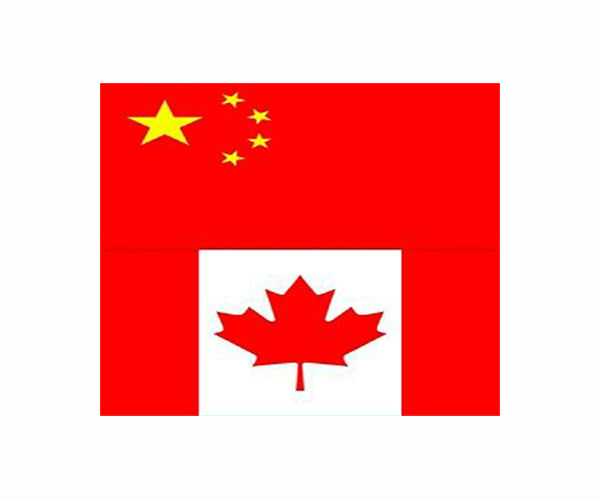
A Canadian man detained in China for more than two years was set to face trial Friday morning for espionage, charges which Canada has attacked as "trumped up" as relations between Ottawa and Beijing plummet.
Michael Spavor is one of two Canadians detained in apparent retaliation for Canada's arrest on a US extradition warrant of Huawei executive Meng Wanzhou, and formally charged last June with spying.
AFP saw a police van with tinted windows arriving at the court in the northeastern city of Dandong on Friday morning, surrounded by about a dozen police officers as it drove past reporters waiting outside.
Spavor's family have called for his "unconditional release," adding that he was innocent of the accusations against him.
His family described him as "just an ordinary Canadian businessman who has done extraordinary things to build constructive ties" between Canada, China and North Korea.
Canada's foreign ministry said Thursday that Beijing has confirmed that Canadian officials "will not be granted permission to attend the trial" despite several official requests.
Michael Kovrig's trial is scheduled to start on Monday in Beijing.
The two men have had almost no contact with the outside world since their detention.
Virtual consular visits only resumed in October after a nine-month hiatus which authorities said was due to the coronavirus.
China's judicial system convicts most people who stand trial and the two men face up to life in prison if found guilty of "espionage" and "providing state secrets".
Beijing has insisted the detention of the two Canadians is lawful, while calling Meng's case "a purely political incident".
Meng — whose father is Huawei founder and CEO Ren Zhengfei — has been in a two-year battle against extradition to the US over charges the firm violated US sanctions on Iran.
Her court case in Vancouver has entered its final phase with hearings expected to end in mid-May, barring appeals.
Family, employer call on China to release two Canadians
Ottawa (AFP) March 18, 2021 –
The family of Canadian businessman Michael Spavor and former diplomat Michael Kovrig's bosses on Thursday called on China to release both men facing trial within days.
In the meantime, Canada's foreign ministry said Beijing had not yet granted Canadian officials permission to attend their trials.
"Despite several official requests to Chinese authorities, Canadian officials have not yet received permission to attend the trials," the department said.
In a rare statement cited by public broadcaster CBC, Spavor's family said they felt it "necessary to speak out and call for his unconditional release," adding that he was innocent of the accusations against him.
"His continued unjust detention depriving him of his liberty is both unfair and unreasonable, especially given the lack of transparency in the case," they said.
Richard Atwood, the president of Crisis Group, where Kovrig worked as a senior advisor, also said in a statement, "After 830 days imprisoned, Michael should be released immediately so he can return home to his loved ones."
The two Canadians were detained in December 2018 in apparent retaliation for Canada's arrest on a US extradition warrant of Huawei executive Meng Wanzhou — roiling relations between Canada and China.
They were formally charged last June with spying, which Prime Minister Justin Trudeau has said were "trumped up."
Spavor and Kovrig are scheduled to go on trial Friday and Monday respectively.
Atwood said he was "disappointed" by Kovrig's pending prosecution, which coincides with a high-level meeting between US and Chinese top foreign officials in Alaska, saying: "From the moment he was detained, the political nature of his case has been clear."
"What happens in the Chinese legal system does not change this," he said, while the company's vice president Comfort Ero stressed that Kovrig's work in China was always "in the open and well known to Chinese authorities."
Spavor's family, meanwhile, described him as "just an ordinary Canadian businessman who has done extraordinary things to build constructive ties between Canada, China and the Democratic People's Republic of Korea."
"He loved living and working in China and would never have done anything to offend the interests of China or the Chinese people."
