
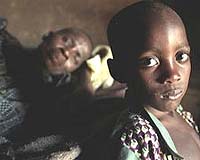
Efforts to help children bearing the brunt of the world's AIDS pandemic should be refocussed on helping the family, a strong and elastic support mechanism, according to a report published on Tuesday.
The study by the Joint Learning Initiative on Children and HIV/AIDS (JLICA) calls for a revamp of how to help the two million children infected with the human immunodeficiency virus (HIV) and the estimated 12 million who have lost one or both parents to the disease.
The report, authored by an independent alliance of researchers, policymakers and grassroots activists, says the successful campaign to roll out drugs to people with HIV in poor countries has cruelly masked the failure to help children in need.
HIV-infected children are "significantly less likely" to gain access to the precious drugs compared with adults, and face terrible hurdles in education and social discrimination, it says.
"Families' effectiveness in absorbing the shocks of HIV and AIDS and other afflictions points to a crucial lesson: strong, capable families must be the foundation of any long-term response to children affected by AIDS," according to the report, entitled "Home Truths".
This entails channelling practical help for poor families, including "income transfer" programmes, such as poverty grants, child support grants and, for those in chronic insecurity, food distribution.
Programmes such as these are "efficient and direct", says the report.
Putting a child in an orphanage not only leads to a worse outcome for the youngster, it also is up to 10 times more expensive than providing him with a place in his extended family, the document says.
"Families' unique advantages in nurturing children can operate only if families have a basic level of material resources," it argues.
Around 33 million people had HIV at the end of 2007, two-thirds of whom live in sub-Saharan Africa, according to figures issued last year by the agency UNAIDS.
Overall funding for AIDS rose from 1.4 billion dollars in 2001 to 10 billion in 2007, but needs to be at least 15 billion in 2010, it says.
Share This Article With Planet Earth
