
New Delhi banned half the Indian capital's private cars from its roads on Monday as the megacity's 20 million people spluttered with stinging eyes in the worst pollution in three years.
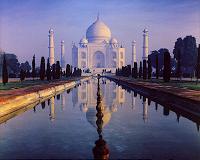
As smog levels exceeded those of Beijing by more than three times, authorities also parked a van with an air purifier near the Taj Mahal — the iconic 17th-century marble mausoleum 250 kilometres (150 miles) south of Delhi — in a bid to clean the air in its surrounds.
With the pollution causing a rush of respiratory complaints at hospitals and the diversion of 37 flights on Sunday, a new law came into effect restricting cars from the capital's roads to alternative days, depending on if their number plate ends in an odd or even number.
More than 600 police teams were deployed at road intersections in the capital with the power to hand out fines of 4,000 rupees (nearly $60) to transgressors
Exempt from the restrictions were Delhi's seven million motorbikes and scooters, public transport and cars carrying only women, stoking criticism that the measures were ineffective.
"There is smoke everywhere and people, including youngsters, kids, elderly are finding it difficult to breathe," Delhi's chief minister Arvind Kejriwal said in a Twitter video. "Eyes are burning. Pollution is that bad."
Construction was banned temporarily late last week in the world's most polluted capital city, while schools have been closed until Wednesday, with the city government handing out free pollution masks to children.
"I have a headache every day I wake up. It's suffocating to breathe sometimes. And inflammation in the nostrils and all. And eyes also. Like it kind of burns," Ankusha Kushi, a student, told AFP.
As Delhiites woke up on Monday, levels of particulates measuring less than 2.5 microns — so tiny they enter deep into the respiratory tract — were at 613 micrograms per cubic metre of air, according to the US embassy in Delhi.
– Deadly over long term –
The World Health Organisation's recommended safe daily maximum is a reading of 25.
In central Delhi, the state air quality institute rated levels of the tiny particulates — which can be deadly over the long term — as "severe".
Bollywood megastar Priyanka Chopra Jonas posted a selfie in pollution mask on Instagram and said it was "hard to shoot" in Delhi.
"I can't even imagine what it must be like to live here under these conditions. We r blessed with air purifiers and masks. Pray for the homeless," she posted.
Fourteen Indian cities including the capital are among the world's top 15 most polluted cities, according to the World Health Organization.
One study last year said that a million Indians died prematurely every year as a result.
With local elections due in Delhi in early 2020, the crisis has also become a casualty of political bickering, with each side blaming the other.
Kejriwal, who likened Delhi to a "gas chamber" on Friday, said the city had done its part to curb pollution and that the burning of wheat stubble residue on farms outside the capital had to be stopped.
India's supreme court too stepped-in, slamming the authorities for failing to curb pollution and asked them to tighten rules against violators.
– Car rule 'a stunt' –
But national environment minister Prakash Javadekar accused Kejriwal of politicising the issue, while an MP from Prime Minister Narendra Modi's ruling Bharatiya Janata Party (BJP) violated the odd-even car rule as a "symbolic protest" by driving a car that was barred under the scheme.
Experts warned that both state and national governments needed to go beyond short-term remedies.
Stop-gap solutions "can't be a substitute for addressing the major long-term chronic sources of air pollution", Daniel Cass, from global non-profit Vital Strategies, told AFP.
Changing agricultural practices, switching electricity generation sources and accelerating the conversion of home heating from charcoal to natural gas were also key measures in the pollution fight, Cass said.
Siddharth Singh, a climate policy expert, said the traffic restrictions are "ineffective".
"If air pollution was solely due to the vehicular traffic, then this would be a solution. Right now it cannot be a solution because motorised private transport has a very small share in the whole pie," Singh told AFP.
Key facts behind Indian capital's toxic smog
New Delhi (AFP) Nov 4, 2019 –
Millions of people in New Delhi are suffering in what the Indian capital's chief minister has called a "gas chamber" of poisonous smog that has prompted authorities to declare a public health emergency.
Here are some key facts on the crisis in the world's most polluted capital city:
– Worst pollution in years –
New Delhi has seen a growing pollution problem each winter for the past decade but despite efforts to control the annual onslaught, current levels are the worst in three years.
On Monday morning, the concentration of PM2.5 — fine particles of less than 2.5 microns that can enter the bloodstream and penetrate the lungs and heart — was at 613, nearly 25 times the safe limit set by the World Health Organisation, according to the US embassy in Delhi. On Sunday it approached 1,000.
High levels of PM2.5 are linked to chronic bronchitis, lung cancer and heart disease. Greenpeace says more than 1.2 million Indians died prematurely in 2017 due to air pollution.
– Toxic cocktail –
New Delhi is hit each year by a near perfect storm of pollution that takes hold immediately after the Hindu festival of Diwali in late October, when millions of revellers let off firecrackers.
On top of the firework hangover, the city of 20 million people is threatened by the widespread burning of wheat and rice stubble in neighbouring farmlands, along with traffic fumes, factory emissions and smoke from fires used in poor neighbourhoods for heating and cooking.
Pollutants from this toxic cocktail get trapped over Delhi by cooler winter temperatures and the usually slow-moving winds that prevail at this time of year.
– New laws –
Authorities have ordered schools to remain shut and banned construction work across the city until at least Tuesday.
Diesel-spewing trucks that rumble into Delhi each night have been stopped, except those carrying essential commodities.
A new law came into effect on Sunday restricting cars from the capital's roads to alternative days, depending on if their number plate ends in an odd or even number.
Hundreds of police tried to enforce the car rationing order but many owners ignored the restrictions despite the threat of a $55 fine.
The local government has started handing out millions of pollution masks, while calling on people to restrict outdoor activities.
– 'Lives at stake' –
The Indian capital is one of 14 Indian cities listed in the World Health Organization's top 15 most polluted cities globally.
New Delhi chief minister Arvind Kejriwal says that "lives are at stake" in the mega-city's pollution crisis.
But residents complain that no-one is taking the emergency seriously, and experts say neither the national nor city government are taking the required long-term action to control the deadly smog.
With a state election due in Delhi in early 2020, the crisis has also become a casualty of political bickering, with each side blaming the other.
"I can't even imagine what it must be like to live here under these conditions," Indian actress Priyanka Chopra, in town to shoot a movie, said in an Instagram post.
