
The burial rate of sedimentary organic carbon over geological timescales significantly influences Earth's environmental conditions by affecting atmospheric oxygen and carbon dioxide levels. In marine sediments, around 20 percent of organic carbon is directly associated with reactive iron oxides (FeR). However, the fate of this iron-bound organic carbon (FeR-OC) in subseafloor sediments, and its accessibility to microorganisms, has remained unclear until now.
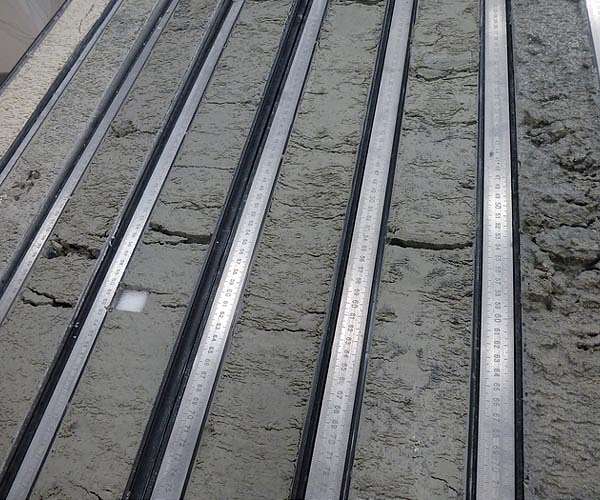
To investigate this, researchers reconstructed continuous records of FeR-OC in two sediment cores from the northern South China Sea. These cores span suboxic to methanic biogeochemical zones and reach a maximum age of approximately 100,000 years.
The study's findings indicate that within the sulfate-methane transition zone (SMTZ), where microbial activity is heightened, FeR-OC undergoes remobilization through microbial-mediated iron reduction. As a result, it is remineralized by microorganisms. The energy released from this process supports a significant portion of microbial life within the SMTZ, a zone about one meter thick.
Outside of the SMTZ, a stable proportion of the total organic carbon resists microbial degradation, remaining stored in marine sediments as FeR-OC over geological timescales. "This means," stated Dr. Yunru Chen, the study's first author and now a postdoctoral researcher at the Cluster of Excellence 'The Ocean Floor – Uncharted Interface of the Earth,' "that the estimated global reservoir of FeR-OC in microbially active Quaternary marine sediments could be 18 to 45 times larger than the atmospheric carbon pool."
This research represents a key step in understanding the stability of sedimentary FeR-OC in response to microbial activity after deposition, providing new insights into its dynamic cycling and persistence in subseafloor sediments. The findings will contribute to ongoing research within the "Ocean Floor" Cluster of Excellence, coordinated at MARUM.
Research Report:Cycling and persistence of iron-bound organic carbon in subseafloor sediments.
