
South Korea offered Thursday to ship emergency flood aid to North Korea, while China will also help out its close ally amid reports the impoverished country's food crisis could worsen this year.
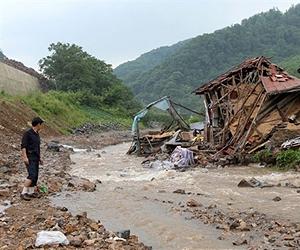
The isolated North has reported widespread flooding this summer which washed away homes, roads, railways and farmland and caused an unspecified number of deaths.
The deluge caused North Korean leader Kim Jong-Il to change his route on a reported visit to China Thursday, heading via Manpo in North Korea to China's Jian City and avoiding a flood-stricken area, a South Korean official said.
South Korea's Red Cross said it had sent a message to North Korea offering emergency aid to the communist country.
"North Korea received our message today and we are waiting for a reply," Red Cross spokesman Lee Yoon-Hwan told AFP.
It was the first such proposal since tensions mounted dramatically over the sinking of a South Korean warship in March with the loss of 46 lives, he said.
Seoul cut off most cross-border trade and relations after accusing Pyongyang of torpedoing the ship — an accusation vehemently denied by the North.
The South is ready to ship relief goods such as food and medicines, Lee said, adding the scale of aid would be determined later.
North Korea's sole major ally China will also provide an unspecified amount of "emergency relief materials", the official Korean Central News Agency (KCNA) reported.
"This measure will encourage the Korean people in their efforts to recover from the flood damage as early as possible and more energetically step up the building of a thriving nation," the agency said.
The report followed a message of sympathy from China's president Hu Jintao to North Korean leader Kim Jong-Il.
In the message, quoted by KCNA, Hu expressed "deep sympathy and consolation" over "the sad news that some parts of your country were hit by severe floods recently, causing casualties and property losses".
Heavy downpours last week swelled the Yalu river, which forms part of the border between China and North Korea, sending water spilling over its banks on both sides.
After decades of deforestation, the North is particularly vulnerable to flooding. In 2007, it reported at least 600 people dead or missing from devastating floods.
Aid groups warned that this year's flooding would aggravate the North's chronic food shortages. A famine there in the mid-1990s killed hundreds of thousands, and the UN children's fund estimates one third of children are stunted by malnutrition.
A bungled currency revaluation last November, designed to flush out entrepreneurs' savings and rein in private markets, backfired disastrously, fuelling food shortages and sparking rare outbreaks of unrest.
In 2008 South Korea suspended an annual rice shipment to its impoverished neighbour as relations soured.
KCNA said torrential rain and floods had caused serious damage on Sinuiju city and Uiju county, near the border with China.
Rivers had overflowed and more than 7,100 "dwelling blocks" had been destroyed or damaged.
"The government is buckling down to flood recovery, stabilising the life of the affected people," KCNA said.
Share This Article With Planet Earth
