
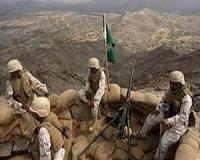
Saudi border guards have been given orders to shoot infiltrators on sight after three troopers were killed on the Iraqi frontier earlier this month, a spokesman said on Monday.
The orders apply to guards patrolling the southern border with Yemen as well as the northern frontier with Iraq, Major General Mohammed al-Ghamdi told AFP.
Senior commander General Odah al-Balawi was among the three border guards killed in the January 5 clash with four Saudi infiltrators, two of whom blew themselves up.
"After that, we will not negotiate with anyone," Ghamdi said.
"We will shoot them directly without any warning, without any negotiation."
He said security officers on the Iraqi side had been told of the new orders.
No group has claimed responsibility for the border clash but Saudi Arabia is among Arab countries taking part in US-led air strikes against the Islamic State jihadist group in Syria, raising concerns about possible retaliation inside the kingdom.
Ghamdi said he did not know if the "terrorists" belonged to IS, but they came from the direction of Iraq and tried to enter through an official crossing in the Arar region.
Officers tried to stop the infiltrators after spotting them on infra-red cameras, shooting two of them dead.
Thousands of riyals (dollars) were found on their bodies, suggesting they had hoped to reach a target elsewhere in the kingdom, Ghamdi added.
Security officers later arrested seven suspected associates of the four infiltrators.
For security reasons, Ghamdi declined to say how many officers are stationed on the frontier.
Last September, the kingdom inaugurated the first stage of a protective fence and surveillance system stretching for about 900 kilometres (560 miles) along the northern desert frontier.
"It's very high-tech," Ghamdi said.
The shoot on sight order also applies to the southern border with Yemen, where Al-Qaeda in the Arabian Peninsula has established a major presence amid deepening instability.
Indonesia must toughen laws to combat IS: think-tank
Jakarta (AFP) Jan 19, 2015 –
Indonesia could help combat the threat of homegrown extremism by banning its citizens from travelling abroad to fight with organisations such as the Islamic State group, a think-tank said Monday.
The Jakarta-based Institute for Policy Analysis of Conflict (IPAC) said new laws banning any involvement with foreign militant groups overseas were necessary to help stem the flow of fighters from Indonesia to battlegrounds in the Middle East.
More than 500 Indonesians have gone to Syria and Iraq to fight alongside IS militants, according to the country's counter-terror chief, prompting President Joko Widodo to consider new measures to combat the threat of homegrown radicalism.
Indonesia, the world's most populous Muslim-majority nation, has already banned support for IS and its ideology.
But in its latest report, IPAC said police efforts to prevent future jihadists from travelling to Syria and Iraq would continue to face hurdles without appropriate legislation.
"As long as joining foreign military or terrorist organisations is not a crime, it is difficult to prosecute," the report said.
There are concerns internationally about the impending release from Indonesian jails this year and next of 130 inmates convicted of terrorism offences, a fear exacerbated by the presence of former prisoners among Indonesia's IS ranks.
Though IPAC found only a minority of the 270 people convicted of terror offences in Indonesian jails supported IS, it said some more extreme prisoners maintained strong links to outside groups and posed a serious threat.
Indonesia's most notorious radical cleric Abu Bakar Bashir swore allegiance to IS along with 23 other inmates at a Java prison in July.
Widodo is reportedly considering revoking the passports of Indonesians who have left for Syria, and is exploring other ways of charging those trying to join IS.
Indonesia has waged a crackdown on extremist groups for more than a decade following attacks against Western targets including the 2002 Bali bombings — a campaign that has been credited with weakening key networks.
There are fears that fighters returning from Iraq or Syria could revive these networks.
