
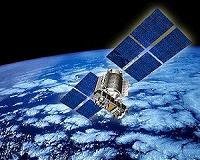
Russia is working on new generation spacecraft for the Glonass system, according to the country's deputy prime minister. Russia continues to develop new generation spacecraft for its Glonass global positioning system, Russian Deputy Prime Minister Dmitry Rogozin said Sunday.
"Work continues on creating and testing new generation spacecraft, which will allow to significantly increase the [Glonass] system's accuracy characteristics by 2020," Rogozin posted on his official Twitter account.
Rogozin also mentioned the launch of the Glonass-M navigation satellite atop the Soyuz-2.1b carrier rocket from the Plesetsk space center in northern Russia, which took place earlier on Sunday. The launch has replaced a Glonass satellite that has served three years longer than its guaranteed lifetime, Rogozin said.
Glonass, a global navigation system operated by the Russian Aerospace Defense Forces, currently consists of 27 satellites, including 23 operational. The system allows real-time positioning and speed data for surface, sea and airborne objects around the world.
Russian Glonass-M Satellite Reaches Orbit on Soyuz-2.1 BCarrier Rocket
Baikonur – The Glonass-M navigation satellite, launched from Russia's Plesetsk space center on a Soyuz-2.1b carrier rocket, was brought to its target orbit by the Fregat upper stage, the Russian Defense Ministry said Sunday.
This was the first launch of the Soyuz-2.1b carrier rocket from the Plesetsk space center in 2016.
"The Soyuz-2.1b carrier rocket successfully brought the Russian navigation space apparatus Glonass-M to its target orbit at the set time," the ministry told RIA Novosti.
The satellite made contact and is functioning normally, the Russian Defense Ministry added.
"Contact was established with the space apparatus, and stable telemetric connection is being maintained. The onboard systems are functioning normally," the ministry told RIA Novosti.
