
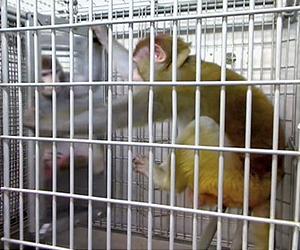
A new study finds that fetal exposure to the plastic additive bisphenol A, or BPA, alters mammary gland development in primates. The finding adds to the evidence that the chemical can be causing health problems in humans and bolsters concerns about it contributing to breast cancer.
"Previous studies in mice have demonstrated that low doses of BPA alter the developing mammary gland and that these subtle changes increase the risk of cancer in the adult," says Patricia Hunt, a geneticist in Washington State University's School of Molecular Biosciences.
"Some have questioned the relevance of these findings in mice to humans. But finding the same thing in a primate model really hits uncomfortably close to home."
The research appears in the latest Proceedings of the National Academies of Sciences. Hunt and Tufts University School of Medicine researchers Ana Soto and Carlos Sonnenschein-all pioneers in the effects of BPA-co-designed the study with Catherine VandeVoort at the University of California at Davis, where the study was performed.
The Tufts researchers compared the structure of newborn mammary glands from BPA-exposed and unexposed female rhesus macaques. Pregnant monkeys were fed a piece of fruit containing a small amount of BPA each day during the gestational period corresponding to the human third trimester of pregnancy, resulting in blood levels of BPA comparable to those of many Americans today.
The researchers found that, at birth, the density of mammary buds was significantly increased in BPA-exposed monkeys, and the overall development of the mammary gland was more advanced compared to unexposed monkeys.
Previous studies in the Soto and Sonnenschein laboratories have shown that exposing rodents to tiny amounts of BPA can alter mammary gland development, leading to pre-cancerous and cancerous lesions when the animals exposed in utero reach adult age.
The researchers say the primate research makes them confident that the rodent mammary gland is a reliable model to study developmental exposures to chemicals like BPA that disrupt a mammal's estrogen activity.
"This study buttresses previous findings showing that fetal exposure to low xenoestrogen levels causes developmental alterations that in turn increase the risk of mammary cancer later in life," says Soto.
"Because BPA is chemically related to diethylstilbestrol, an estrogen that increased the risk of breast cancer in both rodents and women exposed in the womb, the sum of all these findings strongly suggests that BPA is a breast carcinogen in humans and human exposure to BPA should be curtailed."
–SPACE STORY
climate
slug1
150
23-DEC-49
Gaseous emissions from dinosaurs may have warmed prehistoric earth
Gaseous emissions from dinosaurs may have warmed prehistoric earth
sauropod-alamosaurus-sanjuanensis-dinosaur-lg.jpg
sauropod-alamosaurus-sanjuanensis-dinosaur-bg.jpg
sauropod-alamosaurus-sanjuanensis-dinosaur-sm.jpg
It turns out that those calculations depend only on the total mass of the animals in question. A medium-sized sauropod weighed something like 20,000 kilograms, and sauropods lived in densities ranging from a few large adults to a few tens of individuals per square kilometer.
by Staff Writers
London, UK (SPX) May 08, 2012
Sauropod dinosaurs could in principle have produced enough of the greenhouse gas methane to warm the climate many millions of years ago, at a time when the Earth was warm and wet. That's according to calculations reported in the May 8th issue of Current Biology, a Cell Press publication.
The hulking sauropods, distinctive for their enormous size and unusually long necks, were widespread about 150 million years ago. As in cows, methane-producing microbes aided the sauropods' digestion by fermenting their plant food.
"A simple mathematical model suggests that the microbes living in sauropod dinosaurs may have produced enough methane to have an important effect on the Mesozoic climate," said Dave Wilkinson of Liverpool John Moores University.
"Indeed, our calculations suggest that these dinosaurs could have produced more methane than all modern sources-both natural and man-made-put together."
Wilkinson and study coauthor Graeme Ruxton from the University of St Andrews were studying sauropod ecology when a question dawned on them: If modern cows produce enough methane gas to be of interest to climate scientists, what about sauropods? They teamed up with methane expert Euan Nisbet at the University of London to work out the numbers.
"Clearly, trying to estimate this for animals that are unlike anything living has to be a bit of an educated guess," Wilkinson said.
Animal physiologists have studied methane production from a range of modern animals to derive equations that predict methane production from animals of different sizes.
It turns out that those calculations depend only on the total mass of the animals in question. A medium-sized sauropod weighed something like 20,000 kilograms, and sauropods lived in densities ranging from a few large adults to a few tens of individuals per square kilometer.
Wilkinson, Ruxton, and Nisbet therefore calculate global methane emissions from sauropods to have been 520 million tons (520 Tg) per year, comparable to total modern methane emissions.
Before industry took off on modern Earth about 150 years ago, methane emissions were roughly 200 Tg per year. By comparison, modern ruminant animals, including cows, goats, giraffes, and others, produce methane emission of 50 to 100 Tg per year.
The study's conclusions not only show "just how strange and wonderful the workings of the planet are" but also serve as a useful reminder for the importance of microbes and methane for global climate, the researchers say.
