
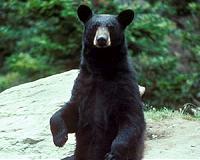
A rare Asiatic black bear has been photographed in the Demilitarized Zone dividing the two Koreas, Seoul's environmental ministry said.
The area around the four-kilometre (2.5-mile) wide strip running across the peninsula bristles with minefields and fortifications.
But while it is the world's last Cold War frontier, the zone itself is known as one of the few areas where nature is untouched by development, and a haven for wildlife.
The bear was photographed by an unmanned research camera in October, Seoul's environment ministry said.
Although there have been some testimonies by soldiers who said they saw Asian black bears inside DMZ, it is the first time that an image of the animal had been captured in the area, it added.
It was a juvenile estimated to be eight or nine months old and weighing about 25-30 kilograms (55-66 pounds), the National Institute of Ecology said, and was presumed to be living in the DMZ with its parents.
The species — Latin name Ursus thibetanus — is classed as vulnerable on the IUCN Red List of endangered species.
More than 5,000 plant and animal species have been identified in the DMZ, including the long-tailed goral wild goat and northern fur seal, according to the South Korean government.
"The latest discovery of the Asiatic black bear once again proves the exceptional ecological value of the DMZ," said environment ministry official Yoo Seung-gwang.
Israel says rare Golan vultures decimated by poisoning
Jerusalem (AFP) May 10, 2019 –
Nearly half of the vulture population in the Israeli-annexed Golan Heights have died of apparent poisoning, Israel's Nature and Parks Authority Friday, in a new blow to an already decimated breed.
Eight out of around 20 griffon vultures left in the area were found dead on Friday, the organisation's director Shaul Goldstein told AFP, in what he described as "a mortal blow to the birds of prey population".
The Israeli parks authority said the deaths constituted "a serious matter", and vowed to find "those responsible for this poisoning and bring them to justice".
A fox and two jackals were also found dead and two other vultures sick were taken to a wildlife clinic for treatment.
Goldstein declined to say if the poisoning was deliberate.
The vulture population on the Israeli side of the Golan Heights has declined significantly over the past two decades, with their number dropping from 130 in 1998 to around 20 before the latest deaths.
In 2016, UN peacekeepers helped return a vulture which had been captured across the border in Lebanon on suspicion of spying for the Jewish state.
Israel seized around 1,200 square kilometres of the Golan from Syria in a 1967 and later annexed it, in moves never recognised by the international community.
About 18,000 Syrians belonging to the Druze community — most of whom refuse Israeli citizenship — remain in the occupied Golan, alongside some 20,000 Israeli settlers in 33 communities.
