
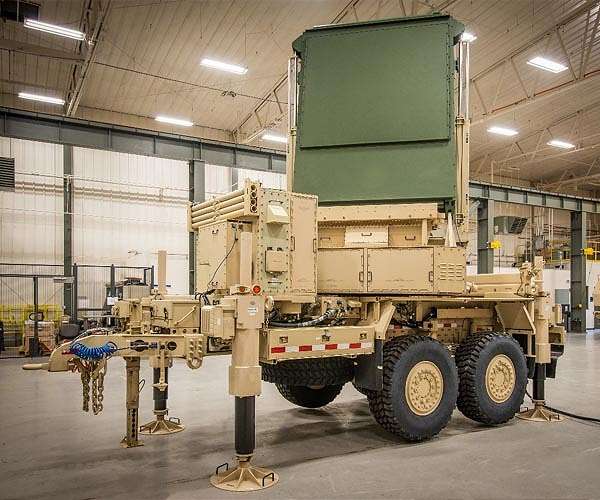
Raytheon, an RTX business, reported the successful completion of its Lower Tier Air and Missile Defense Sensor (LTAMDS) in a major live-fire exercise, where it detected and intercepted a tactical ballistic missile. This milestone is part of an ongoing U.S. Army testing program aimed at deploying the 360-degree radar system by year's end.
The latest event marks the fifth and most complex test to date, showcasing LTAMDS's capabilities within the Integrated Battle Command System (IBCS). During the exercise, a surrogate missile mimicked a high-speed, long-range threat, which LTAMDS detected, tracked, and relayed to IBCS, enabling the PAC-3 Missile Segment Enhancement (MSE) missile to intercept.
Tom Laliberty, president of Land and Air Defense Systems at Raytheon, stated, "The progression of the LTAMDS program has been remarkable – from a sense-off and contract award in 2019, successful testing in 2023, to the program's planned entry into production early in 2025 – that is unprecedented for a new development program." He credited this progress to a collaborative effort with the U.S. Army, leading to a radar system equipped to counter modern threats.
The LTAMDS development has been on an expedited timeline, with six prototype units concurrently tested and integrated at Raytheon and Army facilities. The testing phases have escalated in complexity to assess the radar's resilience and performance against a range of simulated threats. The program aims to reach Milestone C, transitioning from development to production, by the second quarter of FY2025.
Interest from international defense sectors is significant, with over a dozen countries exploring the system. Poland is set to become the first foreign operator, having signed a letter of acceptance for 12 units in 2023 as part of a Foreign Military Sale agreement with the U.S. Army.
