Dr. Robert Buxbaum of Oakland County's REB Research and Consulting company has been awarded an SBIR Phase 1 grant from the Department of Energy (DOE). The grant is to begin this week and will be used to allow Dr. Buxbaum to research new, high temperature materials for use in 4th generation nuclear power.
The main material is – coated Nb-1%Zr. Nb-1%Zr is one of the strongest high temperature materials available. It has been used in research reactors, but has not been used commercially because it can bust into flames in air.
Ti2AlNb is a non-flammable, orthorhombic relative of aircraft titanium that seems that should bind well to Nb-1%Zr and offer high temperature oxidation resistance.
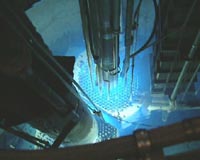
In the nuclear environment high temperatures are important for increased safety, and also us to build a new type of nuclear reactor, called a breeder reactor. A breeder reactor can create new fuel, or can be used to burn up the waste generated in other nuclear reactors.
The technique to bind these two alloys together came from Dr. Buxbaum's work with refractory alloys for hydrogen purifiers and hydrogen generation. REB Research has been developing products in the hydrogen separation and membrane reactor area since 1982, many of them made with palladium-coated refractory alloys.
This study will measure the high temperature mechanical strength of the combined structures, along with their ability to resist oxidation, and hydrogen embitterment.
In this project, Dr. Buxbaum is working with researchers in the Materials Science and Engineering Departments of Michigan State University and Iowa State University. It is possible that the combination will be used elsewhere as well, for example for low-weight, high temperature jet engine turbine blades.
REB Research's products are sold around the world., and have been sold to the nuclear programs of Westinghouse (Sweden), The (South) Korean Nuclear Rector Institute, and Los Alamos National Laboratory in the US. REB Research is an Oakland County Emerging Sector company.
Share This Article With Planet Earth