
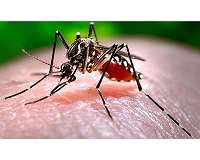
Mosquitoes are despised for their itch-inducing bites and role in spreading disease. But at least one researcher doesn't want to see them eradicated entirely.
Catherine Hill, a professor of entomology at Purdue University, is working on an insecticide that will prevent mosquitoes from transmitting disease without harming the insect or other animal life.
"For the last 20 years I've been trying to figure out how to kill mosquitoes, and then I had this epiphany where, morally, I'm just not OK with it anymore," Hill said in a news release.
Though not well understand, Hill believes mosquitoes likely play an important role in many ecosystems.
"[They are] a large part of the biomass in many ecosystems," Hill said.
Any insect that's been around for millions of years is sure to have predators. In their larval or terrestrial stages, mosquitoes are food for a variety of species, including birds, bats, salamanders, lizards and frogs. As flying adults, they're consumed by spiders, frogs and others.
Hill worries about the unintended ecological consequences of eradicating the insect.
"To yank [mosquitoes] out abruptly, I don't know what that does," Hill said.
Only a small percentage of mosquitoes transmit disease, yet scientists know very little about these species and their role in local food chains. The vast majority of mosquito research is focused on eradicating those that spread disease.
Should her work ultimately prove unfruitful, Hill acknowledges lethal insecticides will be necessary to curb species operating as disease vectors. But she hopes scientists will take a closer look at unintended consequences of removing species from an ecosystem.
"You pull one little piece and start to unravel it, and things happen," said Hill.
Scientists piece together extinct horsepox virus, raising biosecurity concerns
Lab scientists in Canada at the University of Alberta have synthesized horsepox, an extinct relative of the smallpox virus, using segments of mail-order DNA. The feat has raised biosecurity concerns, as well as questions about the costs and benefits of risky research.
Horsepox has been extinct for some time, and the smallpox virus was declared eradicated in 1980. Although the revived vi … read more
