
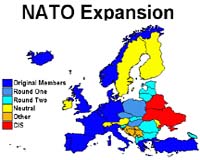
Poland, Lithuania, and neighbouring Ukraine have formed a three-nation military brigade, Warsaw said Monday, in a drive to boost would-be NATO member Ukraine's ties with the alliance, opposed by Russia.
Polish Defence Minister Bogdan Klich said in a statement that he was "immensely satisfied" by the deal with his Lithuanian and Ukrainian counterparts.
They inked the accord on the sidelines of talks Monday among European NATO members at the trans-Atlantic alliance's Brussels headquarters.
In a separate statement, the Lithuanian defence ministry said that the "engagement of Ukraine in the project would induce the country to intensify relations and cooperation with NATO."
Poland joined NATO in 1989, 10 years after the communist bloc began crumbling, and Lithuania followed in 2004, 13 years after winning independence from Moscow. Both moves riled their Cold War-era master, Russia.
Poland and Lithuania are among the staunchest supporters of ex-Soviet Ukraine, which is pushing to be let into NATO despite Moscow's bitter opposition and jitters from several west European members of the 28-nation alliance.
The three-way brigade will be known in army-speak as LITPOLUKRBRIG.
Its headquarters will be in Poland, and its leadership is to rotate every two years among the three countries, with English being the language of command, the Polish defence ministry said.
Besides cementing Ukraine's ties with NATO and boosting regional military cooperation, the Polish ministry said, the goal is also to lay the ground for a European Union combat group.
Poland and Ukraine both joined the EU in 2004, and have pushed for stronger ties between the 27-nation bloc and Ukraine.
A brigade usually ranges from 2,000 to 5,000 troops, combining several battalions of 600-1,500, depending on the particular army's tradition.
The Lithuanian defence ministry said the brigade was set to include a multinational infantry unit that could be deployed in international operations abroad, and that costs and training, as well as command, would be shared.
Share This Article With Planet Earth
