
Inter-Services Intelligence (ISI) is Pakistan's most powerful spy agency, accused in the West of double dealing but increasingly under fire from Islamist militants it once sponsored.
Headed by Lieutenant General Ahmed Shuja Pasha since September 2008, shadowy ISI agents operate across the nuclear-armed Muslim nation of 167 million people, earning notoriety at home and abroad.
Despite helping to capture and kill hundreds of Al-Qaeda militants since Pakistan joined the US-led "war on terror", including self-confessed 9/11 mastermind Khalid Sheikh Mohammed, ISI still courts suspicion.
ISI funnelled weapons bought with US cash to Muslim fighters who ultimately defeated Soviet troops in neighbouring Afghanistan in 1989, where Osama bin Laden was active in a war that spawned Al-Qaeda and spin-off groups worldwide.
ISI's support for the Taliban regime in Kabul from 1996 to 2001 and Islamist groups fighting against Pakistan's arch rival India have led many Western officials to suspect that the organisation still plays a double game.
In March, top US military officer Admiral Mike Mullen said there were "indications" that elements of Pakistan's intelligence service lend support to Al-Qaeda and Taliban militants — something he said "has to change".
The comments sparked fury in Pakistan, where more than 2,500 people have died in more than two years of militant bombings and more than 2,000 soldiers have died fighting homegrown Taliban fighters on the Afghan border.
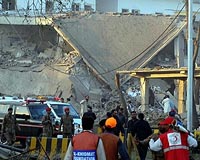
On Friday, a powerful suicide car bomb ripped through ISI's headquarters in the northwestern city of Peshawar, killing 10 people and destroying part of the fortified building.
In May, a suicide attack outside a police building next to the headquarters of ISI in the eastern city of Lahore killed 24 people.
Pakistan strongly denies continued ISI links with militants, although former military ruler Pervez Musharraf admitted in 2006 that some retired Pakistani intelligence officers may have been abetting extremists.
Afghanistan and India accused ISI of involvement in a bomb attack at the Indian embassy in Kabul that killed more than 60 people in July 2008.
ISI is feared at home for playing a central, although covert political role. Pakistan has spent more than half its 62-year history under military rule.
The government led by President Asif Ali Zardari, the widower of assassinated former premier Benazir Bhutto, tried to put the elite agency under the control of the interior ministry in July 2008.
The move was promptly withdrawn when Pakistan's military protested.
In theory, ISI works under the control of the prime minister, but in practice its functions are mainly run by Pakistan's pervasive security set-up.
ISI's spymaster Pasha is considered close to the relatively reformist military chief Ashfaq Kayani, who ran ISI until October 2007.
Besides ISI, the army, air force and navy also have separate intelligence arms. A civilian-run Intelligence Bureau works under the prime minister and the police have a secret service known as Special Branch.
Share This Article With Planet Earth
