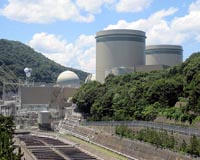
A Japanese utility switched on another nuclear reactor Tuesday in a small victory for the government's pro-atomic push, despite strong public opposition after the 2011 Fukushima meltdown.
The restart of the No. 3 reactor at the Takahama nuclear plant brings the number of running reactors in Japan to five, while dozens more remain offline.
The plant, operated by Kansai Electric Power (KEPCO), is located in Fukui prefecture, some 350 kilometres (215 miles) west of Tokyo.
Tuesday's restart comes after the utility switched on Takahama's No 4 reactor last month after a court cleared its restart, despite complaints from local residents over safety concerns. The court also gave the green light to switch on the No. 3 reactor.
Japan shut down all of its atomic reactors after a powerful earthquake in March 2011 spawned a huge tsunami that led to meltdowns at the Fukushima nuclear plant.
It became the world's worst nuclear accident since Chernobyl in 1986.
Since then, just a handful of reactors have come back online due to public opposition and as legal cases work their way through the courts.
However, Prime Minister Shinzo Abe has aggressively promoted nuclear energy, calling it essential to powering the world's third-largest economy.
Much of the public remains wary of nuclear power after the disaster at Fukushima spewed radiation over a large area and forced tens of thousands to leave their homes, with some unlikely to ever return.
hih/pb/ds
THE KANSAI ELECTRIC POWER CO
A new twist on the origin of uranium
Uranium, the radioactive element that fuels nuclear power plants and occurs naturally in the Earth's crust, is typically mined from large sandstone deposits deep underground. The uranium in these deposits, which are called roll fronts, has long been thought to form over millions of years via chemical reactions of sulfur and other non-biological compounds.
This widely accepted textbook geol … read more