
Three British scientists on a ski trek to the North Pole abruptly ended their mission to map out thinning Arctic sea ice Wednesday, fearing an early summer ice melt.
The trip, part of a global warming study, was "ending slightly ahead of schedule to ensure a safe pick up" by two twin Otter aircraft before the "annual summer break-up and thaw of the ice, which we are keen to avoid," operations director Simon Harris-Ward said.
The expedition surveyed 434 kilometers (270 miles) across the surface of the frozen Arctic Ocean over 73 days, amid treacherous snow conditions and temperatures dropping below minus 70 degrees Celsius (minus 94 degrees Fahrenheit) with a wind chill.
The three explorers Pen Hadow, Ann Daniels and Martin Hartley had to undertake survey work manually after the team's equipment failed to stand up to the hostile Arctic conditions.
Bad weather repeatedly prevented supply planes from reaching them, occasionally leaving them with half-rations as they battled brutal elements, while Hartley also got frostbite in his right big toe.
The trio finally stopped 490 kilometers (304 miles) from the North Pole, said the Caitlan Arctic Survey website.
Yet they still managed to collect thousands of measurements of snow and ice depth and density by drilling and physically measuring as well as making comprehensive observations, they said.
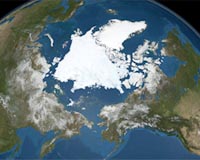
The latest ice report on the expedition's website said the survey pointed to "an unexpected lack of thicker multi-year ice," indicating very little Arctic sea ice remained at the end of the last summer melt.
All of the raw data collected during the expedition would be released later, and analyzed in the coming months, said a statement.
Global warming is believed to be the main culprit in the rapidly melting polar ice cap that is freeing up new sea routes and untapped mineral resources on the ocean bottom.
Mission chief Pen Hadow said by satellite telephone: "The snow cover has been less than we're used to" and the Canadian Arctic ice was "more responsive to the wind than I've been used to" on past journeys.
"The first 25 days, we heard the ice moving every single day. That was a bit of shocker for us but it did calm down later," he said.
There was also "a lot less open water" than expected, Hadow said, noting the team was prepared to swim in the frigid Arctic waters up to two hours each day, but only had to get wet once during the trip.
Despite having to stop early, the three explorers said they were satisfied with the breadth of data collected and looked forward to bathing and resting.
Hadow said a hot shower awaited them upon their arrival at Eureka station in Canada's far north.
"We're like cavemen," he said. "We'll probably be hosed down (and scrubbed) with wire brushes."
Daniels said she looked forward to drinking a glass of "full-bodied red wine" in front of a roaring fire and sleeping in a bed with fresh sheets, after discarding her smelly sleeping bag.
Share This Article With Planet Earth
