
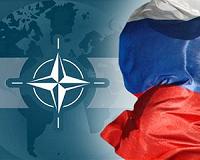
NATO said Friday it fully supported the US decision to pull out from a Cold War missile treaty with Russia, saying Moscow was in breach of the agreement.
"Allies fully support this action," the North Atlantic alliance said in a statement.
NATO issued the statement in the name of its council of member states shortly after US President Donald Trump announced Washington's withdrawal from the 1987 Intermediate-Range Nuclear Forces Treaty.
Russia failed to meet a deadline set by the United States to dismantle a new medium-range missile system, which Moscow insists does not infringe the treaty.
"The United States is taking this action in response to the significant risks to Euro-Atlantic security posed by Russia's covert testing, production, and fielding of 9M729 ground-launched cruise missile systems," NATO said.
But the Alliance said America's treaty withdrawal would take six months to come into effect, giving Russia a last window to destroy the offending missile system.
"We continue to aspire to a constructive relationship with Russia, when Russia's actions make that possible," NATO said.
"We urge Russia to use the remaining six months to return to full and verifiable compliance to preserve the INF Treaty."
INF Treaty: a 1987 US-Soviet nuclear pact
Washington (AFP) Feb 1, 2019 –
The Cold War-era INF arms control treaty, signed by the United States and Soviet Union in 1987, obliged the two superpowers to reduce their nuclear arsenals for the first time.
At the time of its signature by US president Ronald Reagan and Soviet leader Mikhail Gorbachev in Washington, the Intermediate-Range Nuclear Forces Treaty was hailed as historic.
It opened the way to a new era in relations between the Eastern and Western blocs.
Nuclear accords had already been concluded, including SALT I in 1972 and SALT II in 1979, freezing the number of strategic ballistic missile launchers held by each country.
With the INF treaty, the two powers agreed for the first time to destroy a whole range of nuclear missiles.
The treaty bans missiles that can travel distances of between 310 and 3,400 miles (500 and 5,500 kilometers). They were to be destroyed no more than three years after the treaty entered into force.
It led to the destruction of 2,692 missiles by 1991, almost all the intermediate range, which made up a little more than four percent of the total nuclear arsenals of the two countries in 1987.
One of the innovations of the INF treaty was that inspectors from the other country could verify that the missiles had been destroyed.
– Dangerous arms race –
The 1987 treaty put an end to a mini-arms race triggered by the Soviet Union's deployment of SS-20 nuclear missiles targeting Western European capitals.
NATO at the time responded by deploying US nuclear-tipped Pershing IA and II missiles. This led to massive pacifist demonstrations across Europe.
During what was known as the Euromissiles crisis, Reagan described the Soviet Union as "the evil empire."
The arrival in power of Gorbachev in 1985 and his Perestroika reforms, however, signaled the opening of the Soviet bloc to dialogue with the United States.
Three summits between Gorbachev and Reagan between 1985 and 1987 were necessary to achieve the signature of the INF treaty.
In October 2018, President Donald Trump accused Russia of not respecting the accord and threatened to withdraw from it, despite pleas from the European Union to preserve it.
Trump announced on Friday that he was withdrawing, with European allies agreeing that Russia's 9M729 ground-launched cruise missile system has a range that violates the treaty.
