
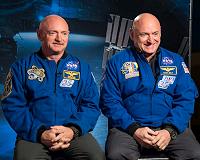
NASA's Twins Study preliminary results have revealed that space travel causes an increase in methylation, the process of turning genes on and off, and additional knowledge in how that process works.
"Some of the most exciting things that we've seen from looking at gene expression in space is that we really see an explosion, like fireworks taking off, as soon as the human body gets into space," Twins Study Principal Investigator Chris Mason, Ph.D., of Weill Cornell Medicine, said. "With this study, we've seen thousands and thousands of genes change how they are turned on and turned off. This happens as soon as an astronaut gets into space, and some of the activity persists temporarily upon return to Earth."
When retired twin astronaut Scott Kelly returned to Earth in March 2016, the Twins Study research intensified with investigators collecting samples from him and his twin brother, retired astronaut Mark Kelly. The researchers began combining the data and reviewing the enormous amount of information looking for correlations.
"This study represents one of the most comprehensive views of human biology," Mason said. "It really sets the bedrock for understanding molecular risks for space travel as well as ways to potentially protect and fix those genetic changes."
Final results for the Twins Study are expected to be published in 2018.
Telemedicine via satellite improves care at astronaut landings
Tempus Pro, a portable vital-signs monitor offering telemedicine via satellite, is helping medics at ESA astronaut landings. Thomas Pesquet was the first to benefit at the end of his mission in May.
Astronauts returning from space must readjust to life on Earth. Gravity influences the body's balance, cardiovascular functions, and especially the muscles, so astronauts are carefully monitore … read more
