
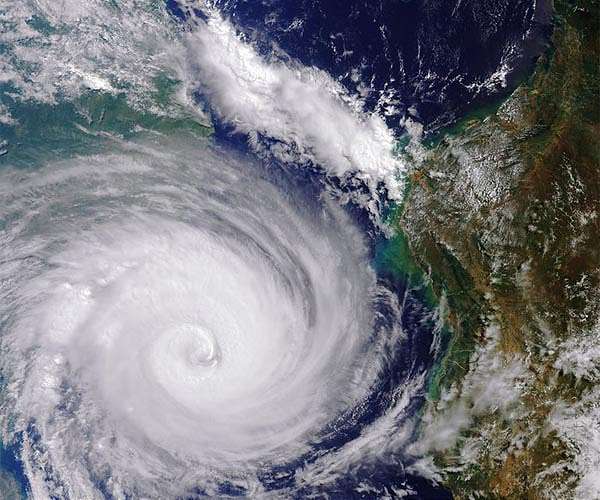
Madagascar's death toll from Tropical Cyclone Batsirai rose to 111 Friday, with most of the fatalities from a single district where it levelled homes.
The national disaster management agency BNGRC said 87 people had died in Ikongo district, near the east coast of the Indian Ocean island.
About 30,000 people were living in emergency shelters after Batsirai struck last weekend, the agency said in an updated fact sheet.
Aid agencies are worried about ensuring clean drinking water, and have begun setting up purification systems. Water-borne diseases pose a major health risk after tropical storms.
Madagascar is one of the poorest countries in the world. Some 42 percent of children suffer from chronic malnutrition, even without a natural disaster.
Madagascar cyclone toll hits 94 as rescuers advance
Antananarivo (AFP) Feb 10, 2022 –
Rescuers on Thursday reached almost all the regions of Madagascar devastated by Tropical Cyclone Batsirai, as authorities said the death toll had hit 94.
"Right now, the toll is 94 dead," said Faly Aritiana Fabien of the national disaster management agency, BNGRC.
"We've made great efforts to reach all of the areas hit by the cyclone. Now we have to make sure that emergency workers can help everyone in need," he told AFP.
Batsirai hit Madagascar last weekend, with heavy rain and winds of 165 kilometres (100 miles) per hour.
The cyclone struck the Indian Ocean island less than two weeks after Tropical Storm Ana left 55 dead in Madagascar.
In the coastal town of Mananjary, which suffered the storm's greatest force, people have started clearing debris and tree limbs from the streets.
Some buildings had collapsed, other somehow stayed standing. Most of the town's homes were destroyed.
As the storm ploughed inland, crops were destroyed. Henriette, 66, survives by growing rice, pineapples and cassava. Her home was reduced to rubble.
"My house wasn't too strong to begin with, so I decided to stay at my sister's place. But I didn't have time to carry all my things, or my furniture," she said. "When I came back Sunday morning, my house was destroyed."
According to UNICEF, 112,000 people need emergency aid, including 62,000 people left homeless. Half of those needing help are children.
"The picture should continue to look something like this," as the areas where rescue workers have yet to reach are sparsely populated, said Jean Benoit Manhes, UNICEF's deputy representative in Madagascar.
Access to clean drinking water is one of the main humanitarian needs.
"Children are especially sensitive to diseases linked to drinking dirty water, causing acute diarrhoeal diseases, as well as a risk of increased malaria," he said.
Some 42 percent of children in Madagascar suffer from chronic malnutrition, even without a natural disaster.
"It's a race against time. If we can reach everyone in need within a week, we can avoid many deaths," he added.
