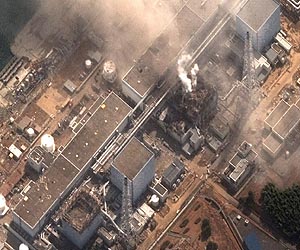
Japan's government was Monday investigating how an apartment had been built with radioactive concrete in the latest scare from the country's ongoing nuclear crisis.
Radiation levels of up to 1.24 microsieverts per hour were recorded in the building in Nihonmatsu, Fukushima, 55 kilometres (35 miles) from the crippled power plant, local authorities said Sunday.
Local media reported that 12 families were living in the block.
The three-storey condominium was constructed in July with concrete made from gravel taken from a quarry near the Fukushima Daiichi Nuclear Power plant in April, one month after it began spewing radiation into the air and sea.
Chief Cabinet Secretary Osamu Fujimura said annual radiation exposure for someone living in the building would be at around 10 millisieverts, half the government-mandated evacuation level of 20 millisieverts.
"But we want to go ahead with an investigation into quarries within the no-go zone and check if there are similar cases," Fujimura told a news conference in Tokyo Monday.
The March 11 quake and tsunami crippled the plant's cooling systems, sparking reactor meltdowns that threw radiation into the environment, and forcing tens of thousands of people from their homes within a 20-kilometre radius.
Radiation fears have since become part of daily life in Japan after cases of contaminated water, beef, vegetables, tea and seafood were discovered.
The government has consistently been at pains to stress the lack of an "immediate" health risk, but has been faced by scepticism from the public.